August 2, 2021
I’ve started my trip home. I left Corryton yesterday at noon. I just lucked out ending up at a Cracker Barrel in Little Rock that allows overnight parking. I was actually just looking for a motel lot when I came across this. It was nice to be able to pull in and get my bed ready without having to be sneaky. A motorhome is parked nearby.
It’s been a slow learning process, but at some point it hit me that I need to stuff as many of my things as possible into the cab while I sleep instead of trying to share my bed with a piece of rolling luggage and a large duffel bag.
I had to move the truck after sitting on the tailgate and smelling a rather foul breeze. At first I thought it was my feet but then I looked down and saw I’d parked right in front of a large sewer grate on the grassy median between the Cracker Barrel parking lot and a Marriott extended stay.
The more days that pass between posts the harder it is to write. It makes sense; more days means more experiences to choose from—more birds. Movement and nightly boondocking seemed to provide a rhythm and the appropriate level of spontaneity to get a daily post done. Now I feel like I have all this material bunched up. I’m like a baby in a pile of clothes.
Speaking of which—Sewanee:
One of my earliest memories is laying on a big green lawn on campus and watching frisbees fly overhead against the backdrop of a blue sky. I also remember my mom coming into the kitchen crying one morning. When I asked her what was wrong she said, “Daddy won’t go to the store and get me a coca-cola.” Bizarre! I’ve pondered this over the years. I think she was crying over something real and tried to put it into terms I might understand. Then again, she was in her mid-twenties with two small kids. Maybe she just wanted a coke.
Other memory: the Lowes were family friends—the father a chemistry professor. Their house had the wonderful smell of his pipe and the wood fireplace in the living room. I was very much in love with the older girl, Leah, who was pretty and had long blonde hair, but the younger girl Sarah was who I bonded with. My mouth was head level with her chest and I often placed it there and bit, trying to get a purchase on that flat surface. I seem to remember the wet spots I’d leave on her shirt.
Finding my old house was a challenge. I was half-a-year-old to 3 when we lived there. Additionally, the house had been moved down the street while we were still in it. I imagine us sitting at the windows waving during the process but, no, we moved out. The house was put on a flatbed pulled by a semi. A special wide pallet was made to support it extending beyond the edges. I have a picture somewhere of it in creeping-transit as it was moved down the street. When I say I lived in fourteen places, I count this house twice.
I’ve searched for the home in past decades circling in and around campus without luck. The last time I saw it was on a trip with my parents and sister. It was the last time we were all together—probably around 1987. We visited the Lowe’s. The girls and parents were there. Now I was in love with Sarah! I guess that biting bond was the real thing.
Having searched the campus several times in the past I knew it was best to take a different approach now. I started with the buildings and grounds department. It was a little foolish imagining that there would be a 75-year-old maintenance worker there who would remember a house being moved back in the mid 60s. A office worker sent me to university leasing. (All the land and many of the houses around the campus are owned by the university.)
The leasing office was in a small bungalow near the edge of campus. I sat down in front of the desk of a nice woman and explained my quest giving her my father’s name. She did a search on her computer.
“It was nothing fancy,” I told her. “Kind of like an old farm house. But it had three floors.”
“Do you know what the address of the home was,” she asked pausing between key strokes.
“No, but I know it was close to the center of campus. In fact, it was either moved off-campus or vice-versa.” I related how the semi flatbed was used. “I seem to remember my dad saying it was moved about a thousand feet.”
After a few minutes clicking on her keys she said there wasn’t data going back that far. She wanted to check some files and offered me a book of local historical homes to look through as she left the room. No luck.
On a table near the front window an aromatherapy machine quietly released a stream of “seafog” vapor next to a 5 x 8 picture of a man in military uniform. About ten more photos of a yellow Labrador Retriever were around the room, posed and impromptu, on the wall, desk and bookshelf.
The woman returned unable to find anything and after a few more helpful questions she recommended that I go see the people at University Archives.
The archives were next to the Jessie duPont library in a lovely, single story rock building of the unifying architectural type ubiquitous on campus. Rocking chairs lined a front porch and I imagined a couple of aging alums sitting there taking in their old alma mater.
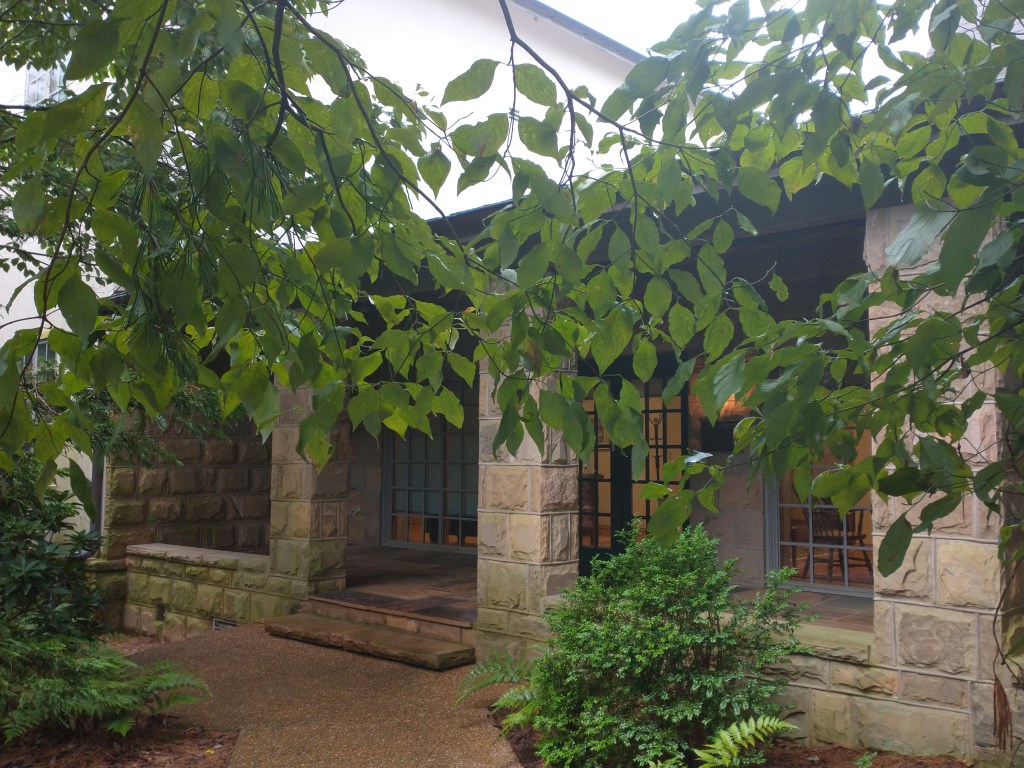

In the lobby there was a reception stand but no one there. I saw movement through the door to several interior offices and soon a woman came from there, introduced herself and listened to my request.
“I’m going to go see what I can find,” Jenny said. “Oop. I haven’t even opened up the gallery. You can go in here and wait if you like.”
She opened two French doors and turned on lights. I walked into a large, high-ceilinged, rectangular room with two upholstered benches facing opposite each other at center. Evenly spaced around the four walls were black and white and color photos of landscapes and other natural elements. Three artists were represented with work ranging from the last decade to the early 1960s.
I slowly walked the perimeter looking at the photos, stopping to study the ones I liked to determine what it was about the composition that attracted me. After completing the circuit I took a seat on a bench and began to rummage through my backpack like the boondocker I am, forever trying to arrange things into some meaningful order and keep things clean. Jenny returned.
“I’ve found a file on your father that I thought you might like to look through,” she said leading me from the room to an alcove off the lobby. (In a distant room I saw a person wearing white gloves and carefully turning pages.)
“This doesn’t have any information about an address,” Jenny continued, “but you can look through it while I do some more searching.”
She set the tabbed manila folder on a desk and left. The service I was receiving at Sewanee felt like something out of a Hollywood movie. I felt like Tom Hanks in the Da Vinci Code, but I wasn’t trying to solve an ancient conspiracy, just find out where my little three-year-old self lived 53 years ago.
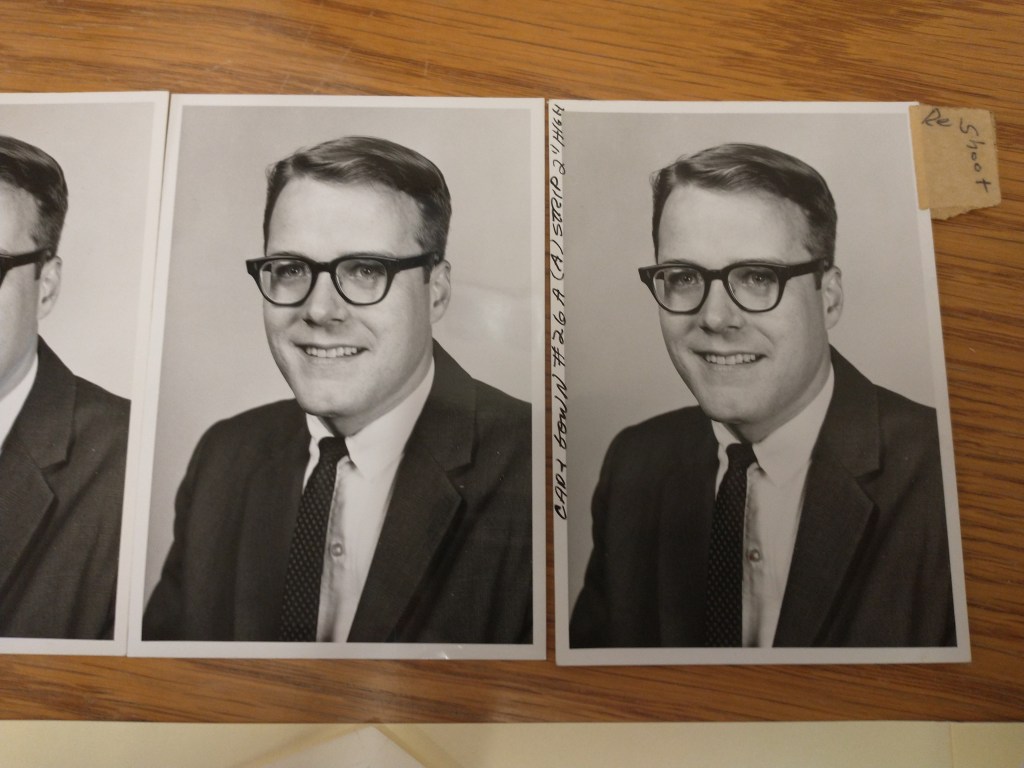
The file was thin but I slowly turned over each sheet reading the contents. There was a faculty data form filled out by my dad, a university photo, a media release to The Winchester Herald-Times and two newspaper articles from The Nashville Tennessean and The Sewanee News.

In 1965, Sewanee didn’t have its own theatre department. It was part of English. Yet dad directed three full-production plays each of the three years he was there. The university was also all male and dad had difficulty casting women’s roles from the sparse selection of faculty and graduate student wives and local workers. He played a part in a movement to make the school coed, which it did in 1969, a year after he left. Later, Theatre and Dance was established as its own department.
When Tennessee Williams died he bequeathed his entire estate and literary works to Sewanee to be made available upon the death of his sister Rose. When she died in 1996, the university received seven million dollars along with the additional millions that would roll in from royalties. Williams is probably the second most-produced playwright in the world—after the English bard. If ever there was a well-endowed university theatre department, Sewanee now is it. Dad would sometimes kick himself for ever leaving.
Jenny arrived back in the alcove walking quickly.
“Okay, I’ve found your dad listed in an old phone book,” she said as she went to a low table in front of another upholstered bench. I moved from the desk to sit next to her and she opened it to a bookmarked page. She scanned down with her finger as she caught her breath.
“It’s right……here,” she said with a final exhalation. I looked and saw Ala Ave after my dad’s name.
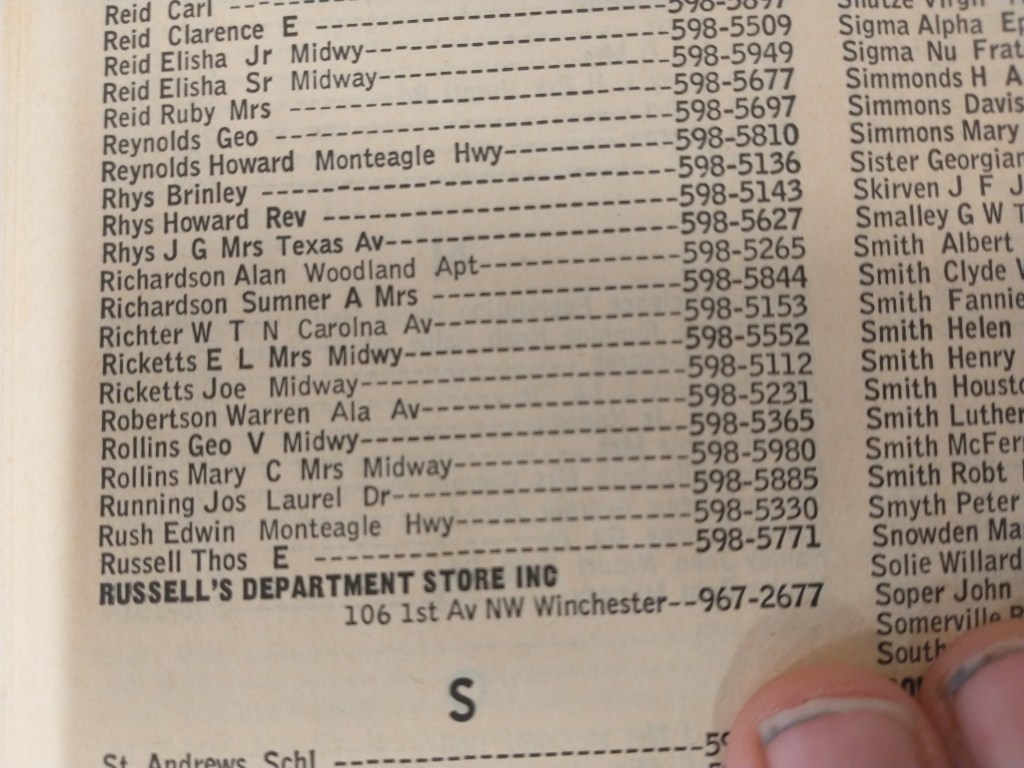
“The names have streets attached with them but no number address. Alabama avenue was actually where the sidewalk is right outside our door.”
“Oh my gosh really!”
“I know, right?” she said.
I was amazed at the coincidence but also suddenly frightened; if there was no street then there was likely no house. Then again, the fact that they were doing away with the street might be the reason the house was moved. Jenny stood and closed the book.
“I think I have an idea where the house may be because the street starts up again where the sidewalk ends.” She continued with some elaborate directions that I had difficulty following.
“You know I have a better idea.” She led me to a back door that looked out over a parking lot.
“Go around this way,” she indicated. “When you come out on the other side of that building you will see it. Let me know what you find.”
The first house I came to had possibilities. Something about the back was familiar. I remembered my father telling me that there was a boogieman who lived in an outside structure, but that structure, a well-house or something wasn’t there. I pondered the front, then turned onto Mitchell Street.
Maybe it wasn’t moved down the same street but to an adjoining one? There was a large three-story house tucked into the woods on the corner, but I decided it was way too big. Across the street was another house, also in some woods, but it was too modern. I walked to the top of the street and there was a demolition site. Maybe it had been torn down?
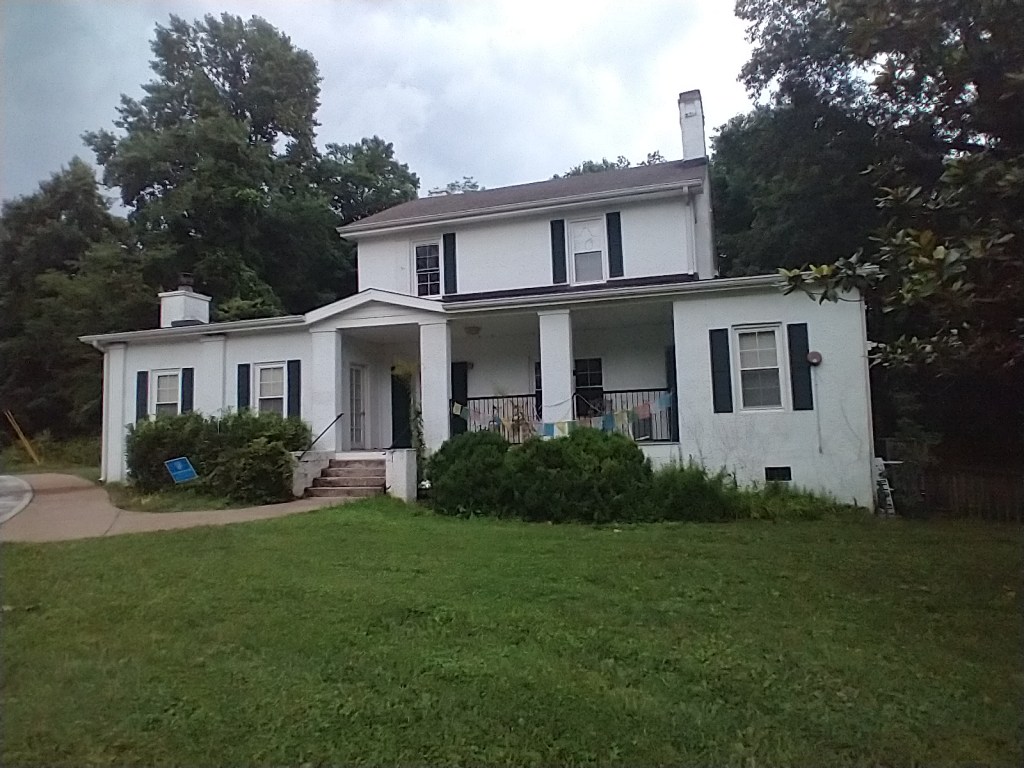
I walked back to Alabama and went along it for what I guessed was more than a thousand feet but none of the houses fit the bill. Returning, I stopped again at the first house. I pondered the front again. The porch was familiar but the house looked too big. There was a beat up sign laying on the stairs that said, “Community Engagement House.” I went to the front door and knocked. No one answered so I tried the door. It was open.
“Hello. Anyone home,” I called out. “Hello,” I said again louder. “Anyone here?” In a distant spot of the house I heard a door close.Emboldened by my memory of living at a university coop and not caring too much who walked around, I entered.
Something about the main living space seemed familiar—the wood floor and wood paneling, but there was nothing definitive. I was three years old after all.
There was a bulletin board. On it was a flyer with the face of a young African American man. Hello my name is….I am your resident advisor for CEH… Okay, this is definitely some sort of University housing.
I peaked my head down a hall that led to a kitchen. Then I turned and saw the stairs. As soon as I stepped onto them I remembered. This was my house! My strongest memory of it was those stairs with a small landing that turned for a few more stairs at the top.
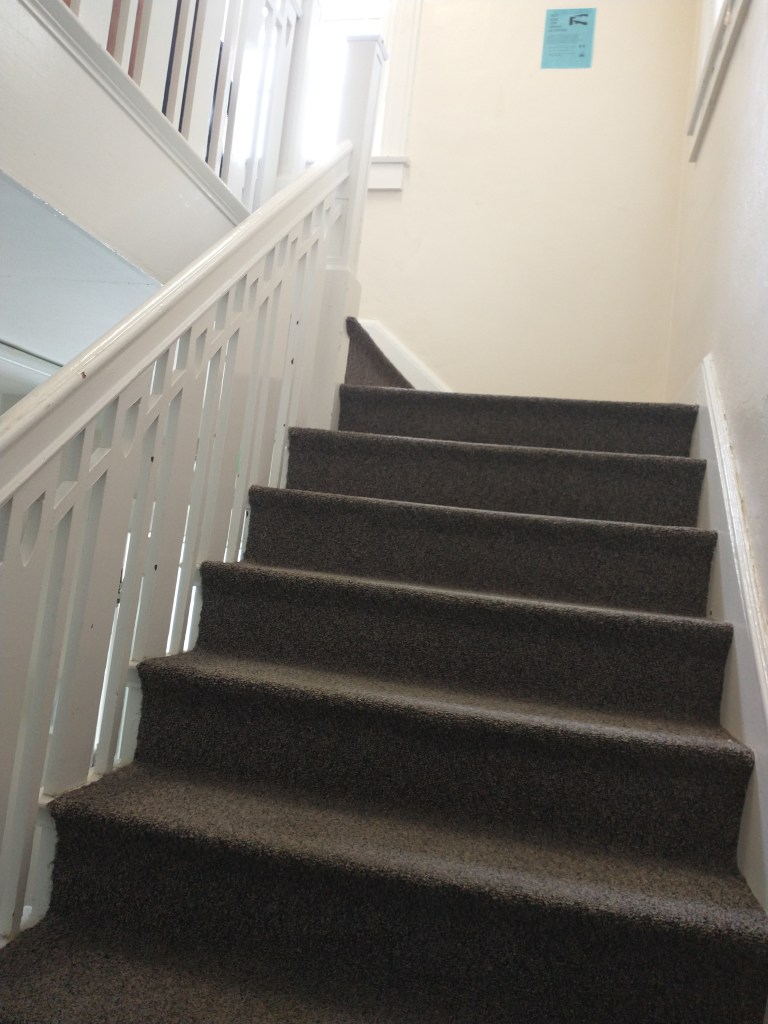
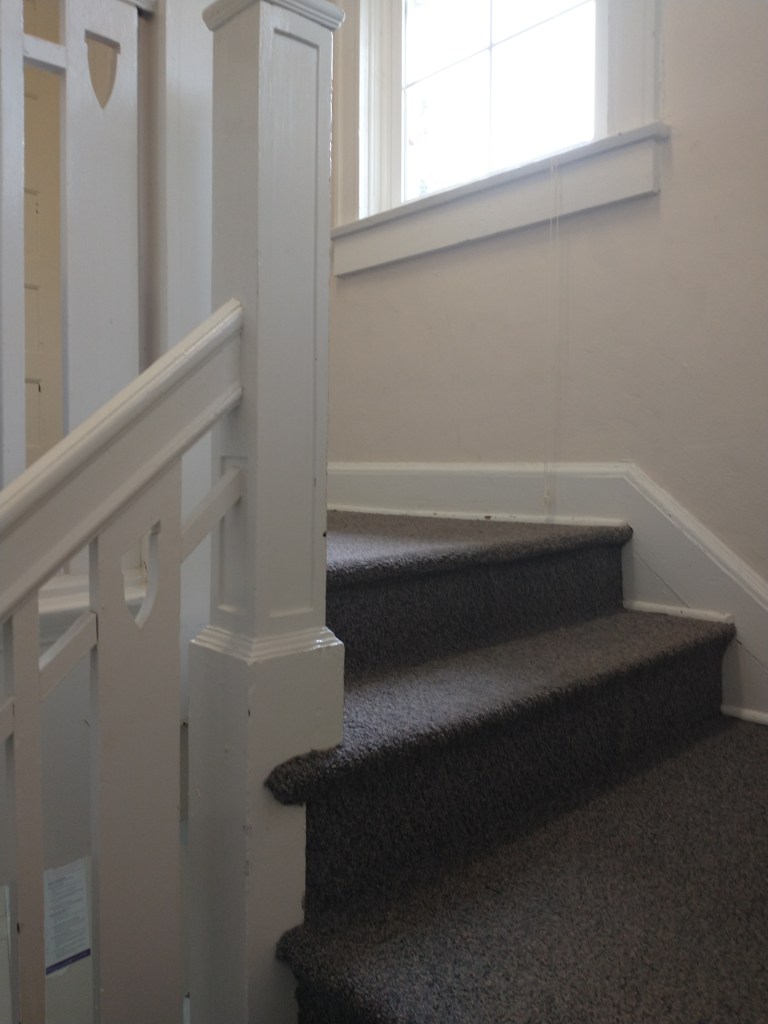
I crept to the top and looked at the door that I believed was my room. There were three other doors up there each with little brass numbers—1,2,3,4. I thought about knocking on the door of my room but then thought better of it.
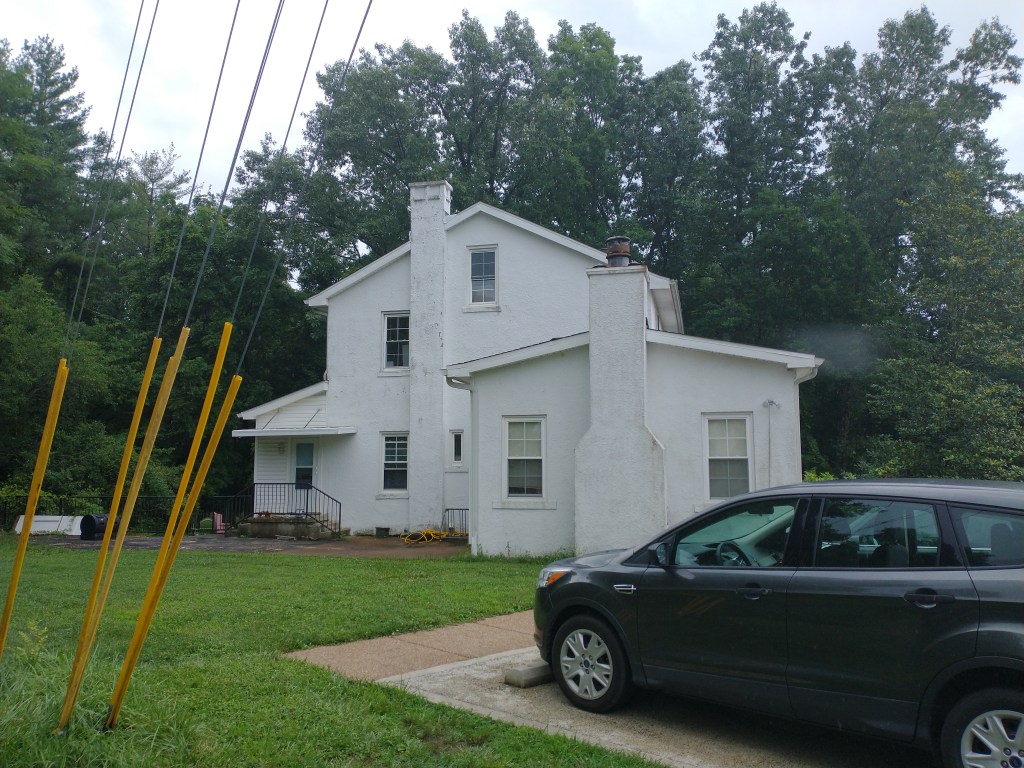
I went back down the stairs quietly. Back outside I made a half circle taking pictures. I then realized why the house hadn’t been more familiar. There had been additions added on. It had just been that central, basic, Salt-box, structure when I lived there.

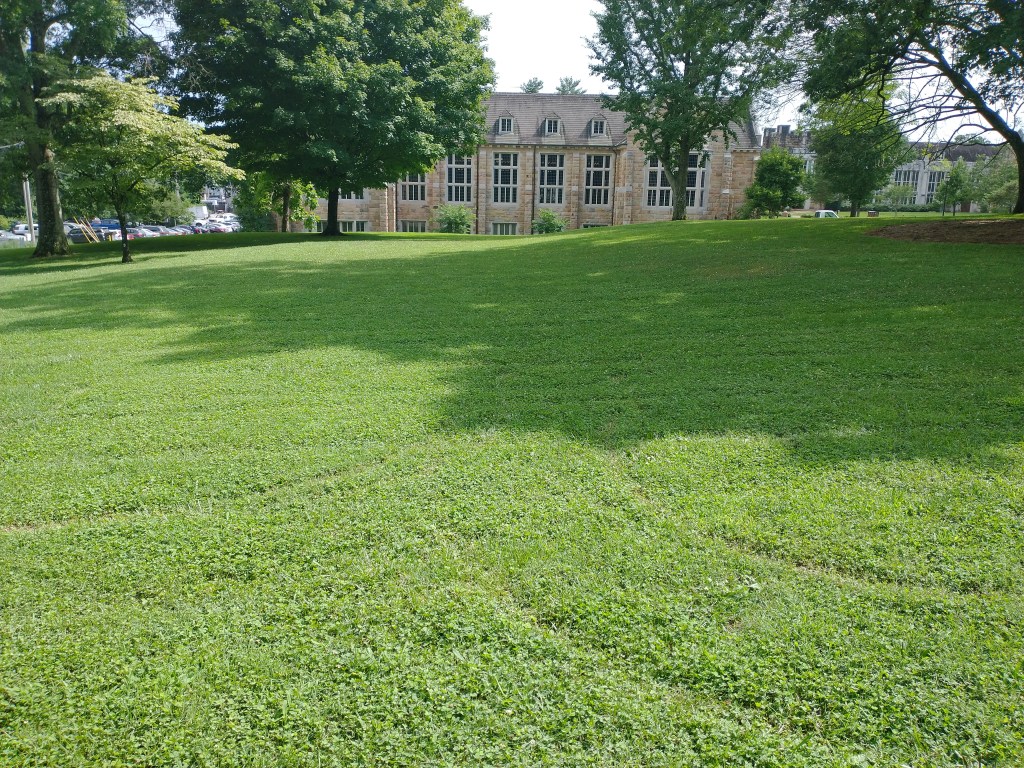
I don’t know the relationship between Jessie Ball duPont and Sewanee. It isn’t easily apparent from the university website or her wikipedia listing. Apparently she was a big philanthropist. However, there are disturbing racist quotes associated with her on the wiki site.
As a University, Sewanee has some heavy lifting to do to deal with its past. Founded by slave holders and leaders of the confederacy, I’m curious how it handles this legacy. The cornerstone for the university was laid just before the beginning of the civil war and then blown up by occupying union forces.
While I was walking on campus, a large percentage of students I saw and some older people, who may have been faculty, were African American. It may have been some sort of summer orientation program for students of color or a true representation of the student body. Either way, representation is key to change and I was impressed.
As I continue to write and focus on race I have become aware of how my very focus on the issue might be viewed as strange by a younger generation, especially being so removed from these places of my past. When I become excited and say, “I saw a black person!” what does that say about my mindframe concerning the South? But honestly, it wasn’t a black person, but very many people of color—perhaps 50%!
I know there are young people today growing up who do not view others through the lens of race. I envy them. I’m still working on that.
 Spotty West Goes East