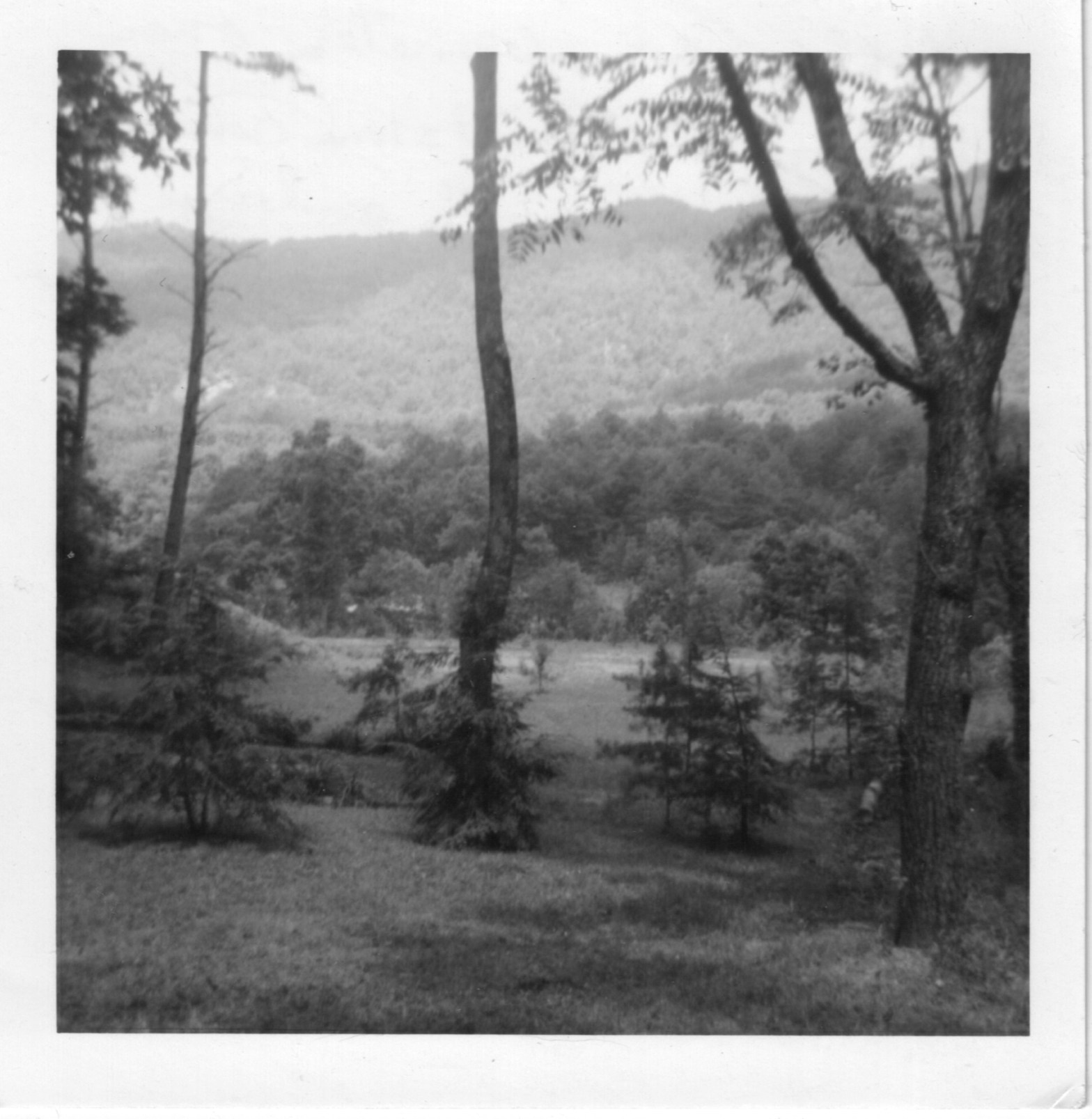
Much of my time these past few weeks was spent thinking about what I want to do on the land in Tennessee. I’ve talked about the cabin idea, but I’m also bouncing around the idea of just pitching a tent whenever I go there. It’s low impact and a hell of a lot easier. I did it a few days last summer borrowing a wildly luxurious 10-person tent of my cousin’s. I guess I need to think more along the lines of “What do I want to get out of this?” If the biggest part is “roughing it” and being close to the land then the most I might do is dig a decent latrine.
Along the low-impact line of thought, if I do build a cabin, concrete would not play a big part in its foundation. I would get some treated wood for a rail foundation or possibly a post and beam. I’ve read a study about treated wood which says it can last a hundred years or more if it is laid on a bed of gravel and has good drainage. You’ve seen the stuff—sort of reddish brown with indentations all over it where, presumably, horrible chemicals are steam-injected or somehow introduced into the lumber. It’s what I used for the foundation of my COVID 2020 summer shed project.
I’m also pondering how to cut, transport, and mill the lumber for a cabin. I don’t want to build a driveway to it. I’d rather the cabin be a walk-in. I’ve even pondered building one on the highest knoll which would have a hell of a view, but would require a ten or fifteen-minute trek on a steep trail that would likely need stairs cut into it.
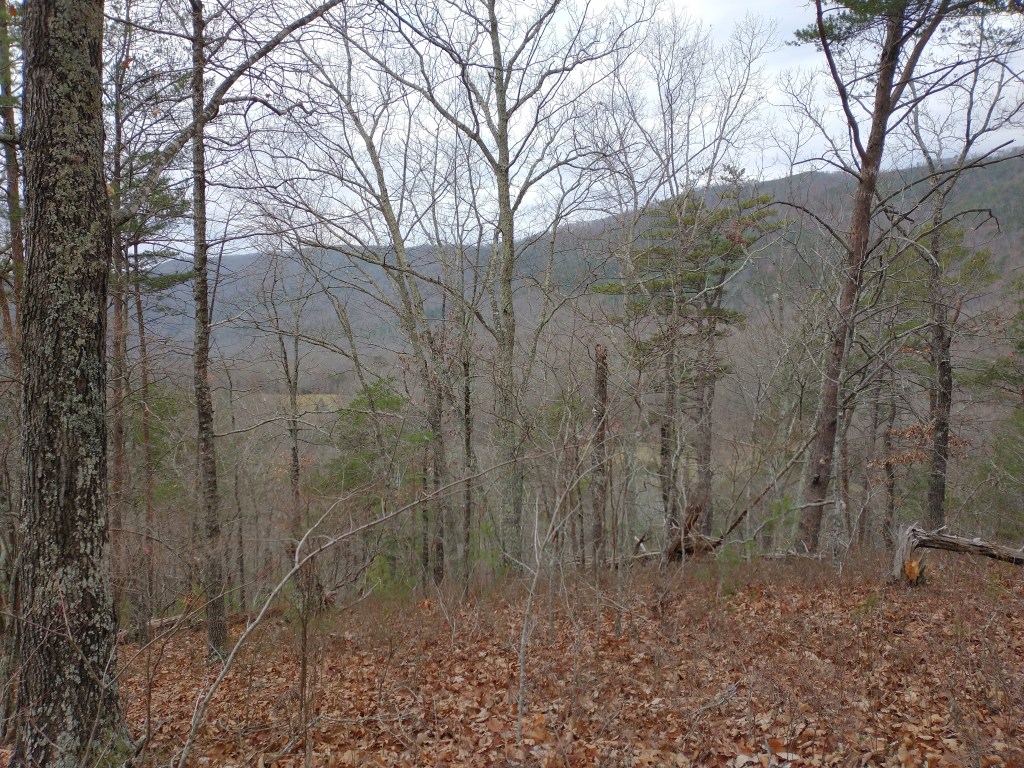
The best spot remains the one near the memorial stones. Still there is the question of how to get the logs out of the forest and onto a trailer to take to a mill. Building a sled to drag them would serve the dual purpose of helping to make the trails more defined. I was also thinking of buying or renting a mule or horse which I could strap with a harness to pull the logs. Would a neighbor allow me to keep this animal on one of their fields? If so, what is the going rate for fielding an animal?
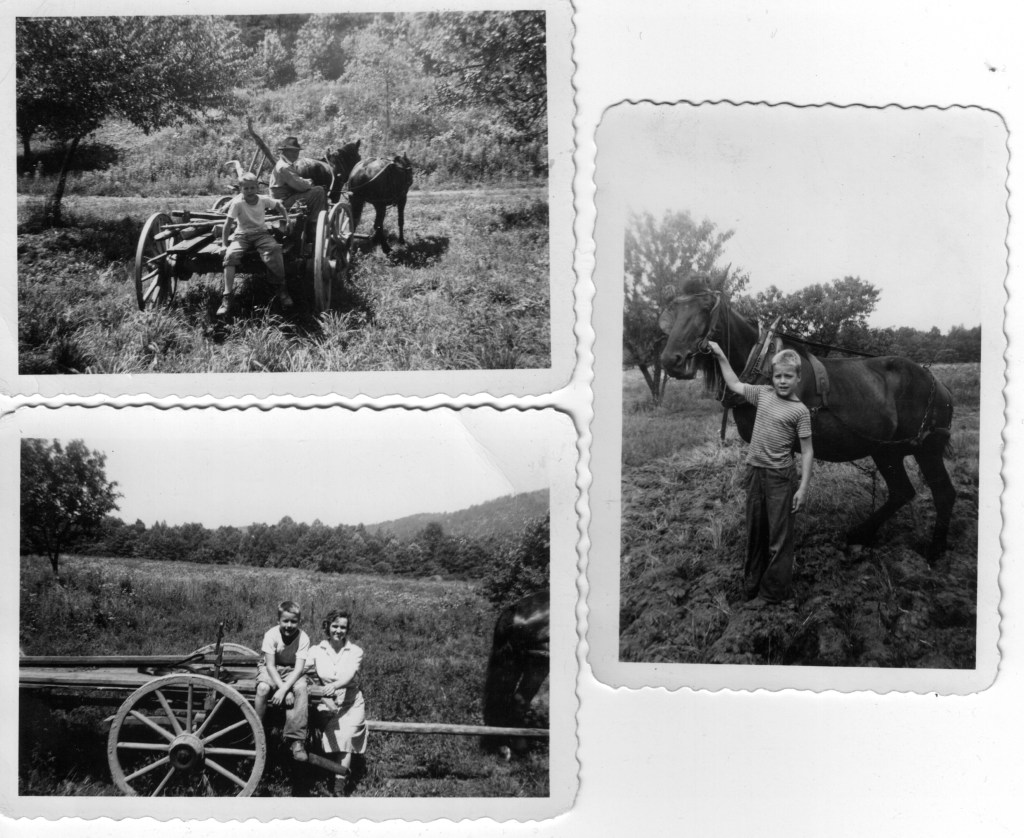
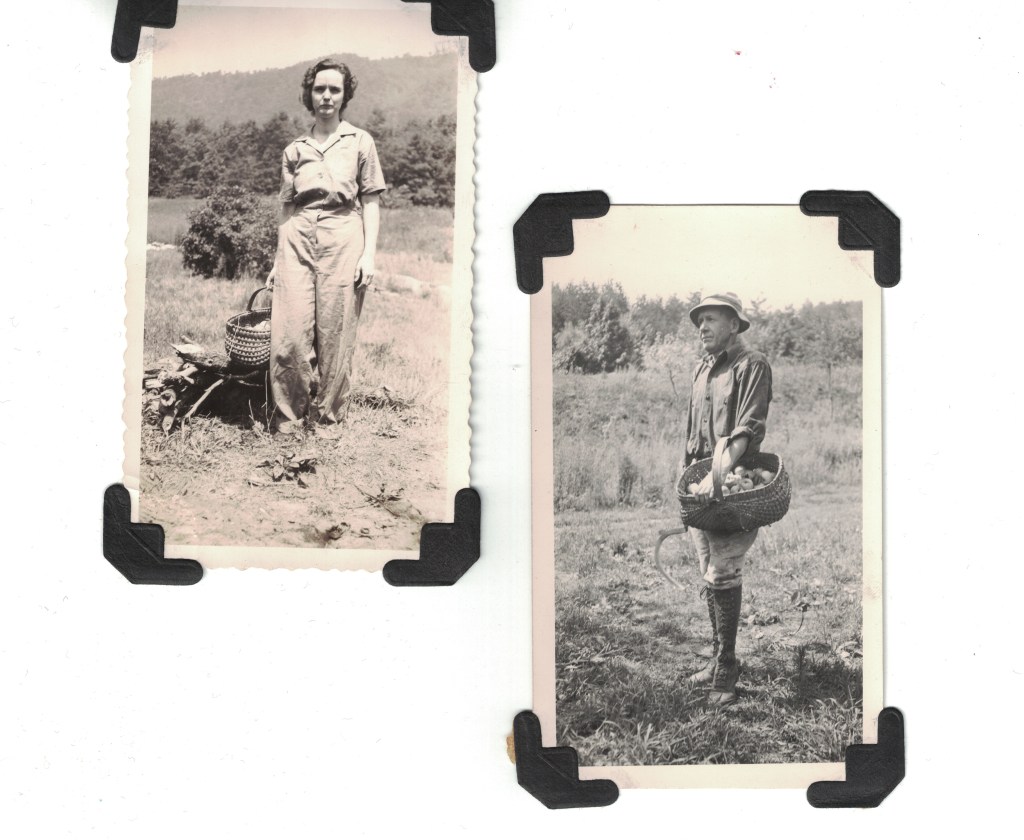
Another bonus to having an animal–donkeys and goats eat poison ivy. (I’ve heard.) Not sure if a mule or horse would. Could a donkey pull a log? I’m thinking some will need to be 12 feet or more for the posts I want to cut. Wet logs are heavy. Could I dry them on the land before moving them?
One neighbor has a wood mill that I might be able to rent. It is the kind where the operator pushes the blade down the log. Stewart’s son-in-law has a fancier one that has a drive that pushes the blade by itself. The advantage of using the neighbors is that it is close, but if I’m going to have to age the wood somewhere, like in a barn for instance, I’ll have to move the wood off site which would make the automated mill the better choice since I’d have to transport the logs a few miles anyway. Lots of questions here.


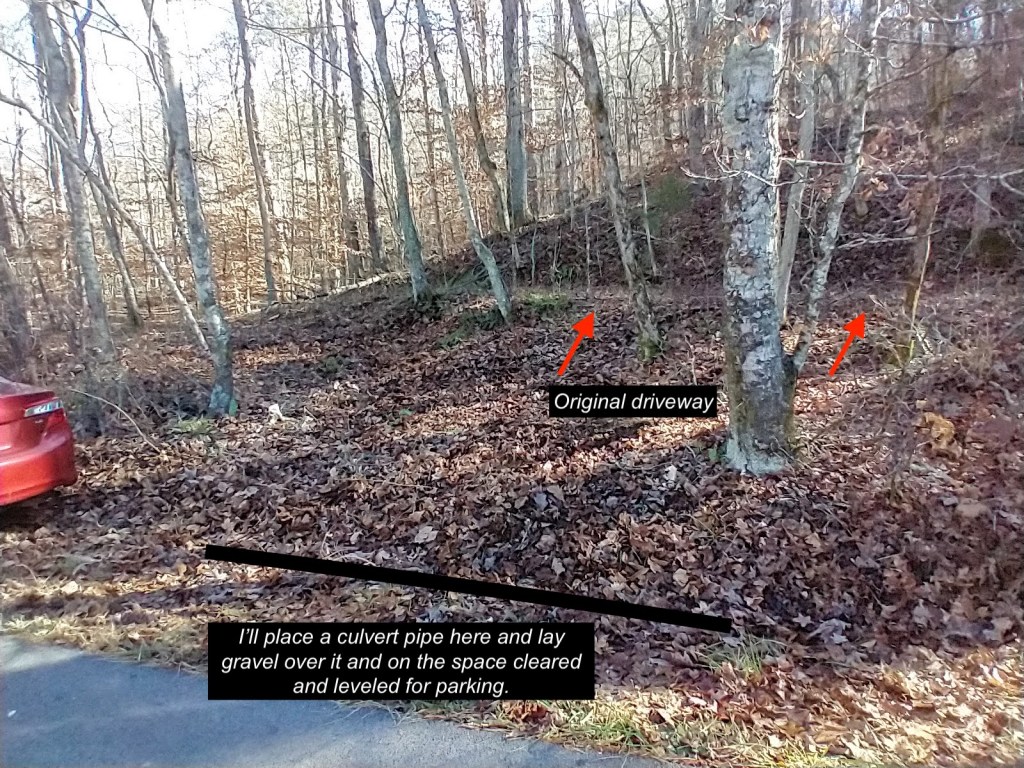
I started clearing a spot for parking during my December trip. I cut some small trees, pulled up saplings and shoveled dirt to start to even out a place. I was desperate to get a little work done before my plane was to leave at two o’clock from Knoxville. I arrived early that morning and in the few hours I was there two neighbors came by and generously offered to clear the spot for me with their machines.
Tobi stopped to talk to me in his big red truck that seemed to have the pulse of an underground Morlock factory thrumming beneath the hood. I raised my voice a few decibels to tell him who I was and we decided to exchange phone numbers. He invited me to get in the truck to go back to his place to get his phone.
“I can’t remember the number,” he said with a happy demeaner. “I’ve been hit in the head so many times I can’t remember anything.”
He and his wife Jean bought land about five years ago after he retired from the demolition business in Ohio. Their land is across from mine at the east end. They had a prefabricated house put up behind a knob where it isn’t visible from the road.
When Tobi brought me back he parked his truck and got out so I could show him the parking spot I was working on.
“Five minutes on my Bobcat, I can do what will take you an hour to do by hand,” Tobi told me.
I think he meant he could do in five minutes what would take me five hours to do by hand but he probably didn’t want to sound too boastful. I asked him if he’d like to see where I was thinking of putting a cabin.
“I’d like to put a little wooden bridge here,” I said as we walked through a dip.
“Oh, right there is where there was a driveway before,” Tobi said, pointing to a long, gradual ramp that went below an incline we were about to walk up.
I’d never seen it before, but he was right. It takes practice to look at wooded land and see the marks of former development. When we came back we walked to where this drive had started from the road. I could see that it would take more shoveling and tree-cutting than the place I’d begun working on. Studying it more I could see that it was originally a half-circle drive that went through the woods and came out in a different spot. It must have been made for visits to the memorials and to bring in the heavy granite slabs in the first place. Sixty years had turned it back mostly to woods.

While we were standing there talking, another person, Steven, my eastern neighbor on the same side of the road pulled up in another big truck. They are popular here.
I’d met Steven when I was finding the corner boundary marker with the forester Jeff. A local guy, both military men–Jeff a war veteran and Steven a careerist–they talked about how the local sheriff’s department had come mostly from the high school football squad. Standing there in the cold with these dudes was more masculinity than I get in my normal life with the exception of the occasional proving-ground scenarios that arrive at the climbing gym—just as often with women as men. Not that these guys were trying to prove anything.
“Mark out where you want the parking space and I’ll come by with my tractor and clear the area,” Steven said.
“Tobi was just offering the same thing,” I told him. “Thank you but I think I’m going to wait on making any decisions. I want to look at the space more first.”
There were several reasons why, beyond readiness, that I didn’t take these neighbors up on their offers. I had asked Tobi what he would charge and he said he didn’t hire himself out anymore.
“I just likes doing things for people.” I’m a bit like that myself sometimes so I could accept that, but I’m also wary.
Tobi had already asked me if it would be okay if he hunted deer on my land and I’d told him I didn’t want that. While Steven didn’t ask, he is a hunter on his own land and has a tree stand on one of our common boundaries. I would be surprised if he didn’t take a shot at a deer that happened by. I can’t help but think that a favor from either of these guys might make them feel I owed them. Anyway, I’d be happy to trade for their services I just want to clarify what that trade would be before we do it.
It could be that I’m making things unnecessarily complicated. I tend to do that. If anyone could change the quiet country life into the noisy inner workings of an overthinking brain, that would be me.

———————————–
Over a month ago I received an email from a group in my union that wants to take up the issue of racism and have an open discussion with teachers. They recognize that we, as teachers, must confront our own personal bias on a daily basis to be effective educators. Teaching brings out every skeleton you have in your closet and if you don’t want to deal with it then it’s better to slam that door and go into some other profession.
Anyway, this union group put out some videos, papers and a book to delve into as points of discussion for our first meeting. They were giving away copies of a book by Ibram X. Kendi, Stamped From the Beginning, The Definitive History of Racist Ideas in America—a daunting title for sure given the nature of this emotionally frail, white male. Nevertheless, I signed up to get one with an interest in being part of the discussion. The 511 page book (590 with index and bibliography) came to my school mailbox just a few days before the first meeting. Knowing there was no way I could read the whole thing by then I just flipped through different sections reading areas that interested me.
Having lived in the Bay Area for 31 years (and worked 20 in Berkeley and Oakland) I turned the pages like one might look around a corner into a dark alley anticipating that the woke police might be waiting to hit me over the head.
When I read the following passage–the italics are mine–I was getting ready to slam the book and run:
During America’s first century, racist theological ideas were absolutely critical to sanctioning the growth of American slavery and making it acceptable to the Christian churches. These ideas were featured in the sermons of early America’s greatest preacher and intellectual, Boston Divine Cotton Mather…Cotton Mather was the namesake and grandson of two of New England’s intellectual trailblazers…
Greatest preacher! Intellectual trailblazers!!! So that is how he’s going to position things? I didn’t mind that he was calling out the church. I already knew it was the glue that kept racist ideology together for most Americans, but giving racists the title of intellectual trailblazers! Okay, now I know where this guy is going!
I went about flipping through the book looking for how he was going to dismantle every piece of history. My page turning became equivalent to stomping down a hall despite the fact that this author’s intellectual credentials make me look like a Kindergartner. (I know nothing about Cotton Mather and only the basics of early American history).
I was prepared for him to call Dr. King an assimilationist and then I really was going to throw the book across the room, but I calmed down and the more I read the more I saw that he really wasn’t trying to bludgeon anyone. I started thinking, maybe I am an assimilationist. I certainly know a lot about trying to fit in. Is that such a bad thing?
Well, yes and I won’t go into all the somersaults I’ve gone through over the years walking a tightrope between my racists and assimilationist tendencies, which he groups together, and anti-racists beliefs on the other side. It’s pretty clear my head has been messed with growing up in Tennessee, Florida, Texas, and Mississippi. And BTW… Jeez I’m touchy.
Wary, but interested, I decided I would go to the first zoom meeting of the discussion group. Then life happened. I had a very difficult week in which I felt suddenly at war with a coworker who I normally don’t have much to do with. Leading up to the meeting I was in a very I don’t give two-fucks mood. Needless to say this was not the headspace I wanted going into a meeting to discuss racism. So I skipped it and went online to look at more cabin-building videos.
Yesterday morning I read about the controversy with Whoopi Goldberg. You’ve probably read all you want about this. I’ll just say that one of the more salient comments I saw was that if you can’t have this type of discussion on The View maybe it should be named something else.
Another thing that it brought up was what I read years ago which has stuck with me. That is: race is a human construction. It’s just skin color. Race doesn’t actually exist. Our real differences are cultural. Race is just a convenient way to lump everyone into the same group. It was a convenient way for Nazis to kill whoever they wanted.
 Spotty West Goes East