
I thought there might be bodies buried on my land, burial mounds made by the ancient people who once hunted and farmed around here in Eastern Tennessee. Or, several years ago when I saw one for the first time—before I realized there were dozens of these rock mounds—I thought it might be a cache of buried treasures. It was the kind of fanciful thinking that happens before you’ve done any investigation or given something a deeper thought.
As recently as last week, I was still perplexed—so much so that I decided to dig into one. I was looking for usable rocks anyway. The mounds provided concentrated pickings for the step-sized flat stones I was looking to build stairs with.
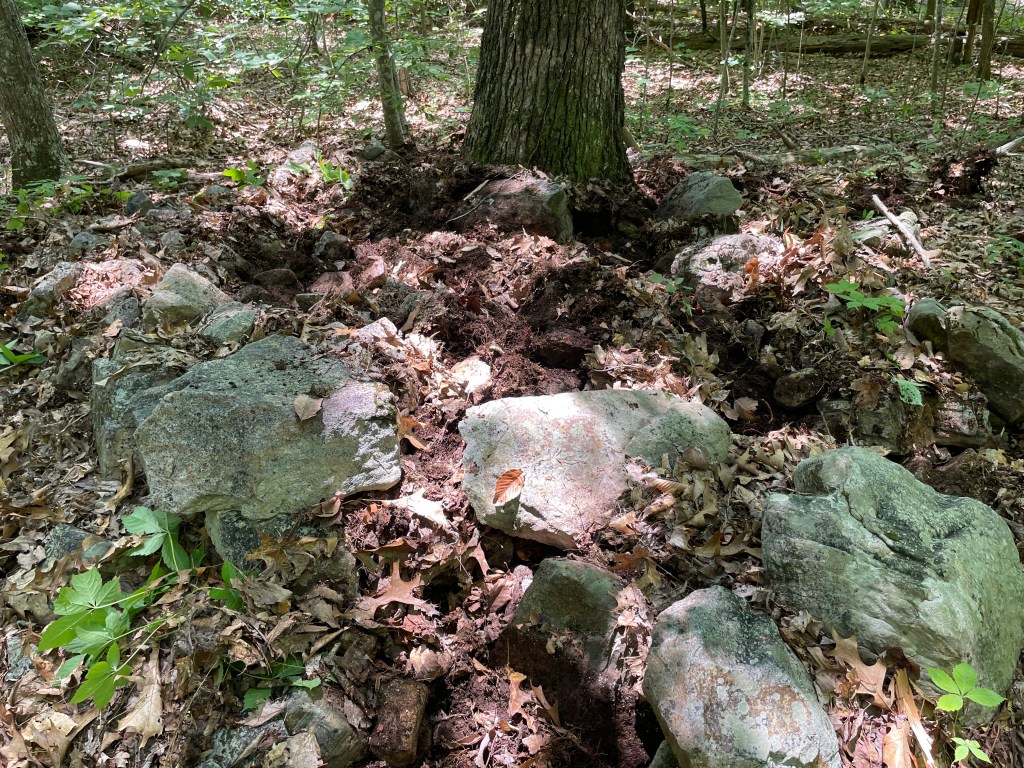
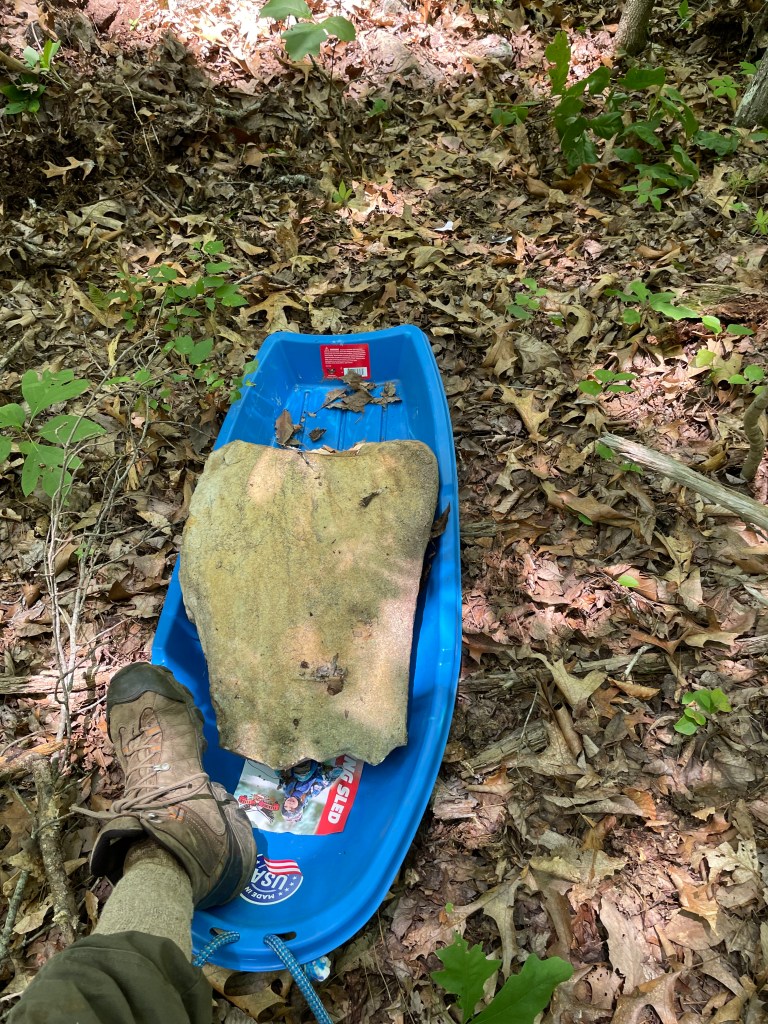
Most of the circular mounds are seven to ten feet across. All are on the rhombus-shaped property, not on the other side of the road where I may build a cabin.
I’m not sure what my plan was when I picked a mound and started to dig through fallen sticks and leaves. A few inches down this turned into a raft of loamy soil held together by thousands of roots and fine vines. I could pull away big chunks of the raft and throw them to the side revealing dozens of small, dark caves formed by the pile of rocks underneath.
Before I cleared the whole top off the mound it became apparent to me that if I dug through the rocks I would only find more rocks until eventually I hit the ground. The prospect was not entirely uninteresting, but for the purpose of finding flat stones for stairs it would be a lot of work when I could simply go about, as I had been, to other mounds and simply pull the best ones from the sides or tops without doing a lot of digging.
My reasoning about why the mounds might be here was quickly being honed by the hard work it was taking to get to the truth. Perhaps some sort of work-avoidance-bias was at play, but my back was beginning to protest the mind’s fanciful sparks in favor of its more logical leanings.
Joppa Mountain sits directly behind this land. It is the southern most subrange of the Clinch Mountains that run 150 miles northeast into Virginia. Fifty feet away from where I’d parked Stewart’s truck on the pitted, rough gravel drive between my property and my neighbor’s the slope bends dramatically upward. My best guess is that at some point in ancient time these piles of rubble were enormous boulders that broke loose from the top and came bouncing down the mountain bowling over trees and anything else in their path.
Then nature did its work. Thousands of winters and summers, rainstorms, leaf storms, duff and ice, trees and vines all found purchase in each crack and cranny slowly cleaving part from part. What was once one became many.
The logic behind this is that there are massive, picnic table-sized boulders yet untouched which sit as neighbors among the mounds. Their smooth tops don’t catch the leaf litter and twigs so easily as the mounds. Are these newer boulders or ones made of tougher material that is not so easily broken down? Did a single geologic event send all these boulders flying at the same time or has the mountain been sending them down on regular visits over thousands of years? For that matter, what proof is there that any of them tumbled from high? Couldn’t it be that they rose through the ground where they are or that the ground receded to expose them? Farther away, across the road, there are broken rocks dispersed throughout the soil but none of these big boulders or heaps of rocks. That, to me, lends to the theory that the boulders tumbled from the mountain top.
I never thought I was very interested in geology but in using the land and in my small efforts to change it I find I want to know more of the secrets it holds.
It’s very likely there are no human remains here. It might be easy enough for me to find out about the burial traditions of the ancient people who occupied this land and clarify what to look for. It is less likely that there are buried treasures unless you include all the things I don’t know about this place. That’s a treasure of a different sort.
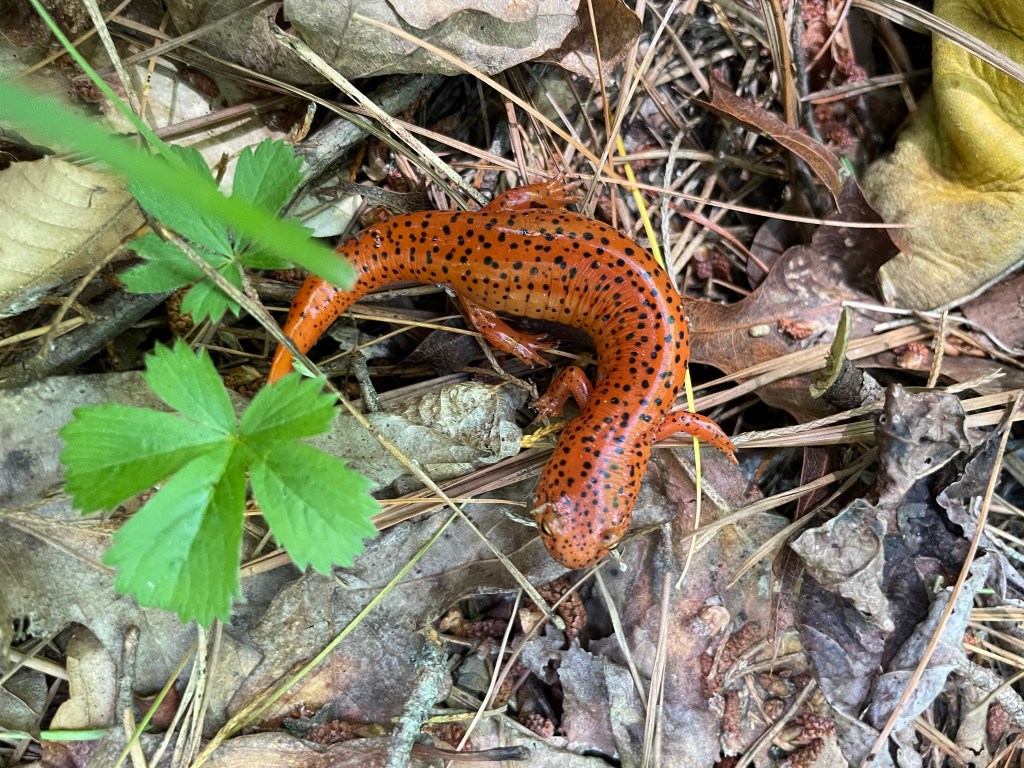
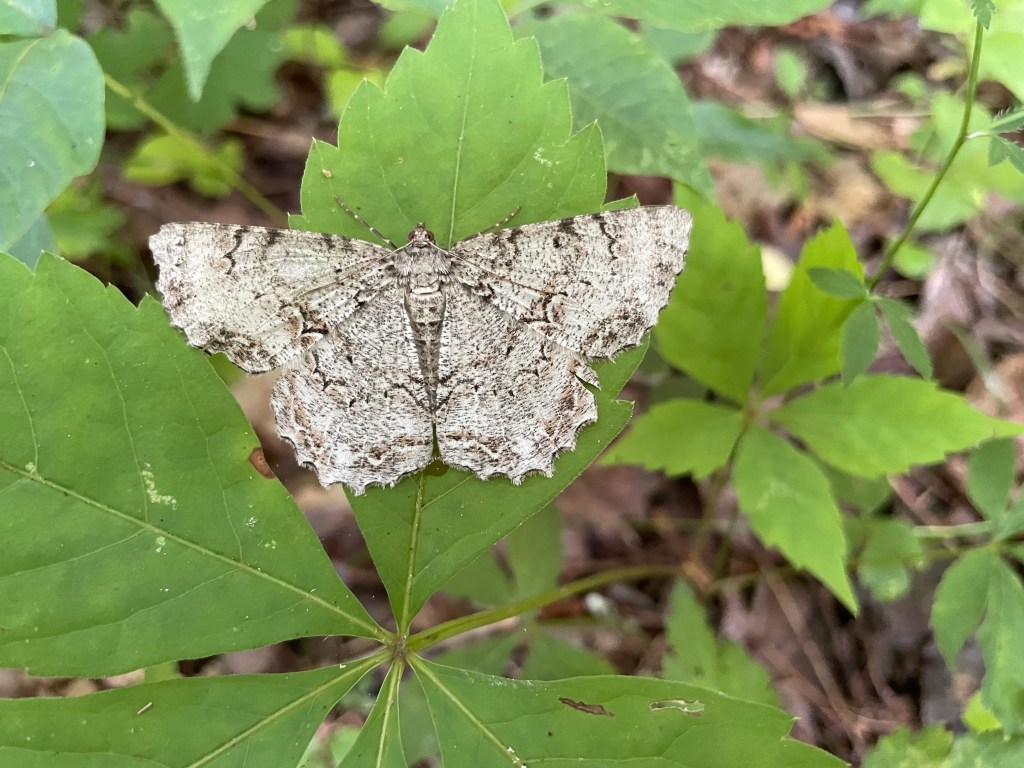
Here are some photos of recently spotted flora and fauna:
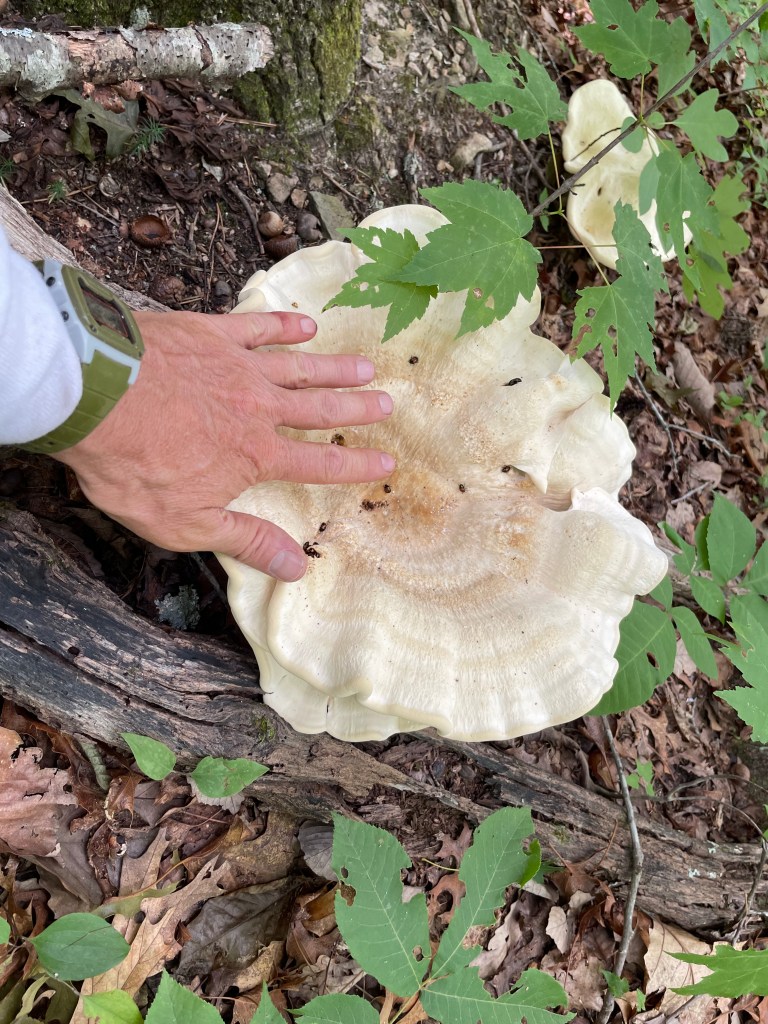
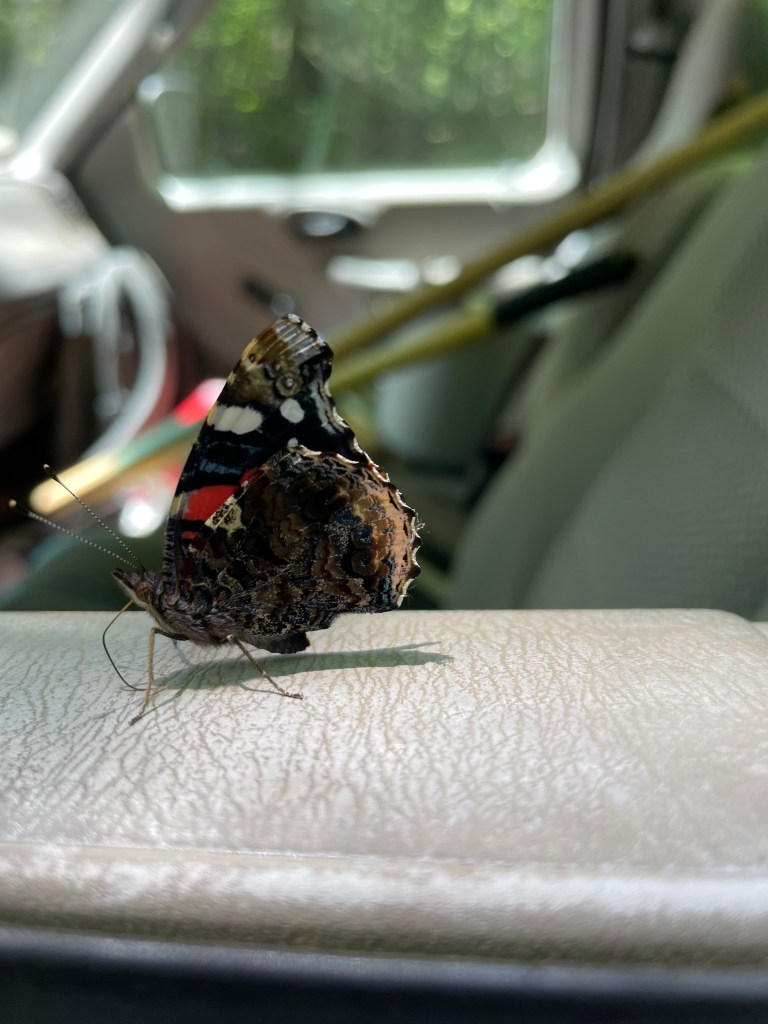

——————————
I made fried okra last night. I saw these beautiful baskets of fresh okra at a farm stand and I thought I’d give another go at frying some up. Last summer I wasn’t so successful. Growing up, fried okra was a fairly regular thing at my house and almost a staple at my grandmother Knott’s.
My mother used to say she couldn’t boil water when she met my dad. I wonder if the thing that inspired her to become a good cook was the same thing that makes me fry okra when I come back to Tennessee. It’s a way to connect to home.
I don’t seek out okra in California. True, it’s not as prevalent in grocery stores, but you can find it in the bay area without looking too hard. I suppose surrounded by the sights and sounds of my roots I want to plant myself deeper here. Otherwise it doesn’t come up much. Around winter holidays I crave the family’s cornbread sage dressing, but I have failed in my two attempts to make it.
I have a scrawled recipe of the dressing folded over on an eight by eleven piece of scrap paper in my copy of Joy of Cooking. It’s the notes I took from my mom over the phone twenty-five years ago when I was living in a studio apartment in the Tenderloin. She would have been in Sevierville then—30 miles south of where I am now, close to the place where Dolly Parton grew up.
“I don’t have a recipe,” she said. “I just do it.”
“Well can you explain it to me?” I asked.
“It’s all about the cornbread,” she said.
But it wasn’t. I can successfully make the family’s hard-crust cornbread but I can’t seem to work out the dressing from the ingredients and directions she gave me.
I don’t have a family recipe for fried okra but I knew it was nothing complicated. Out on the land yesterday I took a break from trail blazing to look some up. I sat on a cut log. Wifi is working better out there, but it’s slow. Between each stage of data loading I listened to the sounds of the midday forest—an absence of chirring, a breeze stirring in the tree tops, a bird call, something scratching in the leaves, silence. It hasn’t been as hot here as the forecast warned, but the kind of work I’m doing is still wearing me out.
A grid of pictures with the recipe names and number of ingredients came up. I picked the one that had the fewest: egg, corn meal, wheat flour, salt, cayenne.
On the way home I was too tired to stop at the store and, anyway, I didn’t want to buy flour if there was some in the cabinets. It turned out there was corn meal and flour—buttermilk corn meal, in fact. I already had the eggs.
I substituted black pepper for cayenne and mixed the dry ingredients (1 ¼ corn meal to ¼ flour in a paper grocery bag), cut up the okra, soaked it in egg for ten minutes and then shook it up together. It came out great. The key was not being chintzy on the frying oil. There needs to be at least a quarter inch in the pan. That’s how I failed last time. I probably also tried to fry too much at at time. It’s better to do two batches. Oh, and if you like it closer to brown than golden like me, fry it a bit longer than called for.
 Spotty West Goes East