July 1, 2024

I was very curious to look up the mouth parts of the horse fly when I came back from the land yesterday. This little animal has been high on my list of annoyances and for this trip at least has replaced ticks, poison ivy, snakes, and bears (in that order) as my number one fear. (I’m adding red bugs, aka chiggers, into the third position after recent dermal outbreaks that I mistakenly thought were errant spots of poison ivy—of which there are some of those too.)  

I debate whether to even put bears on the list. I only do because there is a moment’s jolt of adrenaline when I hear a footstep in the forest. For the most part I’d enjoy seeing one again—as long as it isn’t a frequent occurrence. My fear has been more acute in California when I’ve camped in a zipped up tent and don’t have a ready means of escape and easy visuals of what’s coming.

Until this trip, horseflies have barely been on my radar. It could be that this season had a high birth rate or perhaps it has something to do with my behavior. I’m sweating profusely and largely staying in the same place building stairs out of heavy rocks on the steep part of the main trail. The horseflies, along with regular flys, seem to be attracted to my sweat. But whereas regular flies lovingly mop up the salty liquid right in front of me—like a restaurant worker cleaning a table— horseflies, generally speaking, speed around attempting to find a landing place outside of my eyesight.

Horseflies aren’t interested in your sweat or, as it turns out, your flesh—despite how it might feel. I had always assumed that they enjoyed chewing up a chunk of meat like a Texas oilman and that their mouth parts looked something like a grabbing claw. It turns out, they are actually cutting a hole to slurp up your blood not taking a chunk out. 

To give a clearer visual they could be renamed Edwina Scissors Mouth (only the females do this). From what I understand, they have at least three sword-like blades. One is serrated and another, sharp and thin, is used to pry open the hole made in your flesh by the first. These appear saber-like while a third, double-edged and symmetrical like Excalibur, is plunged in the widened hole and has a channel in the center which allows the injurious insect to draw your blood into its body. 

I don’t understand, evolutionarily, why horseflies are as loud as those annoying little motorcycles that seem to be so popular today with grown men who ride around with their knees up around their ears. It doesn’t make sense why the horsefly wants to give their victims a heads up. Perhaps with their harassment the mammalian body produces some yummy, high-energy, fear-induced chemical that is released into the blood stream and gives one’s life juice that extra kick these flying daggers are looking for.

—————

I thought it was a swarm of bees like the ones high in the flowering pepper tree in my backyard in California— loud but mostly invisible for the leaves. I kept passing the sound just off the main trail without bothering to look. The second day and perhaps the fourth time passing I stopped to really hone in. It wasn’t bees but flies and they weren’t high in the trees but four feet away, just above the ground.

My heart leapt into my throat. If I didn’t say it out loud, it was loud in my brain, Oh, a new-born, baby fawn! 

I immediately wanted to reach out and pull its little body into mine, kissing every white spot on its small back and every inch of fur between the big wet eyes and black nose. 

This feeling was made more acute having, coincidentally, just moments before received a video on my phone of my housemate’s dog Sasha who I miss terribly and who we often call bat-eared, fawn-bodied, kangaroo. 

The phone, buried in a side pocket along my leg had begun playing music. I retrieved it and looked at the screen. It was one of those auto-generated, Google collages of personal photos soaked in heartstring-pulling-music.

I don’t know how these videos happen—when or why. They just appear at random. They often hit an emotional home run but sometimes stitch you together with a person you barely know or painfully remind you of a dead romance. 

This was one of the home runs. It was all Sasha photos fading in and out, appearing and melting away along with my heart. 

Of course I didn’t grab up the fawn which would have been a terrible violation of nature akin to snatching a kid off the street. No doubt its mother was somewhere about. It was curled into itself, eyes open but why wasn’t it moving? Were all the flies there because it was nearing death? 

I inched closer and it startled. 

I began to coo to it, “Hello beautiful baby.”

I crouched down and took pictures. When I rose to back away it made a panicked cry and with difficulty stood. 

I cooed again, “It’s okay baby. It’s okay.” But I couldn’t entreat it to stay. It began to walk away slowly on wobbly legs. I felt bad for disturbing it. 

I watched the new-born creep between the trees navigating the rocks and uneven ground with unsteady footing. In about forty feet it disappeared in the dense trees and brush and I turned back to work. I checked a few minutes later and saw it pass in an open space twice as far as it had been and still moving steadily onward. 

I was worried. I called Stewart and asked him if it would be okay. Would the mother be able to find the baby? He assured me that the mother could smell her child. Later, another woodsman confirmed that they will call to each other and that in fact, any female mamma deer would come to the babies aid. 

Thinking back to the day before, something strange now made sense. I’d been walking on the main trail from the shed and I saw the large white butt of a deer leaping away from me and then making a noise that I can only describe as a sound like a rope being pulled violently through a wooden hole. 

It was a sound I’d never heard from a deer and it made me want to follow it to find out more. I left the main trail onto the one that goes to the memorial stones. I moved carefully between the overgrowth I haven’t had time to cut back.

Intermittently I heard the sound repeated , “Vrip, Vrip”, moving higher up the knob. I saw the deer flash between trees. The sound kept rising but I had no interest in following it into the steep bramble. I turned around, got back on the trail and passed the spot where I’d find the baby the next day — the spot where I think the mama was trying to lead me away from.

I’m guessing the fawn was born here and that the interest from the flies was in the birthing fluids which at the very least, probably made a nice coating on the babies fur. 

——————

In the course of my discovery about this land, I end up doing a lot of theorizing. Learning is changing one’s mind when more information comes along and I’m rethinking my thoughts on those piles of stones. 

A couple of friendly blog readers reintroduced the idea that these piles may have been made by people to farm the land. I’d dismissed that early on in my theorizing with the knowledge that this land was not good for farming. There are few dry weather water sources and almost no level surfaces. But whose to say the rocks weren’t piled up to make walking/hunting areas easier to navigate or to stockpile stones for future wall building or other construction projects? 

Now when I think about the massive boulders being torn apart by age and weather, I look at the piles and wonder why they don’t fit more like puzzle pieces instead of being stacked…and wouldn’t I see more examples of boulders with a central core and shucked off pieces all around it? No, I think these piles of rocks were put there by humans—at the very least to avoid all the ankle twisting that they can cause. But when and by who? 

A reader sent me this link from a reddit conversation on rock piles:

—————

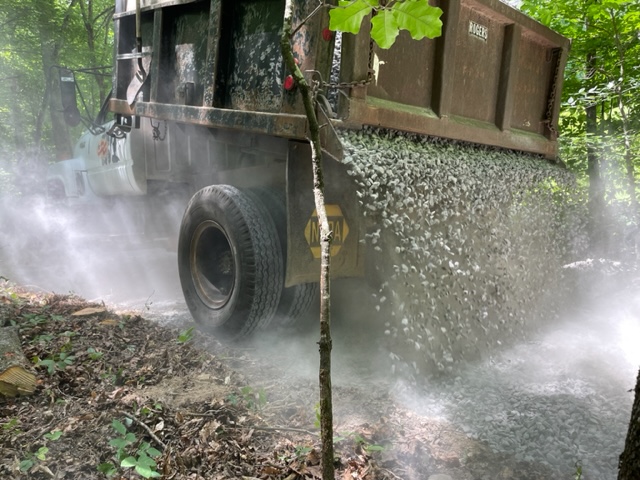
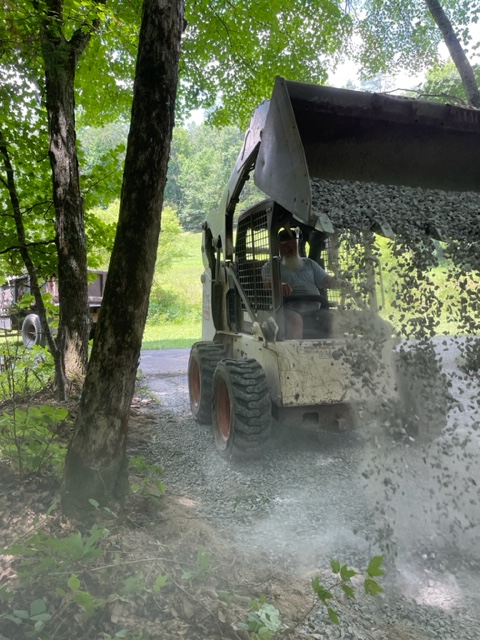
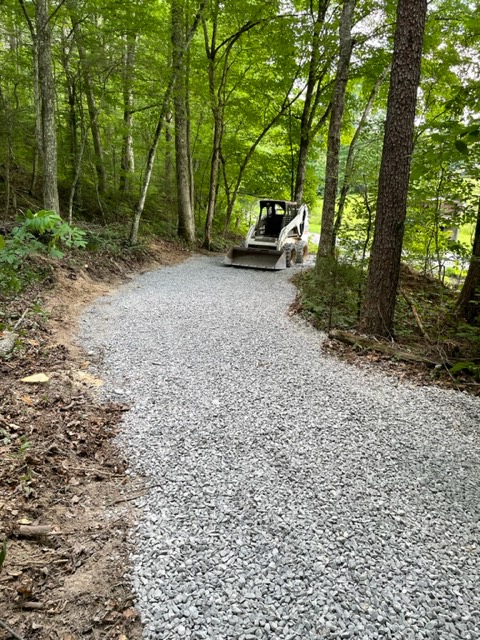
Here are some photos of the work progress that’s been made so far.

The driveway is in thanks to a great recommendation for Jesse’s Lawn Service and Landscaping, Bobcat and Excavating. Watching someone good at using these machines it’s easy to see how the idea of transformers came about. Machine and person become one.
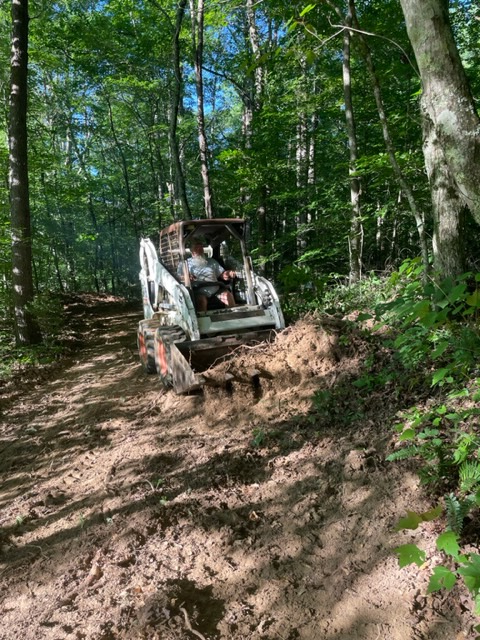
Jesse jumping down from the steel Bobcat cage which has saved him from falling trees in the past.
Driveway done.

I’ve upped the level of maintenance on the main trail and taken the hoe to it. I’ve debated getting a heavy duty weed wacker like the ones used by professional landscapers. I lived for five years in my house in Concord before I used the dishwasher. Now I don’t wash anything by hand that will fit. Maybe I’ll return to the slower way when I retire. Will I hoe these trails for five or ten years and then submit? Right now I like the quiet work and don’t want the intrusion, expense or environmental cost of more machines.

Stewart let me borrow his truck for a second load of rock for the stairs I’m putting in. This time I had help from cousin Parker, Linda’s high school age grandson. Moving and seating these rocks has been by far the most strenuous work I’ve done. I’ll show the progress of stairs on my next post.

I’m not just moving rock. I’m also attempting to transplant some Christmas Fern and Cedar saplings. We’ll see if they make the transition. Summer may not be the best time for moving plants.

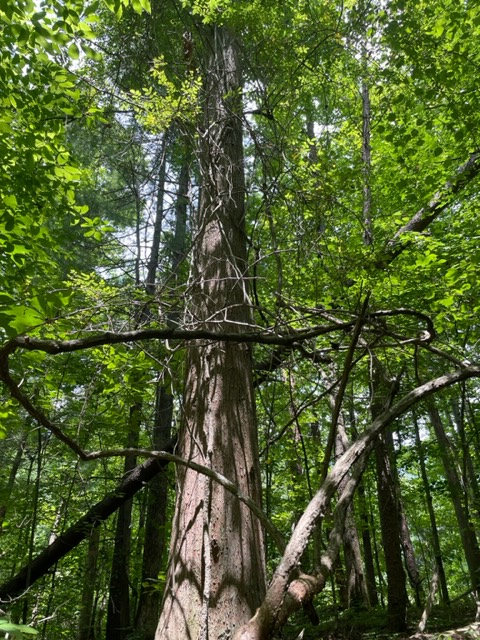
Sometimes I find trees along the trail that seem to need a helping hand. This one was overrun by multiflora rose which can produce a vine the size of your arm. This is a before and after shot. I have no idea how much freeing a tree of vines benefits it, but it stands to reason that it does.
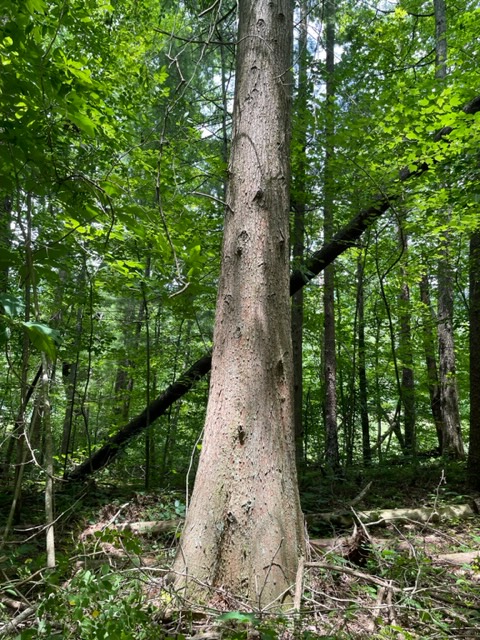
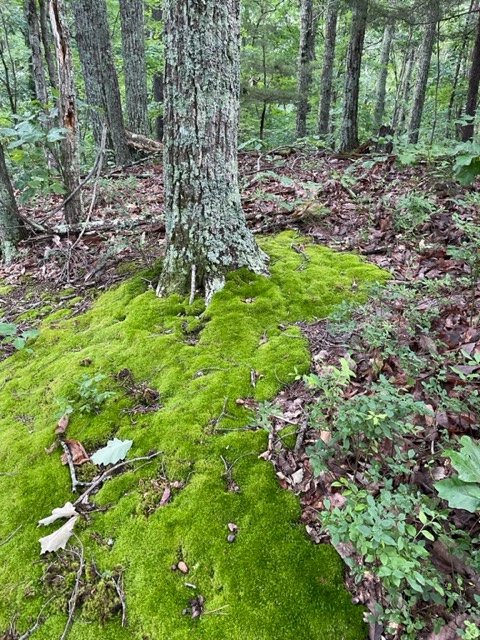
Plants: The moss below wasn’t on my land but a neighbors who I just met and who graciously took me for a hike with her two old dogs all along the nob ridges. Carol lives with her husband Jack two houses down in a wonderful home hidden from the road with a big wrap-around porch and a 180 degree view of mountain.
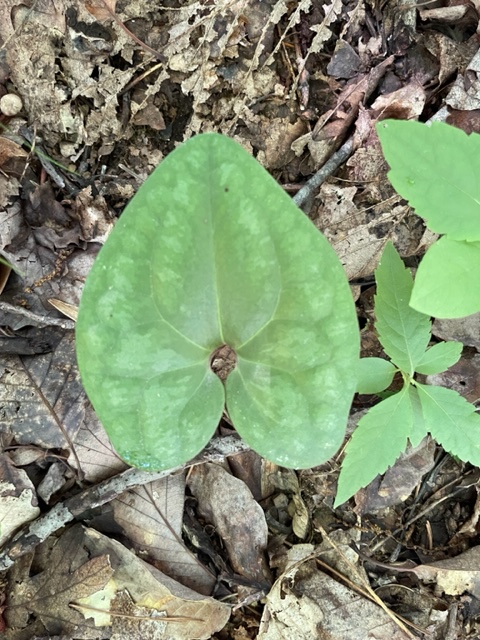
Belwort
Ginger
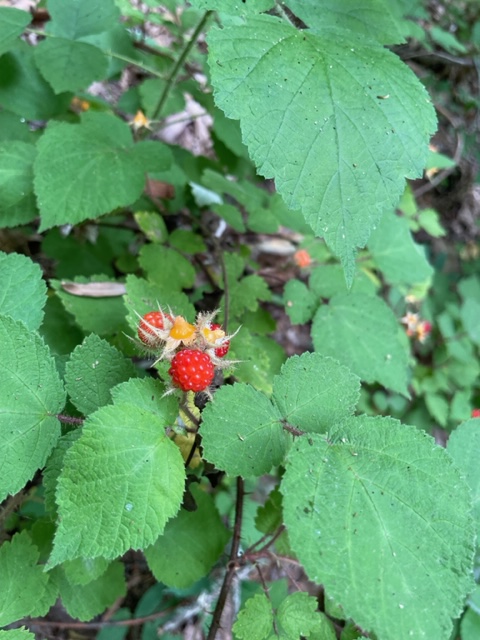
Raspberry

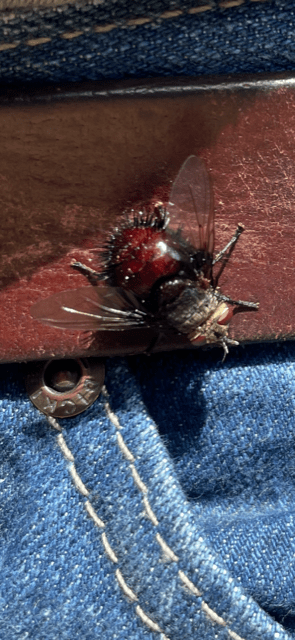
Animals: The bristle fly on the left was very scary looking and I knew nothing about it. I walked with it for a hundred feet before gently brushing it off my belt. It is harmless to humans but if you are a larva watch out!

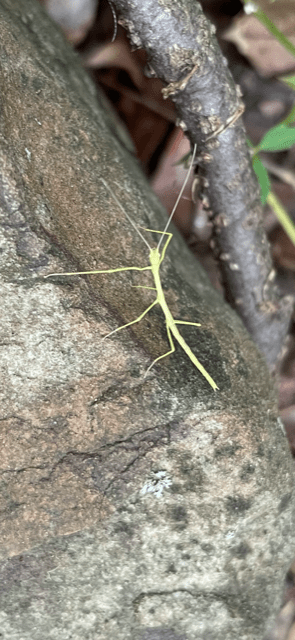
The little one on the right is a walking stick. I’m just guessing this was a young one since it was small–only about an inch. But who knows? It may be a species that maxes out at that length.
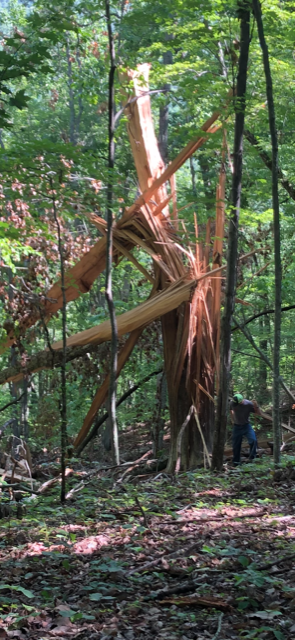
The neighbor took a shot of me with this enormous splintered oak that probably went over in a recent windstorm. We could smell the wood fifty yards before we saw it. It was like being at a lumber mill.
She also photographed me with the memorial stones when I took her on a tour of my land. The area is in need of tending although I like the look of it being kind of wild. I want to go back to nature but it would be a nice treat to make someone curious enough to pull back some vines in a wild place to discover what is written below.

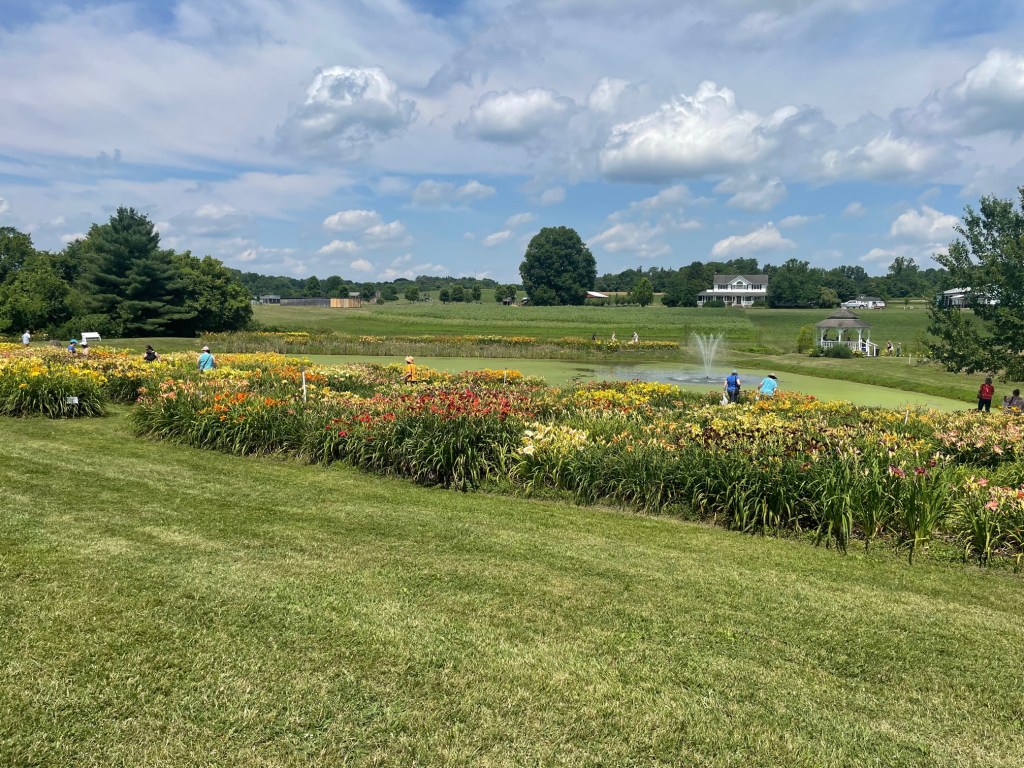
Oakes Daylilies celebrated its 25th anniversary with its annual Daylily Festival. Retired now from the family run business, Stewart sat under a tent with Linda handing out catalogs and talking with customers old and new. The business started informally with his father over 40 years ago and now it’s run by his son and grandson. Four generations of flower growers! There was food, music, free day lily bulbs, landscape painters and a common love for a flower that brings joy to multitudes.
I’ve mostly been going to bed late and getting up late. If I can put in five hours of work on the land I’m doing good. If nothing else, I now have a driveway and a pretty good trail from there to the old shed. If I never get a cabin built at least I’ll have that wonderful walk and a place to get off the road.

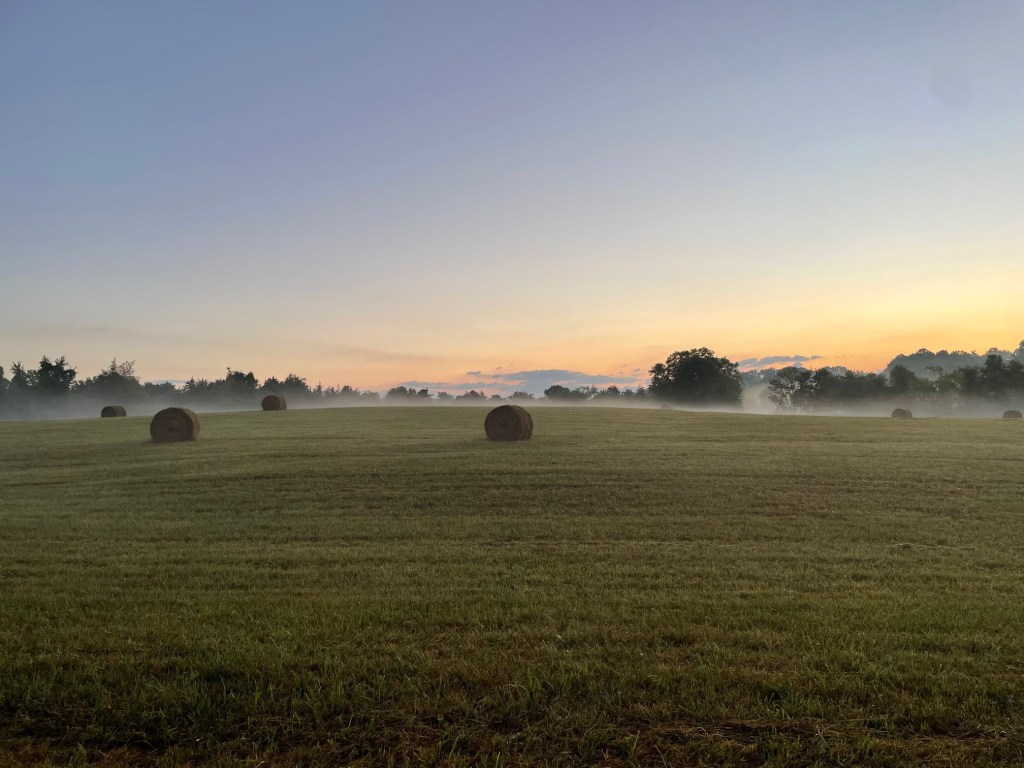
Here’s the view from behind my Aunt Linda’s condo. I happened to get up early one morning and walk outside. I’ve much to be thankful for.
I hope you have a good independence day. Do not despair. Let’s remember what it means to be independent and free to think. Let’s remember the important principal of separation of church and state–that we respect all religions by not raising any above the rest in our public institutions–that we strive to be a nation with dignity for all people. Please use your voice. Speak out when something is not fair…and vote whether that means holding your nose, voting your conscious, voting for a partial ticket, voting for a third party — just vote. Democracy at it’s best isn’t easy. There is no single solution and as all my vegan friends say, “there is more than one way to peel a carrot and if it’s organic it may not need peeling at all.”

(Okay, no one says that.)
June 19, 2024

I thought there might be bodies buried on my land, burial mounds made by the ancient people who once hunted and farmed around here in Eastern Tennessee. Or, several years ago when I saw one for the first time—before I realized there were dozens of these rock mounds—I thought it might be a cache of buried treasures. It was the kind of fanciful thinking that happens before you’ve done any investigation or given something a deeper thought. 

As recently as last week, I was still perplexed—so much so that I decided to dig into one. I was looking for usable rocks anyway. The mounds provided concentrated pickings for the step-sized flat stones I was looking to build stairs with. 

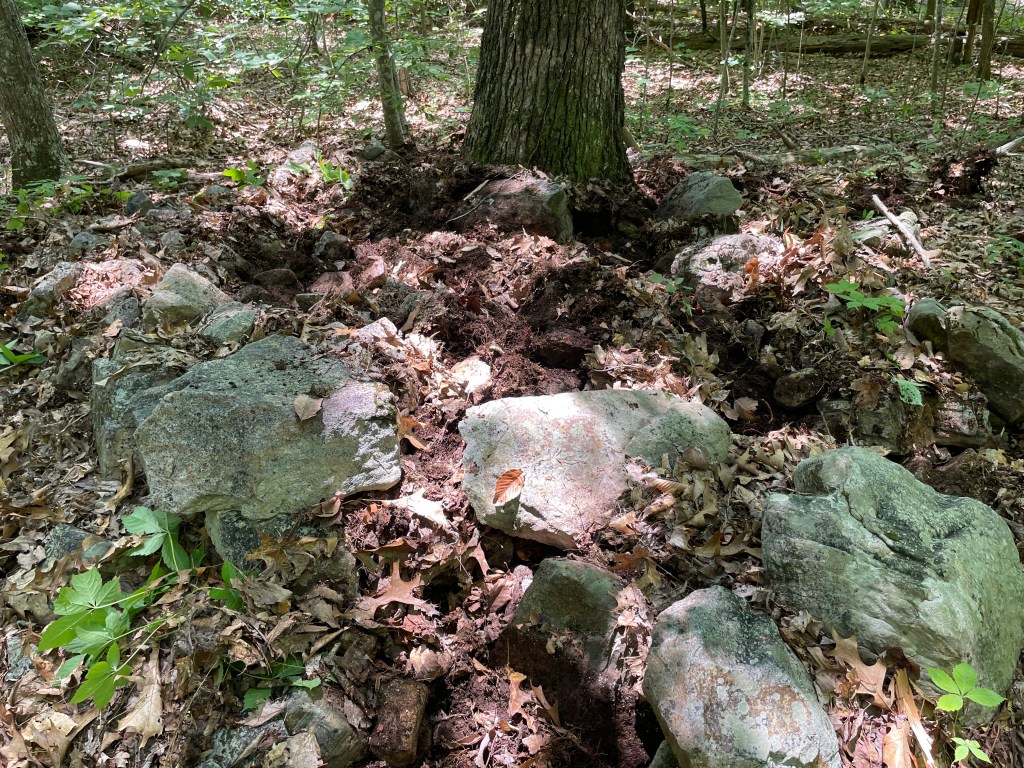
Rock mound I started to “get to the bottom of”
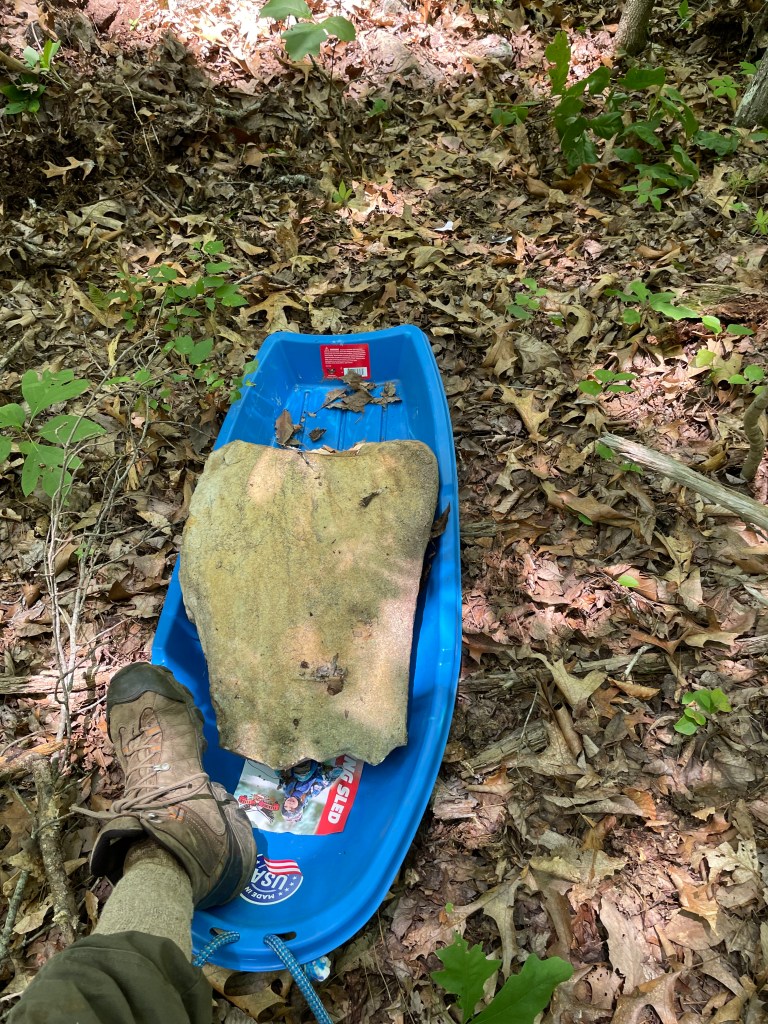
I bought a child’s sled at the Farmer’s Coop to help slide these big stones out of the woods.

Most of the circular mounds are seven to ten feet across. All are on the rhombus-shaped property, not on the other side of the road where I may build a cabin. 

I’m not sure what my plan was when I picked a mound and started to dig through fallen sticks and leaves. A few inches down this turned into a raft of loamy soil held together by thousands of roots and fine vines. I could pull away big chunks of the raft and throw them to the side revealing dozens of small, dark caves formed by the pile of rocks underneath. 

Before I cleared the whole top off the mound it became apparent to me that if I dug through the rocks I would only find more rocks until eventually I hit the ground. The prospect was not entirely uninteresting, but for the purpose of finding flat stones for stairs it would be a lot of work when I could simply go about, as I had been, to other mounds and simply pull the best ones from the sides or tops without doing a lot of digging. 

My reasoning about why the mounds might be here was quickly being honed by the hard work it was taking to get to the truth. Perhaps some sort of work-avoidance-bias was at play, but my back was beginning to protest the mind’s fanciful sparks in favor of its more logical leanings.  

Joppa Mountain sits directly behind this land. It is the southern most subrange of the Clinch Mountains that run 150 miles northeast into Virginia. Fifty feet away from where I’d parked Stewart’s truck on the pitted, rough gravel drive between my property and my neighbor’s the slope bends dramatically upward. My best guess is that at some point in ancient time these piles of rubble were enormous boulders that broke loose from the top and came bouncing down the mountain bowling over trees and anything else in their path.

Then nature did its work. Thousands of winters and summers, rainstorms, leaf storms, duff and ice, trees and vines all found purchase in each crack and cranny slowly cleaving part from part. What was once one became many. 

The logic behind this is that there are massive, picnic table-sized boulders yet untouched which sit as neighbors among the mounds. Their smooth tops don’t catch the leaf litter and twigs so easily as the mounds. Are these newer boulders or ones made of tougher material that is not so easily broken down? Did a single geologic event send all these boulders flying at the same time or has the mountain been sending them down on regular visits over thousands of years? For that matter, what proof is there that any of them tumbled from high? Couldn’t it be that they rose through the ground where they are or that the ground receded to expose them?  Farther away, across the road, there are broken rocks dispersed throughout the soil but none of these big boulders or heaps of rocks. That, to me, lends to the theory that the boulders tumbled from the mountain top.

I never thought I was very interested in geology but in using the land and in my small efforts to change it I find I want to know more of the secrets it holds. 

It’s very likely there are no human remains here. It might be easy enough for me to find out about the burial traditions of the ancient people who occupied this land and clarify what to look for. It is less likely that there are buried treasures unless you include all the things I don’t know about this place. That’s a treasure of a different sort. 

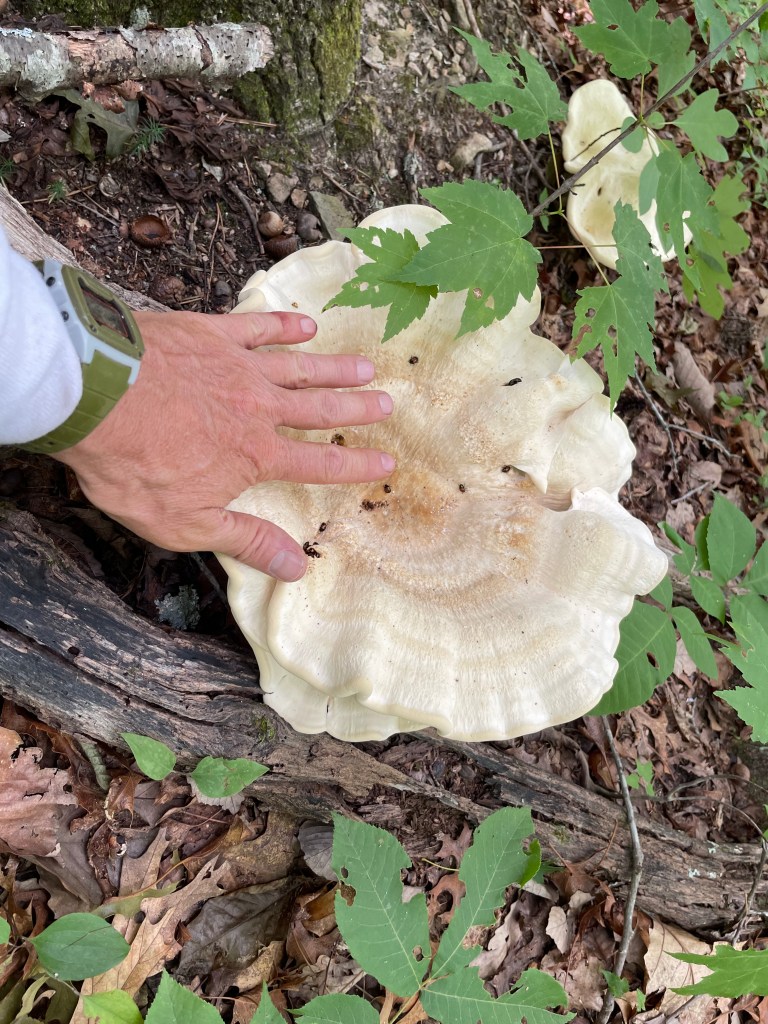
Here are some photos of recently spotted flora and fauna:

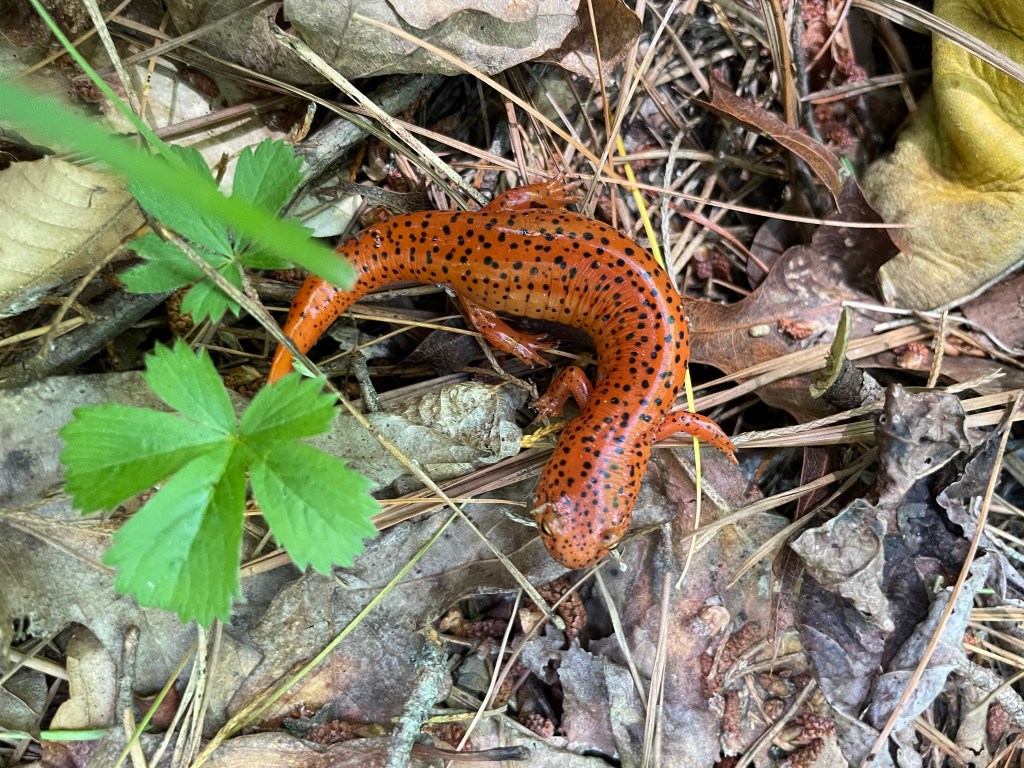
Red Salamander
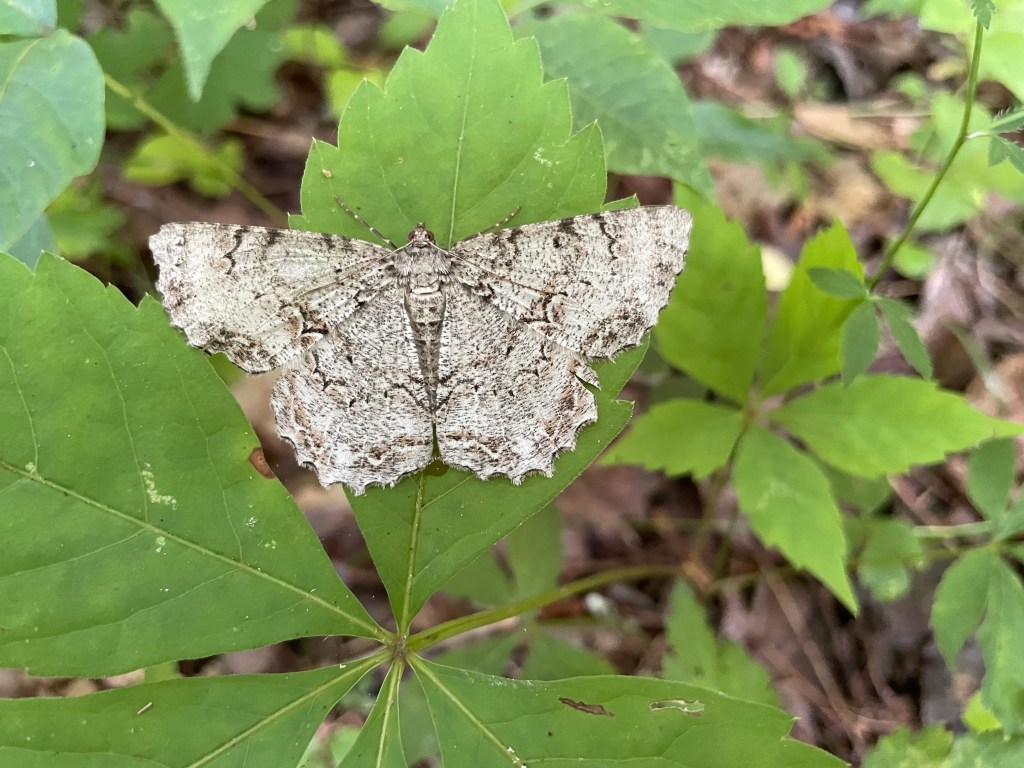
Tulip-tree Beauty Moth
Stump Blossom
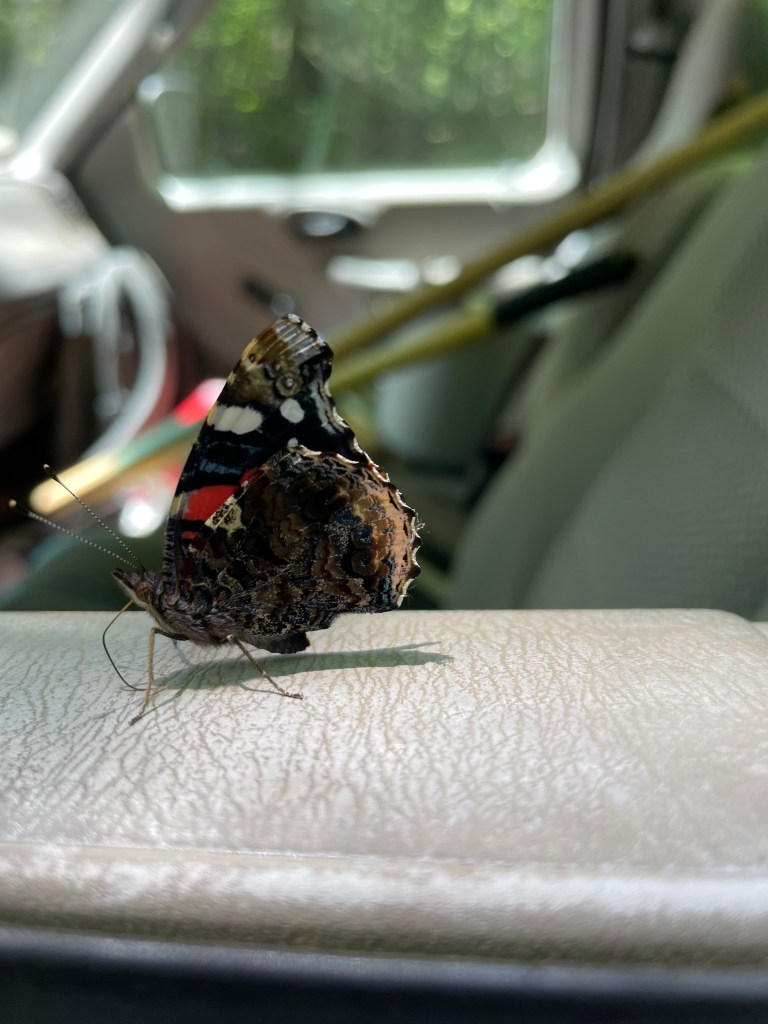
Red Admiral Butterfly–He hopped on my arm and rode with me for about a half mile in the truck.
Bank Haircap Moss

——————————

I made fried okra last night. I saw these beautiful baskets of fresh okra at a farm stand and I thought I’d give another go at frying some up. Last summer I wasn’t so successful. Growing up, fried okra was a fairly regular thing at my house and almost a staple at my grandmother Knott’s. 

My mother used to say she couldn’t boil water when she met my dad. I wonder if the thing that inspired her to become a good cook was the same thing that makes me fry okra when I come back to Tennessee. It’s a way to connect to home. 

I don’t seek out okra in California. True, it’s not as prevalent in grocery stores, but you can find it in the bay area without looking too hard. I suppose surrounded by the sights and sounds of my roots I want to plant myself deeper here. Otherwise it doesn’t come up much. Around winter holidays I crave the family’s cornbread sage dressing, but I have failed in my two attempts to make it. 

I have a scrawled recipe of the dressing folded over on an eight by eleven piece of scrap paper in my copy of Joy of Cooking. It’s the notes I took from my mom over the phone twenty-five years ago when I was living in a studio apartment in the Tenderloin. She would have been in Sevierville then—30 miles south of where I am now, close to the place where Dolly Parton grew up. 

“I don’t have a recipe,” she said.  “I just do it.”

“Well can you explain it to me?” I asked. 

“It’s all about the cornbread,” she said.

But it wasn’t. I can successfully make the family’s hard-crust cornbread but I can’t seem to work out the dressing from the ingredients and directions she gave me.

I don’t have a family recipe for fried okra but I knew it was nothing complicated. Out on the land yesterday I took a break from trail blazing to look some up. I sat on a cut log. Wifi is working better out there, but it’s slow. Between each stage of data loading I listened to the sounds of the midday forest—an absence of chirring, a breeze stirring in the tree tops, a bird call, something scratching in the leaves, silence. It hasn’t been as hot here as the forecast warned, but the kind of work I’m doing is still wearing me out. 

A grid of pictures with the recipe names and number of ingredients came up. I picked the one that had the fewest: egg, corn meal, wheat flour, salt, cayenne. 

On the way home I was too tired to stop at the store and, anyway, I didn’t want to buy flour if there was some in the cabinets. It turned out there was corn meal and flour—buttermilk corn meal, in fact. I already had the eggs.

I substituted black pepper for cayenne and mixed the dry ingredients (1 ¼ corn meal to ¼ flour in a paper grocery bag), cut up the okra, soaked it in egg for ten minutes and then shook it up together. It came out great. The key was not being chintzy on the frying oil. There needs to be at least a quarter inch in the pan. That’s how I failed last time. I probably also tried to fry too much at at time. It’s better to do two batches. Oh, and if you like it closer to brown than golden like me, fry it a bit longer than called for. 

June 12, 2024

I’m sitting in bed at my Aunt’s senior condo in Corryton, Tennessee. Linda and Stewart picked me up at the McGhee Tyson Airport in Knoxville last night. When I got to the condo I unpacked and for the first time switched to the small room with the double-bed instead of staying in the master bedroom with the king-sized one. I’m not sure why I didn’t do this before. There is too much real estate on that big bed. If I end up in the middle and wake up thirsty I can’t reach a glass of water on the night stand. It’s like being parched in the middle of a desert. If I want to check the time on my phone, I might as well commit to getting up and making a cup of tea as swimming to the other side’s night stand.

On the drive, Aunt Linda told me, “the place is exactly as you left it.” That’s true except for the little piles of desiccated bugs in numerous spots along the laminated hard wood floor, around the front and back door, and under the kitchen cabinets. The bugs are attached in strings of spider webs like buoys. Pull on one and all the others come trailing along.  Each pile is the domain of a single spider no bigger than my thumbnail. Some piles are abandoned and others still have the resident arachnid moving quickly (or in some cases slowly) to escape the raft of buoys swept into the dustpan. 

The bugs appear to be Armadillidiidae (aka roly polies) that have had all the fluid sucked from them and crunch under the foot like tiny, dark, round croutons. I wonder how this many roly polies make their way into the house? I never see a live one inside when I’m here. Do the spiders put on tuxedos and invite them in with a big smile saying, “Come into my parlor?”

Beneath the pile of corpses are lots of tiny white dots that appear like flicks of correction fluid. To the touch they feels like hardened paint. The first time I encountered them I got out a putty knife to scrape them up. That was before I discovered they’re water soluble. They disappear instantly with a damp rag. Is this spider shit? Sometimes smears of light red are mixed in. I suppose this is the blood of the prey. 

I unpacked my suitcase into the empty dresser and relocated a bookcase across the room to access a plug behind it. There are plenty of plugs in this room but this one suits my computer best. It seems that in their effort to make computers lighter and promote the cloud-world Apple is trying to get rid of holes on its machines. Mine has two of the same kind, both on the left side so if I can find a plug over there it makes for a more seamless, wired experience. All the better if I can also exit my bed from the right.

Today I will go out to my land and ponder the small efforts I can make toward a more seamless experience there which means a walk in the woods without spider webs in the face or ticks questing at the tips of leaves in hopes of attaching to my clothes. That means hacking away at the jungle to keep it at bay.

Eventually the seamlessness might encompass a cabin door with barely a sill to sweep my foot over, a fire place with logs piled up and kindling crosshatched beneath a grate awaiting a match, a full bookshelf illuminated by a lit lantern, a comfortable reading chair, a nice loft bed. 

For now, it’s enough to dream of these little things, to go out to the woods and play, moving ever so slightly in that direction. 

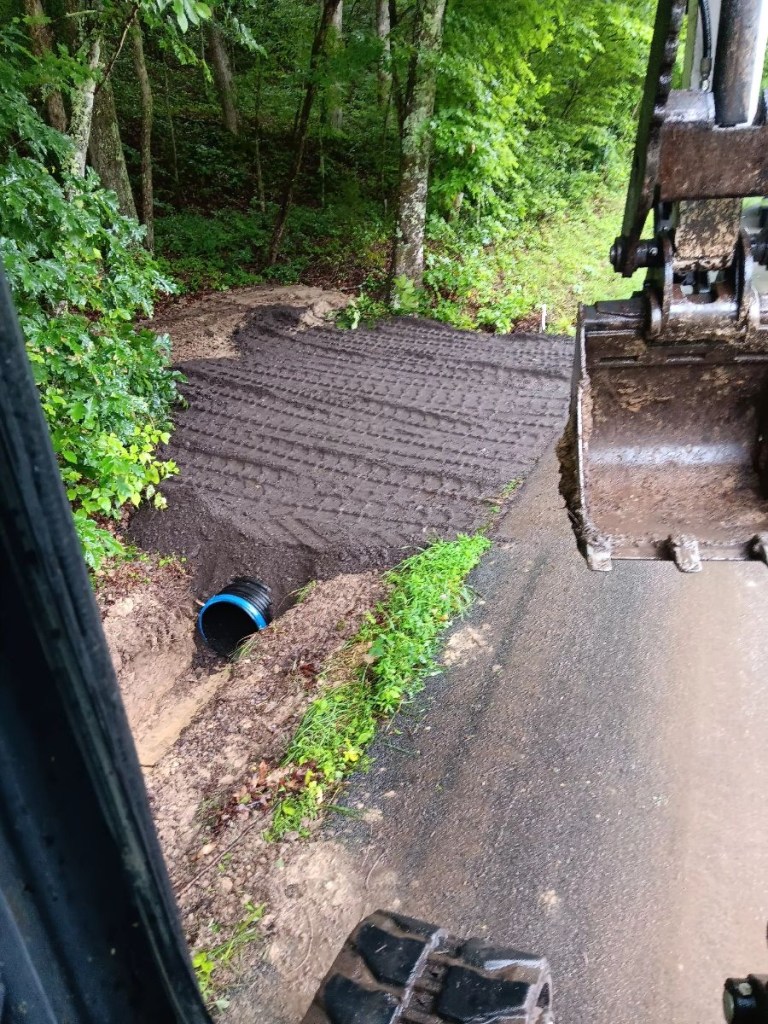
I’m happy to report some progress. My driveway permit was approved last week and the county installed the required double-walled culvert pipe that I purchased over the phone from the local Farmer’s Coop. The permit for a driveway is the only thing I needed approval for and once the county approves it they are the only ones who can install any required drainage–and every driveway needs drainage. You are at the counties’ mercy for this one thing and it won’t happen without them. I could build a 16 room “cabin” and they wouldn’t care. They don’t care about building codes or sewage or burning piles of trash. It’s all about making sure that water doesn’t pile up on the road.

After putting in the permit many moons ago I was loosing patience. A week before the end of school I called the highway commissioner’s office and spoke to the secretary there for about the fifth time.

“They’ve been so busy with these downed trees. That’s all they’ve had time to do lately,” she explained in a wonderful sing-song voice. 

The slow way she said downed trees I could almost see them falling. 

“Yes, but it’s been two years since I put in my permit application and I just want to know what is going on and if there is something I need to do to make this happen.” 

I told her I don’t have any place to park on the land and how I need a place to unload things and how I’m going to be building a cabin, etc, etc. 

She found my application. I heard her shuffling through papers. 

“Here it is sitting right on the desk,” she said.

I told her that I would be calling every day until I found out about the progress of my application.

“Well you go right ahead and call sweetie. We don’t mind talking to you.”

Jillian who’d overheard my conversation from the other room congratulated me on not loosing my cool. And then I didn’t for the next two days when I kept calling. 

My appeal won out. The secretary mentioned a worker in charge of putting in the drains and he called me for better directions to find my proposed driveway. I was at work and almost didn’t answer. The caller ID said Morristown, TN and I hadn’t known anybody there since I was in a British bedroom farce in that town after my stint at trying to open a restaurant with my mamma almost 30 years ago.

I didn’t hear from him for another week so I texted him last Thursday and instantly got back a message that said, “Installing as we speak”. I leapt for joy.

Then this picture came through after his crew finished putting in the pipe:

Was it time or persistence or kindness that got the job done? I think the best answer is yes.  

All’s swell that ends swell.

April 6, 2024

I made good on my intention of getting rid of my motorcycle. Last week a seventy-one-year-old man with 45 years of riding experience drove off on it. A small lump formed in my throat as I watched him ride away. Otherwise, it felt good. I couldn’t have asked for more. The buyer wasn’t likely to kill himself. He was mechanical so I knew he could take care of the Silver Spaceship. Also, his age reminded me that getting back in the saddle again was not outside the realm of possibility. 

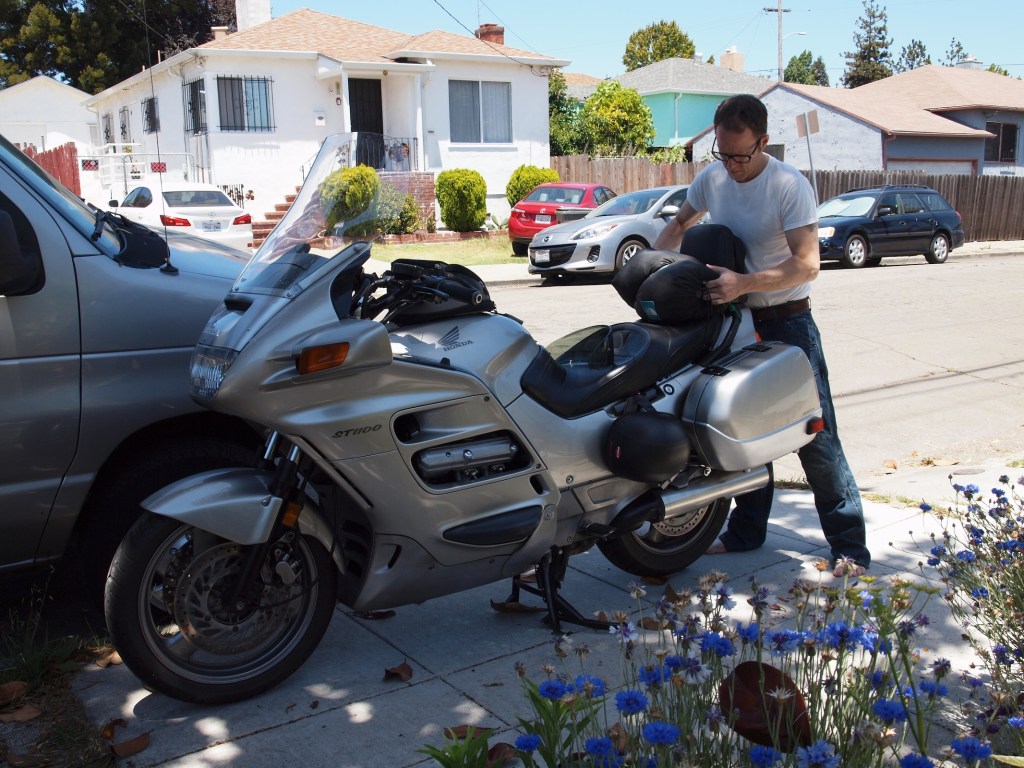
Here I’m preparing to leave on my 2015 cross-country trip. The trip is why I bought the bike.
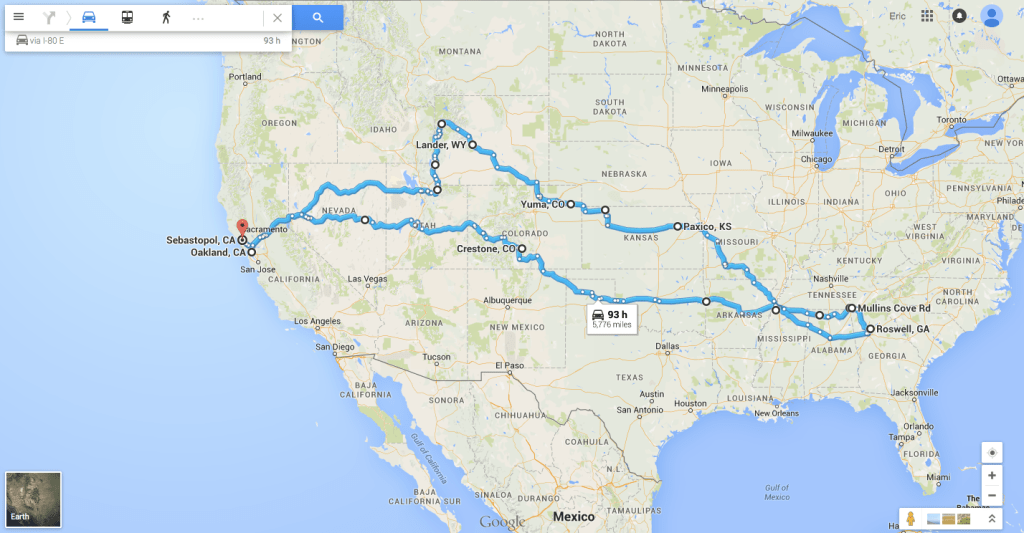
I went on the northern path and came back on the southern.

I used the Bay Area’s home-grown Craigslist to advertise the bike. They now charge five dollars to list vehicles. I balked at the notion at first. I have always associated Craigslist with free advertising. When a place popped up for me to enter a credit card number I wondered if it was legit. I looked this new protocol up online and confirmed they’ve been charging the fee for vehicles for about four years. It makes sense. Five bucks may be enough to keep some scam-operators from operating and it’s not too much to ask for selling something worth hundreds of dollars. 

My reluctance was short-lived for another reason. While I would have difficulty answering Marie Kondo’s question Does it spark joy while gazing upon one of my shirts, if I think about Craigslist or, another favorite, Wikipedia, I can answer a definitive yes! Craigslist has been a source of joy since my earliest days of internetting. 

I listed my 1991 Honda for $1700. That price is on the low end for these motos. The ST1100 is one of the best old bikes out there. It’s powerful, reliable, and a smooth, comfortable ride on the highway.  There were cracks, breaks and holes in some of the panels that cover almost the entire bike but that’s to be expected for a 33-year-old motorcycle. The sun breaks down plastic. Mechanically it was near flawless. 

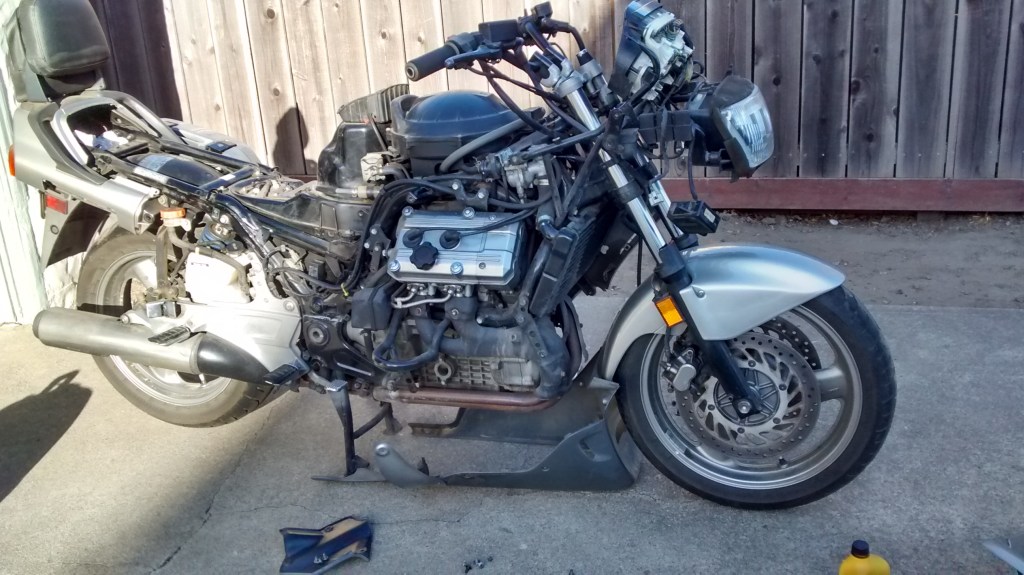
In 2018 I took all the plastic fairings off the bike to give it a thorough cleaning and a good look. It was an all day job. Somehow I still failed to grok that the engine is liquid cooled. (See that black rectangle behind the front fender? Duh. Radiator!) After the cross country trip and riding it for another five years I’d never added coolant. I found out the hard way when the last remnants boiled away in steam on a trip to Napa in 2020. I stopped before any major damage was done. The Silver Spaceship got its one and only ride on a tow truck back to Concord.

As soon as I posted on Craigslist immediately got a slew of low ball offers with sloppy grammar and syntax that made me feel their desire for a quick deal all the more poignantly. 

“Hi,  Let me know if you consider taking $900 for it, this Sat.”

“Nice bike that I will love to give a home but I  am quite strapped and only have 1100.00 to work with at the moment.”

And the best of the worst:

“I have a 2002 Toyota Sequoia that needs a small amount of mechanical work with air bushings and things it’s a great running condition the motor and tranny or a flawless it’s got some higher mileage on it but I’ll be willing to trade straight across need a bike to ride out to LA tonight would trade my SUV and probably most of the mechanic tools inside of it to get the motorcycle so I can head out to go to my girlfriend I was waiting for me program in LA county you can call me at 831-xxx-xxxx ASAP tonight would be better thank you”

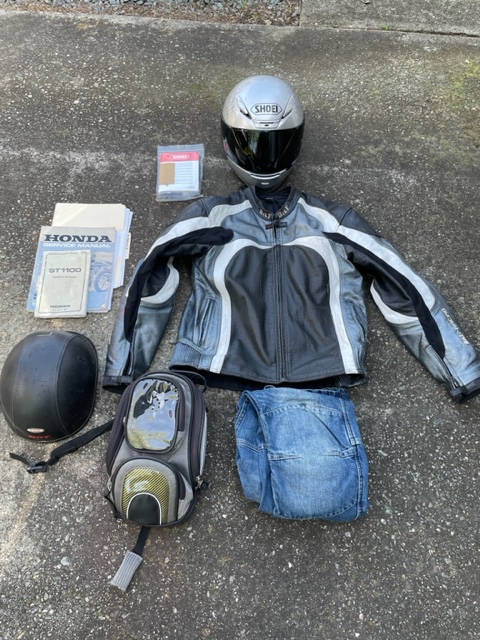
After a bunch of these I was getting a little depressed. The bike had treated me so well in the more than eight years since I bought it from its original owner. Did it really have no more value than this? Should I drop the asking price to $1500? I was including a leather jacket, riding jeans with armor knees, the shop and owners manual, a tank bag and two helmets—all old but serviceable. 

I had already dismissed the idea of parting it out. I could get more money that way but it would be a lot more work taking it apart. Also, this felt akin to sending R2D2 to the junkyard. You don’t do that to an old friend that has years of life left in it.  

I thought on this for a few days and finally decided to leave the price. If nobody bought my moto then I’d just keep it. I didn’t have to take it to the city anymore and lane split across the bay bridge or allow the 20-year-old in me to accelerate to sixty in four seconds. I know how to ride safe. It could just be my cruising bike for April Sundays and midnight August nights, for country rides and smooth open highways and perhaps, for the rare woman who will swing her leg over and lean back onto the rest. 

It felt karmic—like I had just needed to get my head in the right place—when a few hours later I got an email from Lou who wrote a nice note that included these words: “Have cash, don’t want to insult you with ridiculous offers.”

I was pleased that someone else recognized the value. 

Bike and accoutrements as advertised on Craigslist.

I don’t want to co-opt anyone’s ancient belief system but I do feel that inanimate objects live and have a spirit. It feels authentic to give value to things, even things that are seen as trash. All properties have usefulness. It’s easy to see value in an old motorcycle that mechanically works well, but it’s there too in a sun-denuded water bottle matted with grass clippings and dirt on the side of the road. 

I wonder what kind of world it would be if human’s primary goal was to seek value in things and help guide them to a place where that value can be realized? What if we could bring that same feeling of value to our human relationships? What kind of world would we live in then?

I hope that Craigslist person got down to L.A. to see their girlfriend and to begin their program—if that’s what they were trying to say. I hope they didn’t have to give up their tools to get there. The value of things increases exponentially with access to tools. Materials and their possibilities take on a whole new meaning.  

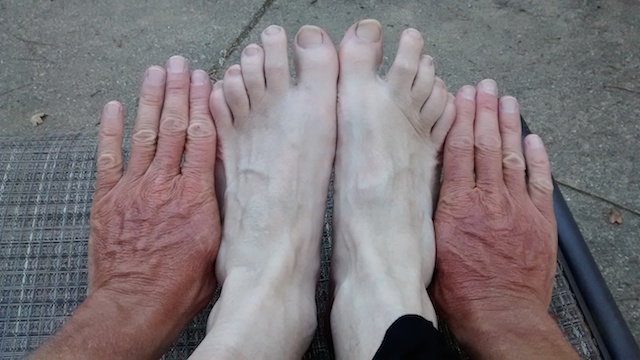
My feet and hands post 2015 cross-country trip.

March 10, 2024

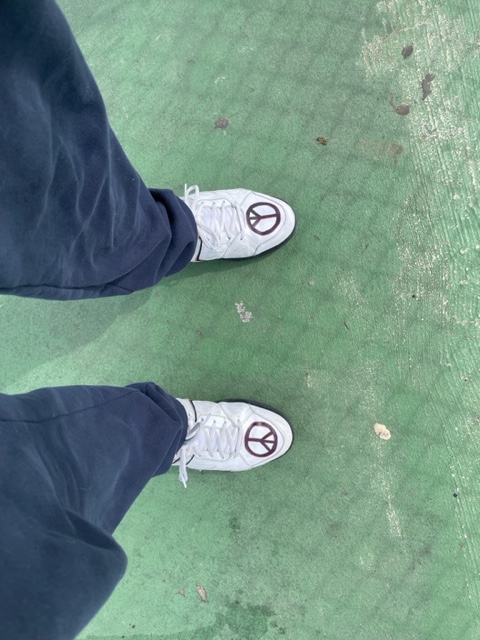
I bought these tennis shoes a few years ago to play with a friend. They were the cheapest that felt halfway decent. I figured the low price was because they were so plain, white, and uncool. Plain white tennis shoes have gone the way of the wooden racket. I don’t have a 20th century, colonial-cotton, hip, tennis ensemble but I got them anyway.

I started using them regularly when I joined the Pleasant Hill Tennis Club about eight months ago. It sounds fancy but it’s actually just six outdoor tennis courts at the Pleasant Hill Middle School that our club uses for mixers and adult league competition on Saturdays. For sixty bucks a year it’s a good deal and I can go play tennis every Saturday morning. 

I’ve been pondering spiffing the shoes up for a while and decided to make peace signs on the tops. President Biden’s State of the Union speech helped to put a little fire under this project. I thought his speech was very good and I liked that he was directly confronting the Republican ideology of revenge and fear adopted by the former president. I particularly like that he spelled out a return to higher taxes for the very wealthy. 

His powerful words that described Putin’s assault on freedom and democracy as a world threat had me rethinking my stance on the war in Ukraine. At the same time I kept thinking and keep thinking to myself there has to be another way.  I know there is. 

There is another way for Ukraine and Russia. There is another way for Israel and Palestine. There is another way for the countless wars and disputes on every continent of our planet. 

Do I know the way? No. 

We’ve all heard the slogan, “War is a lack of imagination” and I know with all my heart that this is true. 

John Lennon and Yoko Ono said, “War is over if you want it,” and I imagine almost everyone, even the most optimistic heard this most-Christian-of-Christmas-songs created by non-Christians and at some point said to themselves yeah, that’s easy to say, John and Yoko, but doing it is another matter. 

Here again, I have to agree…except, not firing a gun, not firing a mortar, not pushing a button to drop a bomb from a remote-controlled drone is a simple act. It only requires a difficult decision and I’m not going to act like I know how a person can make it. 

Is it mere coincidence that two WW2 movies are up for best picture? I saw Oppenheimer. I’ve not seen The Zone of Interest.

Oppenheimer deals with the making of the atomic bombs that decimated two Japanese cities killing an estimated 200,000 people. The moral dilemma of making this weapon and then using it is addressed but not the focus of the movie. It does, however, succeed in making us all a bit more culpable by showing the thousands of individuals who were necessary to make this package to deliver mass death. 

The Zone of Interest is about the family of a Nazi administer of Auschwitz. They lived privileged lives right next to the murder factory, only separated by a wall. The movie trailer makes is look like a true-life horror story. The personnel of Auschwitz killed 1.1 million people. 

It seems impossible to rationalize what was being done at Auschwitz and any of the other slaughter assembly lines created by Germans. It seems like some sort of self-hypnosis would be required—something beyond what we think of as the rational mind. I imagine The Zone of Interest attempts to show that. I want to see it. 

Is it a coincidence that “War is Over! Inspired by the Music of John and Yoko” is nominated for best Animated Short?

In the United States we managed to rationalize our decision to annihilate all those people in Japan— they were the aggressors, the bombs put a swift end to a war that would have taken more lives, remember Pearl Harbor, etc.

It’s easy to rationalize continuing to arm the Ukrainians. This is mostly between warriors and most of the civilians killed are Ukrainians. The belief that Putin won’t stop just with Ukraine is espoused by Biden. The number of animals killed, the decimation to wilderness, the poisoning of land and water, the loss of infrastructure and untold human labor hours laid to waste don’t get that much air time. 

As for the soldiers, how often do we see their stories? Who are they? What forces made them choose to be there? Did they choose? Were there other options? 

In the early sixties my parents lived in an apartment in New Orleans next to a very depressed man who later killed himself. He’d been an airman on one of the planes that dropped one of the atomic bombs.

When are we going to stop treating Peace like something cute to do when it’s convenient? When will we start treating it with the full force of our imaginations? When will our majority Christian nation start acting Christian and actually invite this Christian god to truly bless America and bless the whole wide world with it?

I’ll end up voting for Biden simply because: though the Trump camp is against funding the war in Ukraine (I don’t know their stance on Israel), I know that Trump’s leaders are not opposed to war. I know they will gladly ravage innocents. 

Biden isn’t our savior. He is just a fire stop to put out the flames and give us time—which we could start today—to use our imagination. 

I invite you to convince me to not vote for Biden or tell me how Biden can be persuaded to change his stance on war. How could these wars be ended?

Imagination idea #1—planeloads of leaflets offering relocation, free education/ trade school training, citizenship and an equal or greater salary for a year to any soldier who wants to stop fighting and cross “enemy lines”. 

February 17, 2024

I first started this post 40,000 feet above the Midwest somewhere on a double-aisled 767 jetliner on my way back from Tennessee. Through swaths of cloud I could see the land covered with snow like a white jigsaw puzzle on a black table top. The pieces that weren’t yet put together showed dark, curvy edges—a river and its tributaries crossing the otherwise rectangular allotments.

This whole business of flying is a remarkable thing and I felt particularly thankful to be alive on this second leg of my journey after a harrowing short flight from Knoxville to Atlanta on a smaller aircraft. We were in the midst of a massive east coast storm and it was bumpy. News stories and images were still fresh of a jet plowing into another plane then flaming down the runway. Another lost an escape door 16,000 feet in the air. 

Our ascent was bad but the descent worse. It felt like riding atop an avalanche on a 100,000 pound sled at 400 mph. I asked a flight attendant on the way off the plane how the ride rated in scariness from one to 10. 

She smiled and said, “That was pretty bad. I think it was a solid eight.” 

I was thankful she hadn’t said nine or 10 because I needed to know that things could get worse without dying if I was going to keep flying.

If I’m still at this regular Going-East business when I retire in a year or two I’m more likely to take a slower, statistically more dangerous, but psychologically easier method of travel. I’d like my mode of transport to be environmentally greener too, but short of riding in an electric vehicle with all the seats occupied or a Greyhound or Amtrak also at capacity (three scenarios not likely to happen) the comparisons and calculations I’ve found don’t point to one mode of transportation being much better than the other. I sometimes imagine a low-flying glider released from a giant sling shot. 

Realistically, walking or biking is the least impactful way to go from California to Tennessee. It’s a far-fetched proposition although I must mention that my friend Marlow made an annual 1000 mile round trip on a recumbent bicycle with a trailer and a greyhound dog from Jackson, WY to Moab, UT. He did this for seven years. The first few years it was a 2400 mile round trip to the Arizona/Mexico border until he decided he didn’t need to go that far south to comfortably winter in a better climate.

The options for travelers in the United States may be the worst they’ve been in fifty years. Available destinations for intra and interstate travel on busses and trains is less than half what it once was. How ironic is it that you can’t take a choo choo to Chattanooga? The Amtrak goes to so few places its website treats destinations like expensive hors d’oeuvres on a five star restaurant menu. 

The blue plate specials on Greyhound are a better deal but still limited. They don’t have as many buses or lines as they used to and many of their terminals have closed. When I travel by Greyhound to or from Knoxville I have to wait at a city bus stop next to a parking lot at midnight. Then if I’m coming to Knoxville the ride share to Corryton just 20 miles away costs almost as much as the bus ticket from Raleigh 360 miles away. 

None of this is terrible news for people who have means and money, but this continent has become less traversable to poor people. When you get on trains and busses it’s no surprise why they are often less than half full. 

In terms of combating climate change a full bus or train is better than a full plane or a single electric car. The problem is we all want to individually wipe our hands clean but attacking the problem requires a group effort and collaborative thinking.

——————-

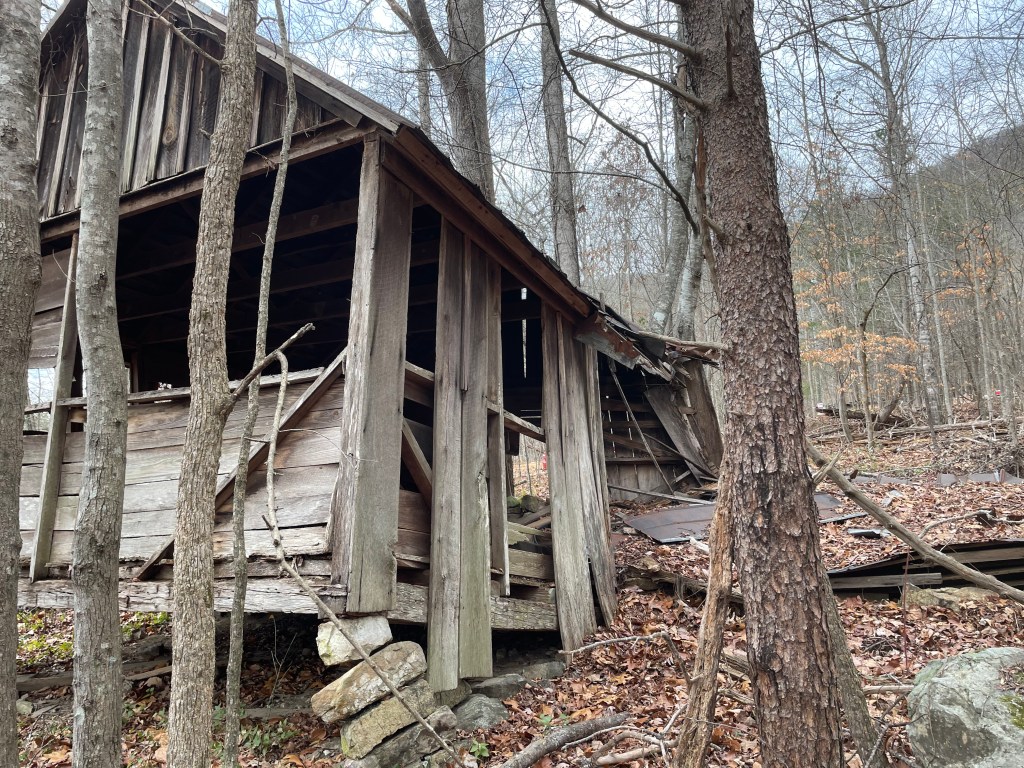
To pick up where I left off on my last post about doing a few smart things, number one among them was ditching my plan to demolish the old Sheridan cabin during this trip. I realized that even if I could get it down in some fast, probably dangerous—or at best merely destructive way—I’d barely have enough time to tear it apart, sort the usable lumber, and store it in a manner safe and dry from the elements. I only had a week. 

With this decision I slipped into a more thoughtful place. I began to look at the cabin as an interesting problem rather than something to conquer. As I began to work I let the knowledge of what was required manifest organically.

This laissez faire attitude extended to other areas that might otherwise have been stressful. Unbeknownst to the highway commissioner he may be doing me a favor in his failure to approve my driveway application that is almost two years old. Same goes with the new neighbor who has a road going over my land and was sold the property with the idea that it was his free and clear.

How to deal with that and the other are not cogs in the wheel but large gears that keep me from jumping into things too fast.

Besides, there is no rush to do what may never get done — specifically build a new cabin using parts from the old. In acknowledging this I freed myself from any anxiety on the subject.

I painted this sign and nailed it to the cabin perhaps 15 years ago when I first started having the idea of doing something on the land. I could see evidence that hunters liked to use the cabin as a stand. A fire pit showed that they warmed themselves here and probably used some of the lumber as kindling.
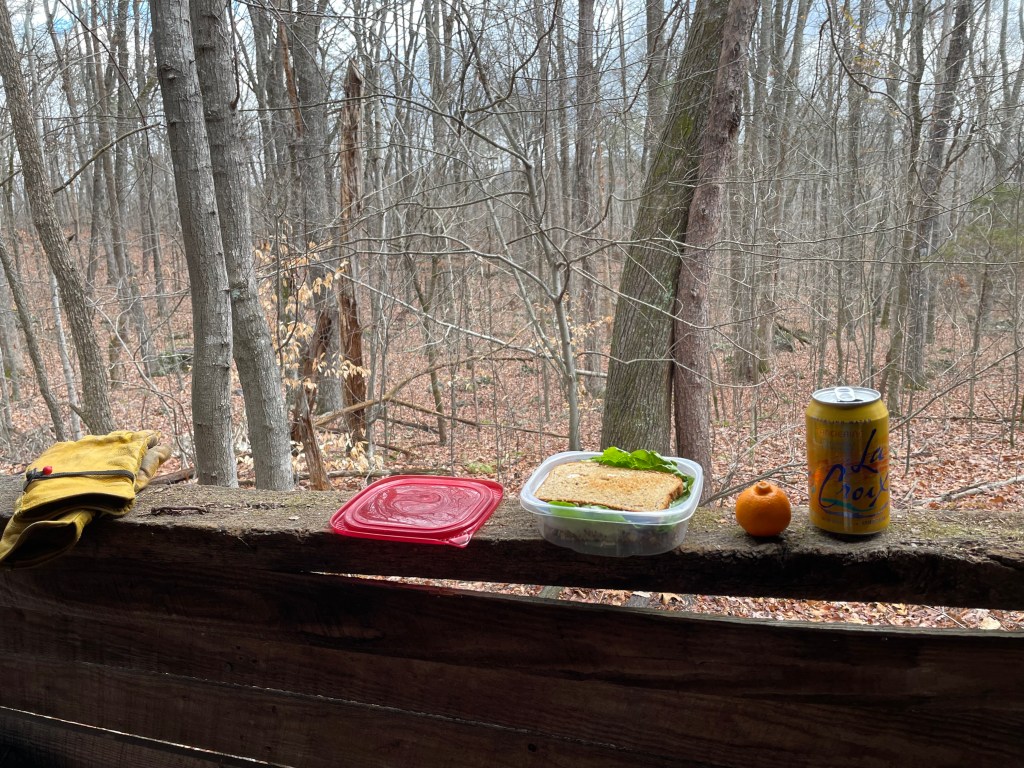
Lunch inside the cabin. It’s a good view for a hunter to catch a tiptoeing deer.

Smart item number two: I recognized that a deconstruction site needs room to move around in safely as much as a construction site does. Doing so not only helps avoid twisted ankles, it also saves time from stumbles and obstructed pathways. 

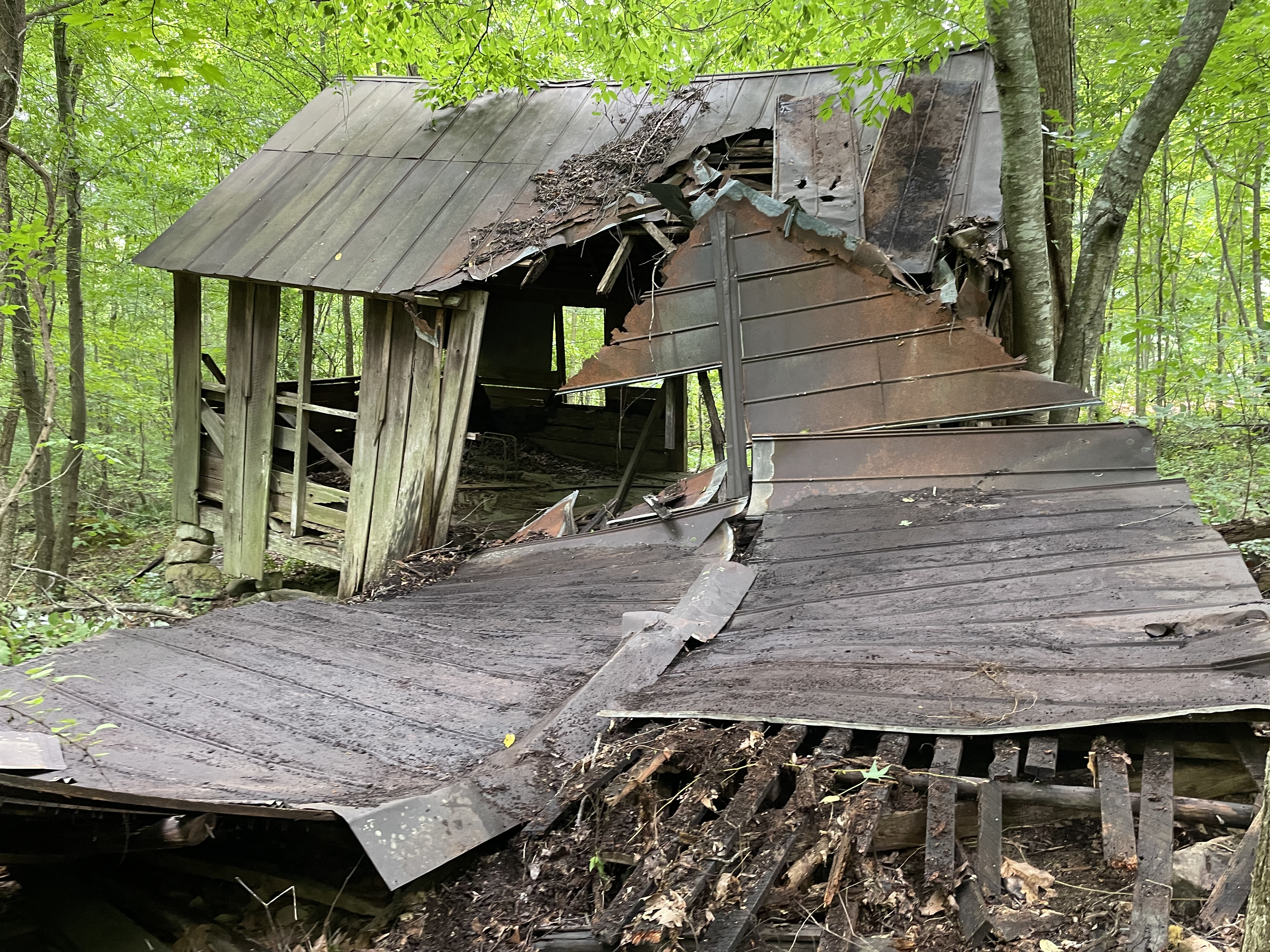
With this in mind I started tearing apart the fallen walls and roof of the part of the cabin that had come down several decades ago. The original structure was a backward L-shape and it is the shorter line of the L that fell and pulled with it about half the wall on the north side along with a good chunk of its roof. I’m guessing this room was a kitchen area because there is a rock structure at one end that could have been a fire place and a metal roof panel on top of the heap had a section cut out for a chimney. 

The debris of the fallen room.

I cleaned this fallen area working through the heap. I pried the metal roofing off, then knocked apart the battens from the rafters. It came apart easily since most of the fallen lumber is in different stages of decay. The wood got progressively worse as I got closer to the ground. In some places it was simply saw dust made by decades of insects and bacteria. 

Lattice of fallen roof after I removed the metal.
As night approached on my first day of demolition I used some of the roofing to make a dry box for some of the wood that may still be usable. Rain was expected the next day.

The demolition was difficult my first day because I was using less than ideal tools—a long, round pry bar and the back of an axe as a hammer. Both contained an unnecessary heft and imprecise bluntness. I returned the next day with an actual hammer and new pry bar that was flat and could grab the nail heads easier.

I took occasional breaks from this back-aching work to straighten up and look at the roof line where I intend to begin disassembly next summer. Over and over I assessed if I would be able to run a line between the trees and attach to a rope with enough lead to allow me to work on the roof and still keep me safe should it fall out from under me.

This is most of the wood I’d like to save.

I also took time during these breaks to assess the lean of the cabin. It was clear I was safe working on the fallen side, but working inside the cabin or on the opposite side facing the lean was not without the possibility of it falling on top of me. 

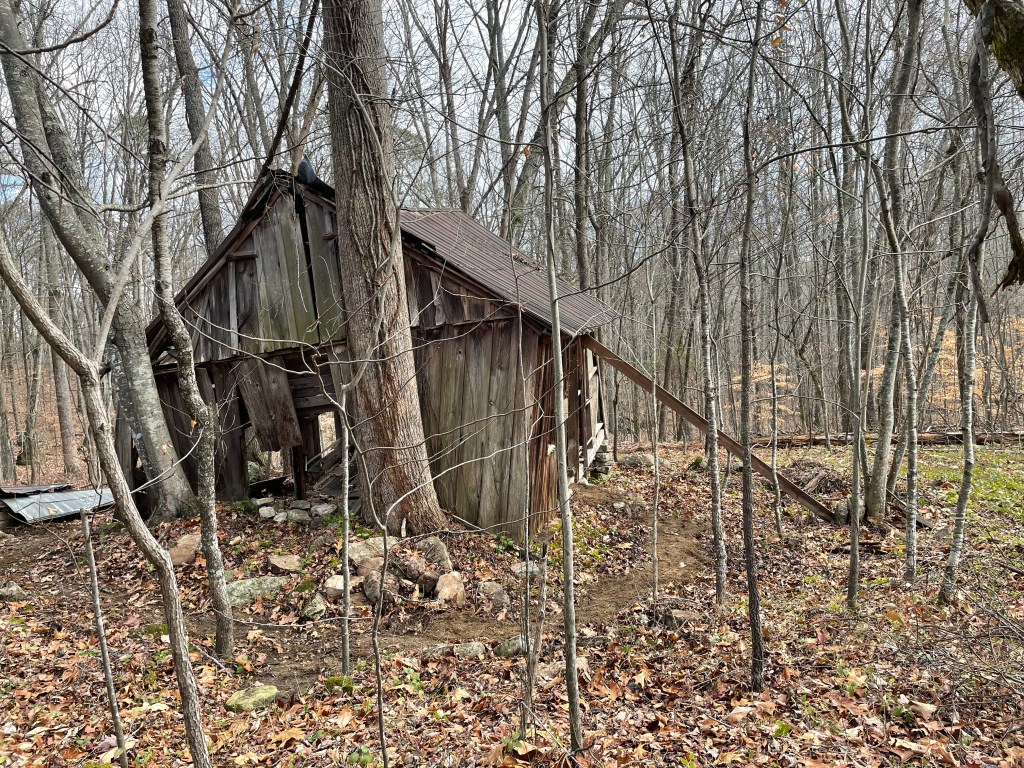
The cabin made a dangerous shift since my last visit. The rock pier that supports the northwest corner had opened like the pleat of an accordion. I have a feeling this development had something to do with my pulling up the remainder of the oak floor boards at the opposite corner last summer. This left only the north half of the cabin with flooring. A wood foundation is similar to a wall in that it relies on its sheathing to keep it from folding up in the way that a rectangle becomes a rhombus.

To safely take the cabin apart I would have to shore it up.  To do this I removed a 16-foot, 2 x 6 joists from its interior. The beam had spanned the width of the cabin but was now only attached on one side.

I hammered the stubborn wood from a rafter where it was attached with long, thick nails. The hammer blows made the whole cabin vibrate. I mentally practiced diving to safety between joists. The stupidity of it hit me later. To make the overall project safer I’d engaged in a dangerous activity in the moment and that’s when accidents happen. This could very well have ended with me receiving a Darwin award. I could have easily cut a small tree to use as the brace instead. 

To staunch the lean I braced one end of the 2×6 against the base of a tree and attached the other end under the eave.

After the brace was in place I continued to work on cleaning up around the cabin. Much of it is surrounded by assorted football size rocks hidden beneath a spaghetti work of vines. Unseen and unlevel they were ankle twists waiting to happen. The vines were great for catching a shoe and stopping me in my tracks. (I attributed an old-timey cowboy voice to them that said, “Whoa. Hold up there feller. Where do you think you’re going?”)

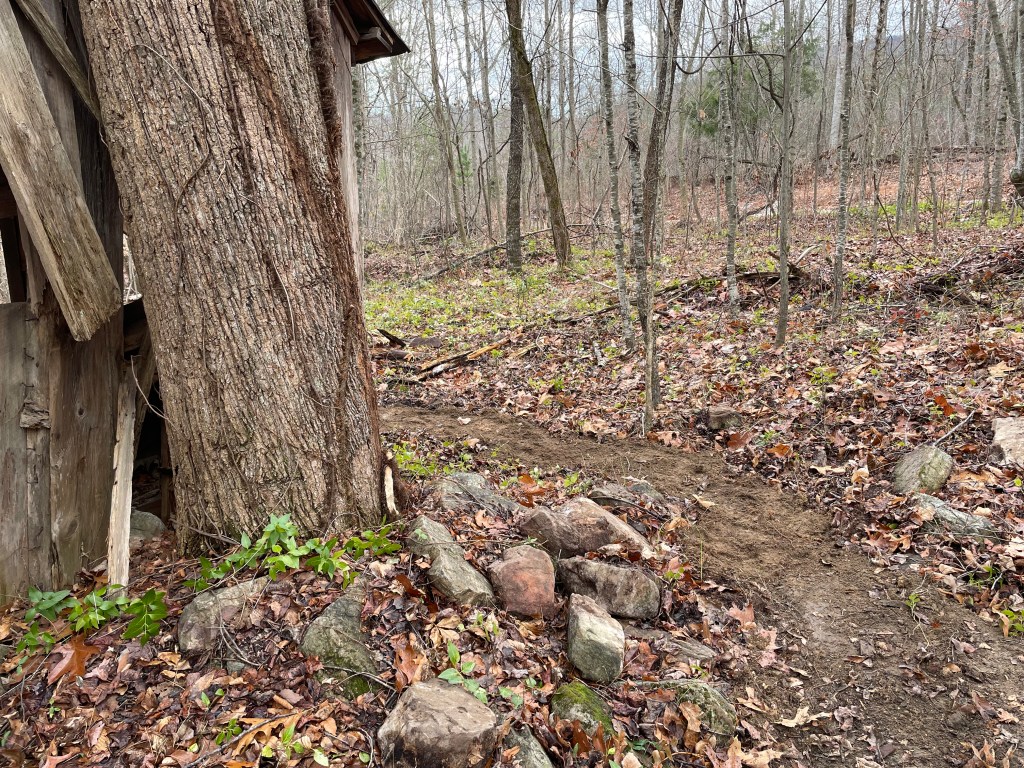
I pulled up the vines and lifted dozens of these big rocks from the ground where they were lightly seated in the loamy soil. I chucked them aside. In their place I began to make a path using the dirt that was soft and full of wood rot from the now cleared wing area. With no wheelbarrow I used a half piece of roof tin as a sled. Over and over I piled it with dirt and slid each load to the closest spot of the path I was making. In this way I was continually walking over the new dirt, packing it in as the path grew. 

Path around the cabin.
The lean is easy to see in this view.

I have to wonder if this fresh dirt won’t end up being an incredibly fertile space for my two least favorite plants to pop up before I can get back this summer: The leggy, multiflora rose vines fall over when they get long and grab my clothes when I pass. I’ve already spoken at length about poison ivy. Anyway, it won’t be hard to clean up anything that grows between now and June and it’s a small price to pay for a level walkway.

Between the hard labor there was another area I kept figuring on. I kept walking through the missing northwest wall of the cabin wondering why this portion of the roof wasn’t falling on my head. What I’d thought might be a corner post turned out to be a few pieces of siding hanging from the roof without even touching the ground. 

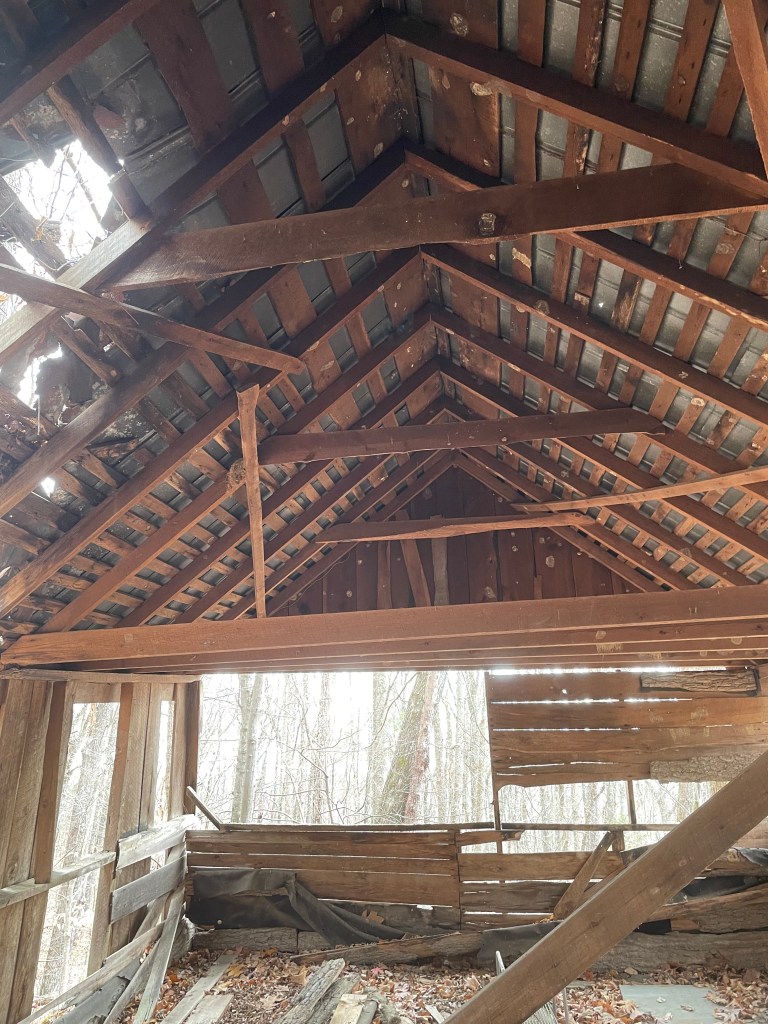
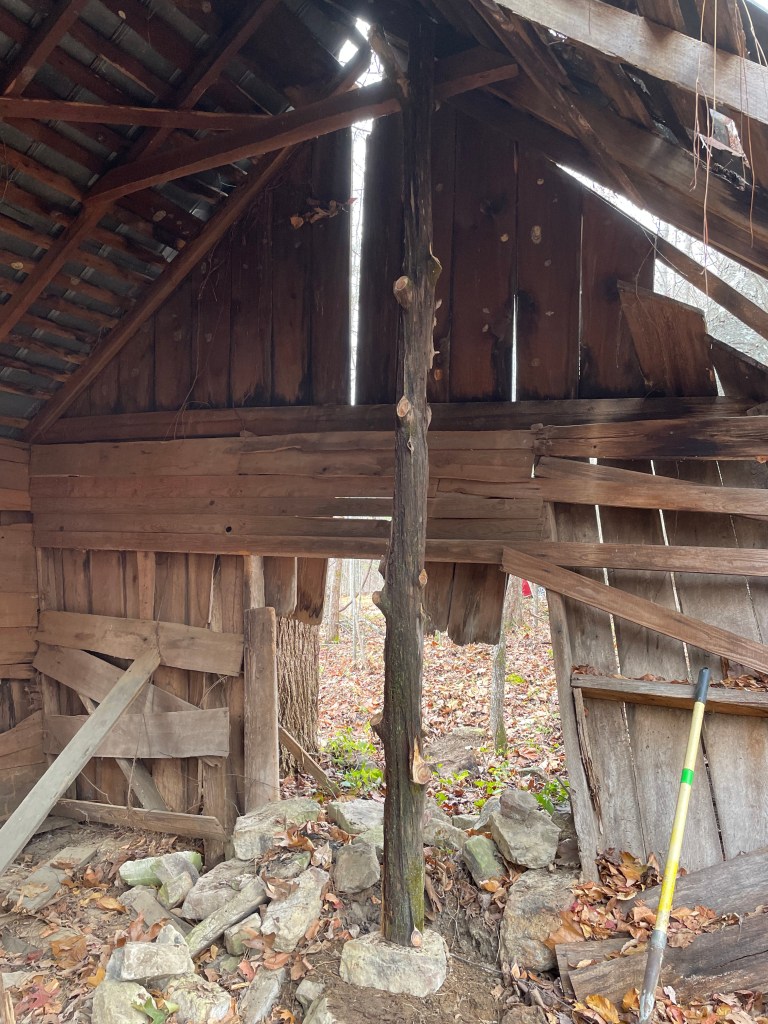
Finally I figured out that it was just the upside down v-shape of the rafters with their opposing force and a few collar beams taking the place of the missing joists that was keeping this part of the structure from folding up. It seemed just slightly more solid than transcendental levitation and I pretty much dropped everything I was doing right then and there to make a post fashioned out of a fallen cedar that had not rotted out. 

The post

At some point early on in my deconstruction preparation, the neighbor whose goats died stopped to make sure I wasn’t some interloper stealing wood off the cabin. I walked out of the woods to meet him on the dirt road and told him about my plans for taking it down and reusing the good lumber for a new place. 

“Aw well, I know you’ve got to do what you’ve got to do, but we’ll sure hate to see her come down,” he said. 

I appreciated him saying that. I’ll hate to see the cabin go too. I like an old dilapidated cabin as much as the next person whether in person or in the form of an oil painting or artistic photo. It represents a special kind of peaceful solitude to anyone who’s ever thought of living out in the woods. But more than what it symbolizes I love the idea of reusing its materials and making it a part of a cabin that I can actually use.

January 20, 2024

It may be useful, I’m thinking, to recap a theme of this blog in the way that a cliff-hanger, double-episode of Star Trek, The Next Generation recounts what last went down. (An episode of this series has been a nightly treat lately for Jillian and me — often while we eat dinner.)

I inherited two parcels of land from my step-mom a few years ago. These were left to her by my father who died in 2009. She could very well have sold them off and used the money for any number of important things but knowing that I took great interest in this land and its proximity to dear relatives she deeded them to me.

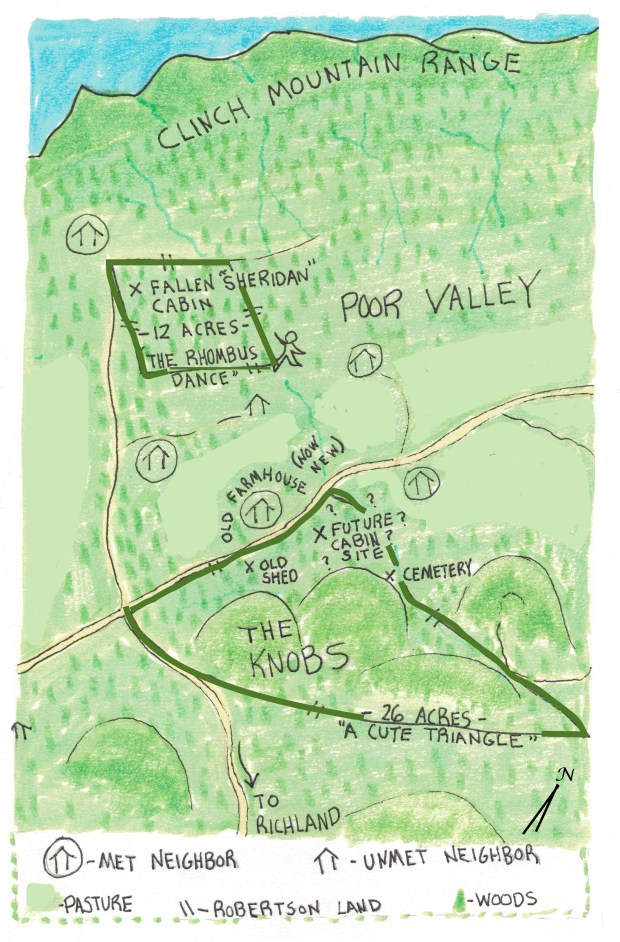
There is a 12-acre piece shaped like a rhombus and a 26-acre piece shaped like an acute triangle. Both are heavily wooded, the larger parcel more so and with a prominent knob near the center. If you think of the top of the knob as a circle, about 270 degrees of it has a steep approach with the remaining 90 degrees connected by a more gradual incline like a wide land bridge. 

The smaller parcel does not have such an extreme elevation change but has deep rolls nonetheless. The land here is characterized by large grey boulders that may have tumbled from the high ridge of the Clinch Mountain range that sits behind it at 2200 feet. Over a hundred acres of this mountain side are for sale but finding a buyer for acreage measured on the side of a wall may be difficult for the owner who I’ve not met. 

My two pieces of land are separated by what is known as Poor Valley—the space between the knobs and the mountain—probably 250 yards as the crow flies. Despite its name, the best and flattest areas for farming and building are in this small valley. Together this made one continuous parcel of about 200 acres that my University of Tennessee, chemistry professor grandfather bought and pieced together in the 1920s and ‘30s.

This was the land that my father had enjoyed all through his childhood as a vacation retreat from their family home in Knoxville 24 miles away. It’s the land where my grandfather is buried and my grandmother and uncle have memorial stones. Three of its acres are designated a cemetery. 

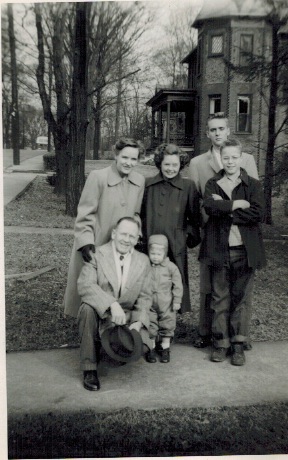
Knoxville family portrait with dad in the dark jacket with his older brother Clifton on the right, his half sister Mary Elizabeth and nephew Bob, center and parents on the left. Older half-brothers Jack and Gilbert are not seen.

As a young man the joy and familial good times my father had on the land throughout the 1940s and ‘50s must have played like a silver screen in his mind — summers in the farm house, gardens planted and apples picked, horses ridden, sled rides in winter and always exploring the surrounding woods.  

But the movie reel must have been canned when my grandfather died suddenly on his last day of work, dressed in his doctoral cap and gown. Dad was still a young man—just 25. My grandparents had planned to retire there to the country farm house.

Alcoholism took several siblings. My parents battled with it themselves. Some sort of bitterness weighed heavily on the memory of idyllic earlier times–something related to the unstitching of the family.

No one treated the land as sacred ground when I was growing up. I heard stories of it but only visited two times, first in 1972. I stepped out of the car and kicked rocks on the side of the road. We were just passing through on our way to my mom’s relatives. The old farm house was still there but Grandma Robbie had put it up for sale. Dad’s remaining family were scattered by then. We were living in Florida. Dad was estranged from the half-brother who still lived in Knoxville. I don’t remember even walking to the gravesite of his dad.

Years later, the next time I went with my dad he had a hard time finding the place. The movie reel in his brain had been relegated to some dusty shelf.

The old farm house in Poor Valley where my dad’s family spent many happy days in the country. The Clinch Mountain Range is on the left. The knobs are out of view on the right. Most of the land was sold off after my grandfather died but a few parcels remained in the family.

On all the remaining 38 acres there is only one spot that is almost perfectly flat and the place best suited for a cabin or house. It is not far from the memorial stones and sits atop a small rise looking across the valley to the face of the mountain range. The one time I ever walked on this spot with my father he talked about its potential. I imagine he had discussions about it with his mother and siblings and probably his father before he died.

“This is the place, if anyone ever wanted to build a cabin or house…this is the place they would do it.” 

Those solid words became a whisper that nobody was left to say but myself. Last week I returned from a week-long visit to the land I’ve grown to love. It’s become a biannual pilgrimage these last four or five years.

The rare flat spot for a house or cabin. Lots of pines on this part of the land. The ph from all the fallen needles may keep a lot of deciduous saplings from popping up here.
This is the view from the flat spot. If I build a cabin would I cut down the trees in front for a better view of the mountain and valley? Not sure. I few hundred yards out there is the other parcel of land–the Rhombus.

One thing I’m convinced of now is that winter time is the season to take advantage of outdoor work. As long as it stays below 45 degrees the ticks sleep like clocks whose gears have been seized by the cold. The poison ivy loses its leaf and the fat and thin vines that climb the trees lose their chewiness and become dry and brittle, easy to chop with an axe or machete. Sometimes merely giving a twist of the blade between tree and vine is enough to break it. I’m not sure how bad these vines are for trees but I’ve got a grudge against them and figure the fewer the better. 

It can be cold in winter, but this is preferable to the summer whose humidity and heat is elevated by the need to cover for protection against the biters and allergens.

It is also eminently more walkable.  The ground cover that grabs your boots and threatens to trip you with every step has died back. The leaves are gone that reduce visibility. They are piled six inches deep. There is no way to walk quietly. They no longer hide the limbs that wack you in the face if you aren’t careful. There are no spider webs. You don’t have to carry a web wand to remove them as you walk. Poisonous rattlers and copperheads, although I’ve seen none, apparently disappear in the winter. I’m not sure where the snakes and spiders go. Perhaps they are having a tea party somewhere underground. 

The shape of the hills and valleys are visible. There are places where I can see a hundred yards or more.

The old shed is holding up well. I keep a lot of useful items in it like my hand tools and the wagon I use to haul things.

This would be the time of year to do a tree count by species and size. Leaves are not always a big benefit for identification anyway. Some species leaf out very high. Saplings, sweet gum, maples and other smaller species block the visuals by forming a lower canopy. I’m getting better at identifying trees by shape and bark pattern. What I’ve learned this trip is that I have many more oak trees than I previously thought.

I’ve also found that there were once many cedars. Now it is difficult to find a live one. The bodies of dozens and dozens lie in the southwest corner of the Acute Triangle and adjacent to the falling cabin on the Rhombus. 

Cedars are easy to identify for the many short, odd and horn-shaped limbs that remain on the fallen trees.

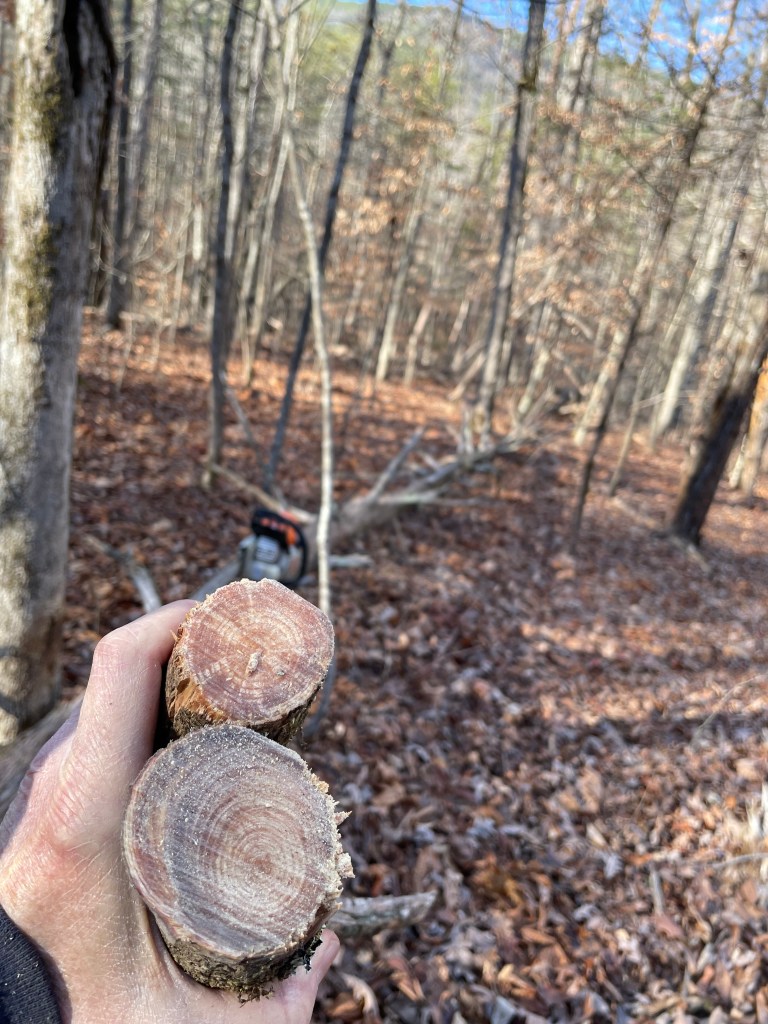
I’ve experimented with chainsawing into these cedars. Many are so deteriorated the saw goes through them like butter and the wood is crumbly and white with no distinctive cedar smell. However, the short limbs often have a solid core and maintain the smell and red color. I brought back samples in my luggage to experiment with.

These branches have solid wood while the trunk they came from is rotted.
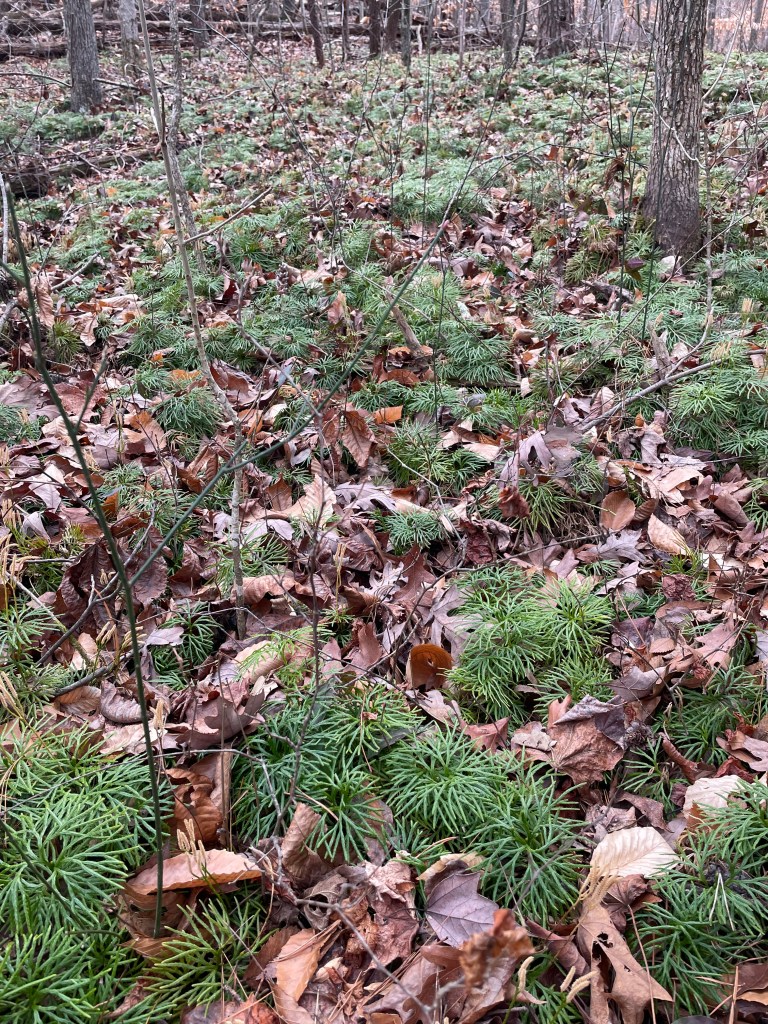
This is called ground cedar but not related to the tree. It belongs to the plant Phylum of clubmosses. There is a lot of this in the area between the shed and the flat spot.
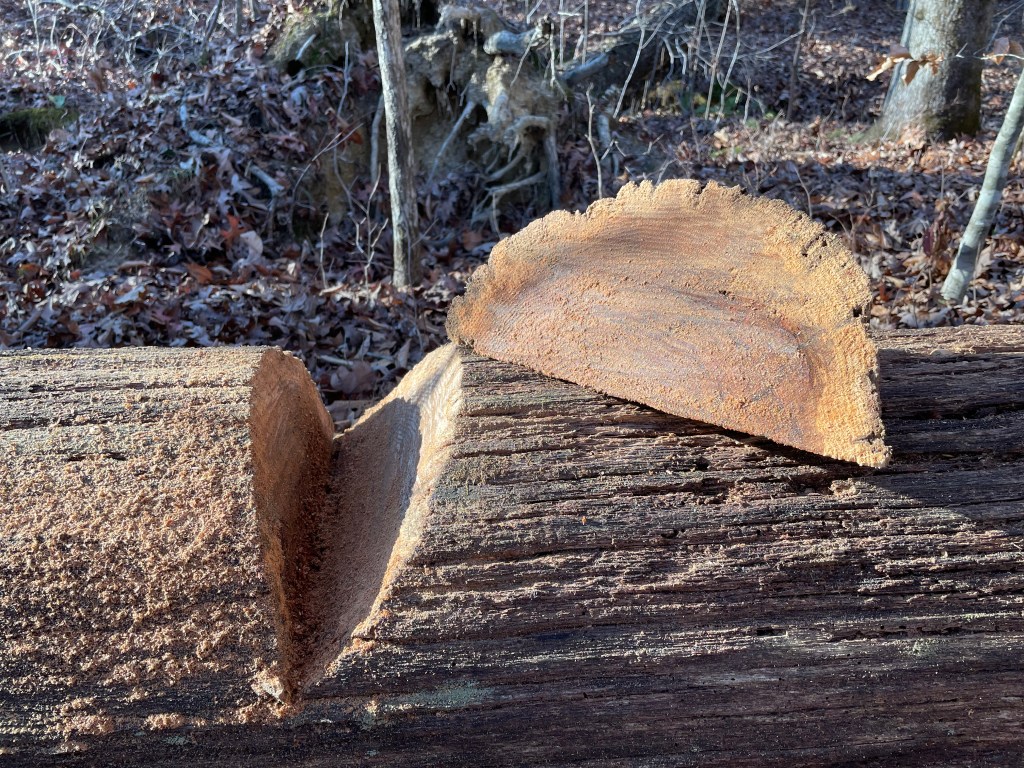
This was an exceedingly straight and long log. The chainsaw worked pretty hard to get out this piece. I brought the wedge to Stewart and he thinks it might be walnut.
Hundreds of fallen trees are on the land. Some may supply usable lumber depending on how long they’ve been down and how much contact they’ve had with the earth.

I’m still not adequately worried about snakes although another neighbor introduced himself from his car window and showed me pictures of two local timber rattlers that had been killed. Both appeared to be approaching baby anaconda size. One was held chest-high folded over a pole. Both halves of the draped body almost reached the ground. The head was a surprisingly sharp and large equilateral triangle. I’m guessing this was accentuated by the head hanging down and it being dead. This video has convinced me not to kill a rattler or copperhead if I come across one. I do, however, think I will invest in some snake gaiter leg guards. 

I had no more sightings of bears but almost every neighbor I talked to had new stories. The two goats from an earlier picture I posted have succumbed to predators and their human parent suspects bears although another neighbor thinks it’s packs of canines bred from wild dogs and coyotes. 

The goat-daddy’s theory gained some authority when he told me that one of the goats had been found dragged up and over a barbed wire fence, a feat that only seems achievable by bears (having no reports of mountain lions in these parts). 

The other goat was found several weeks after it went missing—just a spinal cord attached to a skull which in my mind lends itself more to the wild dog theory. 

In terms of goals, I accomplished as much as I could have hoped for on this trip which included a fair bit of relaxation, visiting family, and except for a few strenuous days only mild exertion. 

There was a good deal of thinking about how to proceed though. The phrase work smarter not harder came to mind more than once. As I approach my last year in my fifties I’m feeling prepared to shuck off at least some of the traits that mark me—according to one close friend—as a dang fool. 

With that in mind I surprised myself with what I consider a few smart choices this trip. Retelling that will be part of my next post which will come out soon. It is mostly written but is too long to include here. 

December 31, 2023

I had a video of me singing Cat Steven’s “Oh Very Young” here as a bit of a teaser to get people interested in this latest blog. I figured some people might be more interested in bad singing than good writing. (Bad and good are likely overstatements on both accounts.) I actually think the singing was okay, but in the end, after a few problems getting the video to appear as the featured photo I chickened out.
Voice lessons are on my bucket list though. I say this while acknowledging that the bucket spills over like a child’s ten-thousand lego collection. It includes ideas that, like the toy, venture far beyond the original rectangular-shaped blocks. My bucket list is messy and unachievable if what science predicts is true and I only have one life to live.

To that end I recently gave away a guitarrón that I found tied to a pole and labeled “free” near the elementary school where I take Sasha to play. Learning a bass, string instrument is one of those legos scattered in the corner of the room collecting dog hair and dust far from the bucket.

This new year, I’m likely giving up several other things that are not on the bucket list but have been a part of my life for many years to a greater or lesser extent—motorcycle riding being the greater one. 

About a month ago I was in two fender benders two days in a row both, coincidently, on my way to see a movie in the theater—something I don’t do on a regular basis making the accidents all the more odd.

In the first incident I was standing at the box office when I heard yells across the parking lot. My truck had rolled backwards and bashed into the bumper of a parked vehicle. In the second incident, I was on my motorcycle stopped in traffic. I looked backwards for a clearing and then quickly accelerated around the car in front, raking off my side view mirror and doing considerable damage to the side panel of that vehicle. Both accidents were 100% my fault. 

Amazingly I was still able to make both movies without illegally leaving the scene. 

The first movie, Radical, was one of those teacher-hero movies that  we like to indulge in. (Not a feel good movie as much as an empowering one.) The second was Fallen Leaves a reluctant love story and bemusing comedy with interesting directorial choices that created a different time and place. I liked them both. 

The two accidents might be a small price to pay to bring an end to my participation in this notoriously dangerous activity. I’ve been riding motos for about 40 years. It’s fun, convenient, and inexpensive but in my estimation I no longer focus well-enough to ensure my survival. 

I’m replacing the mirror housing which I’d already glued together three times. I’ll spit-shine the bike and sell it in the spring when people are more interested in riding.

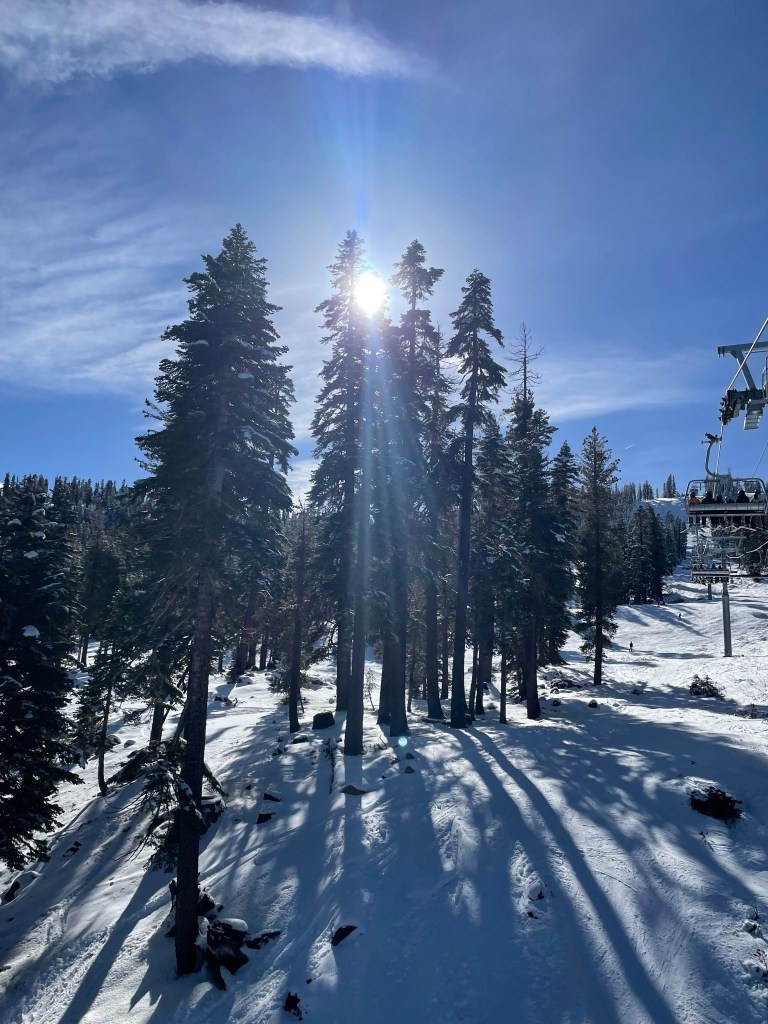
The other activity I will be giving up is down-hill skiing. There is no great emotional cost here. I’ve only done it about ten times in my life. I went a week ago and found myself close to terror after deciding to take three lifts to the top of the mountain and then finding there were no easy slopes down. (Planning and stupidity play a part in this as well.) 

A view from the ski lift.

I don’t have a problem staying on my skis as much as slowing and, of course, with that equation there is a point where the two lines traversing the x and y axes cross each other and end like a cat’s ball of string. Fortunately, helmets are standard issue these days. To be fair, the conditions weren’t great with a lot of crusted over snow, but when I figure in the cost of a lift ticket, rentals, a hotel room, and gas to get there it is a hobby I can afford to give up. 

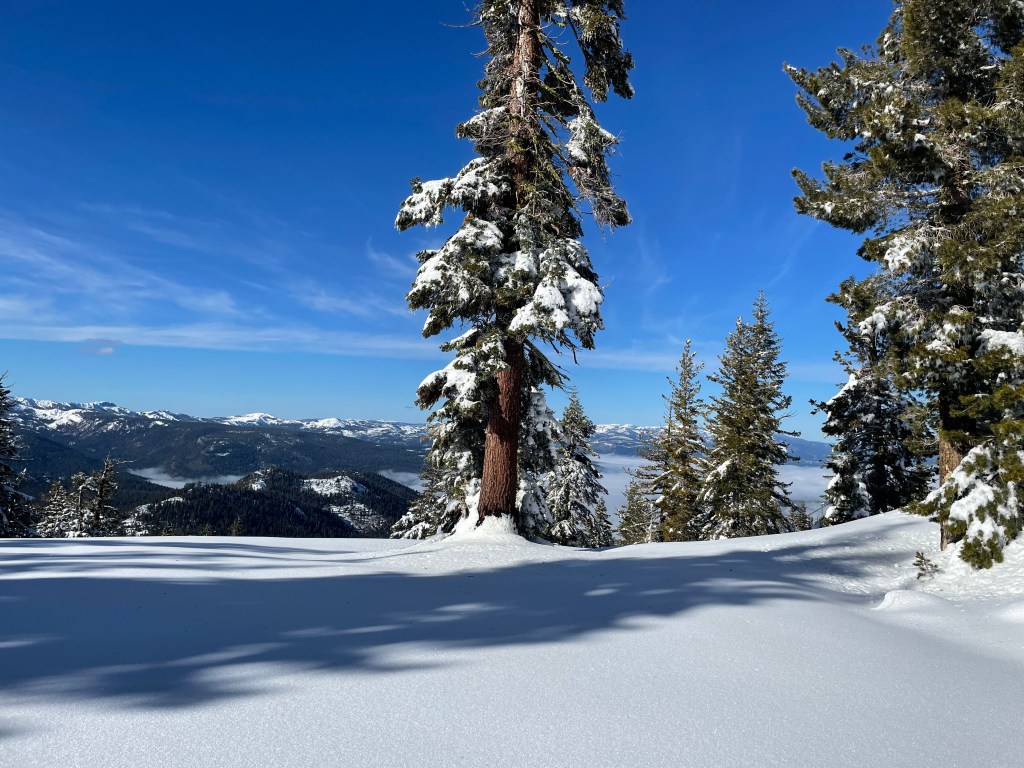
A view from the top.

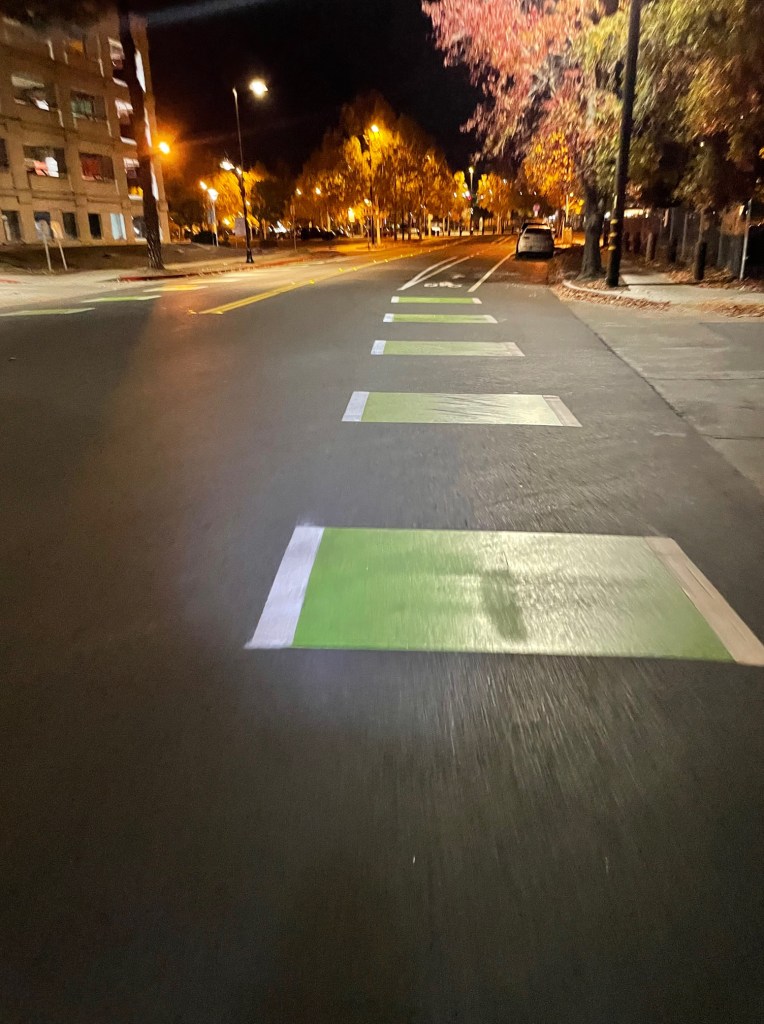
The dangerous activities I intend to keep (living being among them if you pay too much attention to the news and Next Door Ring camera postings) include riding my electric bicycle and bouldering in the climbing gym. Concord has dramatically increased the safety of bicycling by painting new bike lanes. My heart has leapt for joy with each new lane that has appeared. 

Yesterday I shipped my bicycle battery to a business in Colorado to get a complete rebuild. The battery is ten years old and losing its range. The cost is $700 versus buying a new one for $1700. The rebuild is supposed to be better than new as it will add on some extra range and amperage. 

I was just shy of 20,000 miles on the old battery before I shipped it off for a rebuild this past Friday.

————————

Tomorrow I leave for Tennessee to finish off my vacation at my Aunt’s in Corryton and work on my land which is nearby. On the to-do list is finding out why my driveway permit has not been granted although I put the application in with the county over a year and a half ago. The driveway is the space off Poor Valley Road that I intend to gravel near the footbridge I built this past summer. Crossing this footbridge is a short uphill hike to the tabletop where I may someday build a cabin that will overlook the valley between the knobs and the Clinch Mountain range. 

That intention relates to another thing on the to-do list which is to deconstruct the falling Sheridan cabin to use some of the timbers for building the new structure. There is hundred-year old metal roofing that I’d like to salvage along with strong, oak dimensionals of similar age. 

I’ve given plenty of thought on how to do this deconstruction with little surety that it is achievable in the short time I will have this trip.

I’ve been watching YouTube videos which are helpful although most show deconstruction of structures that are more stable than my falling cabin. Common wisdom seems to suggest that taking it apart from the roof down is the best way to insure the maximum undamaged salvage. How to do this safely is the trick since the whole structure is leaning precariously. Walking on the roof secured by a rope attached to an overhead limb might be a good strategy if there is one available. I might also be able to brace the leaning structure adequately with wood on one side and tie it to trees using a winch on the other side. 

I’ve also thought of just pulling the cabin down. One person suggested this might be accomplished with less damage to the wood if I first cut halfway through the supports at the bottom.

Whatever progress I make, or don’t, I’ll be sure to include it in my next post. 

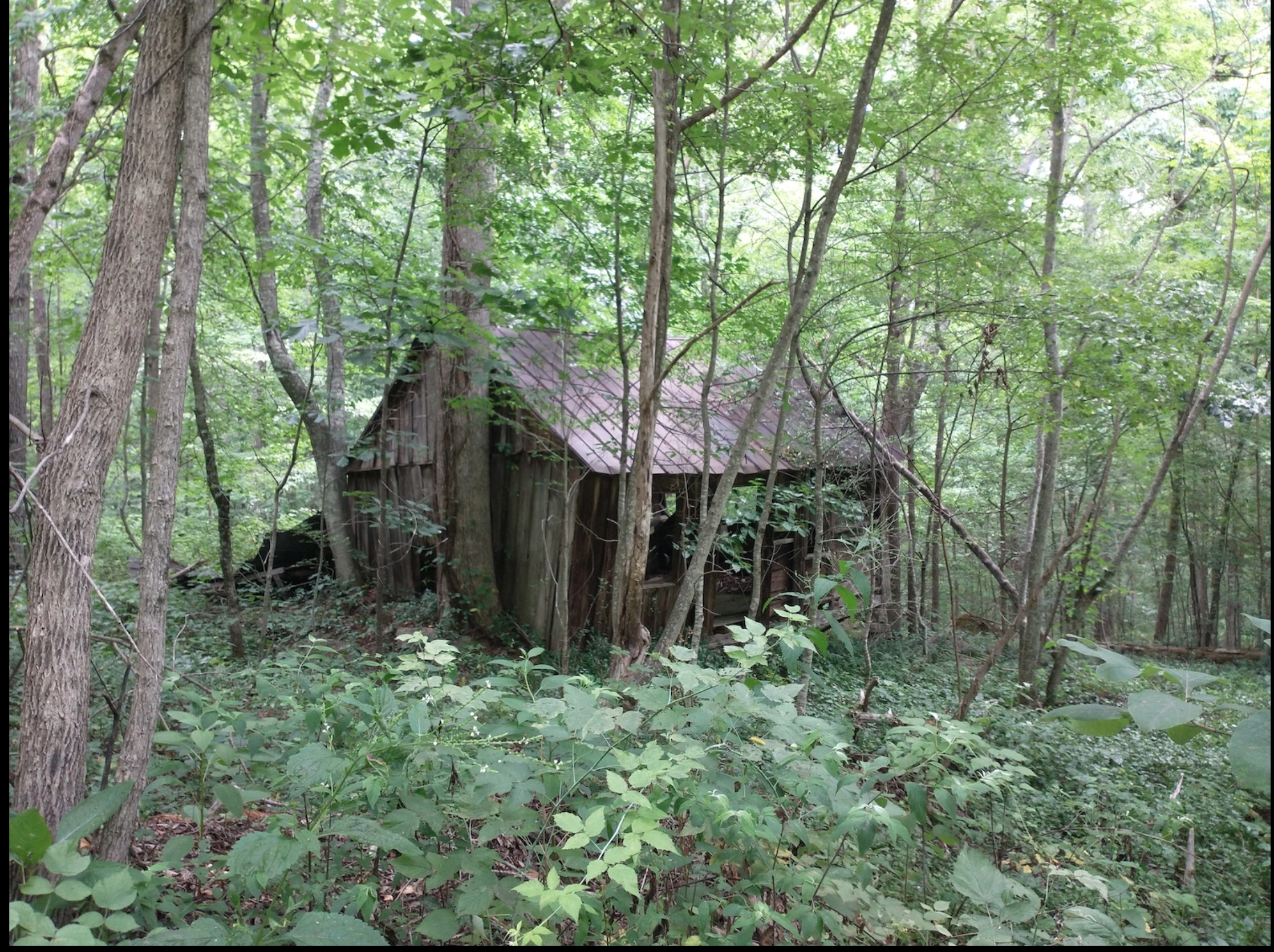
The image on the left makes the cabin seem almost usable. The image on the right is what you see when you go around the other side.

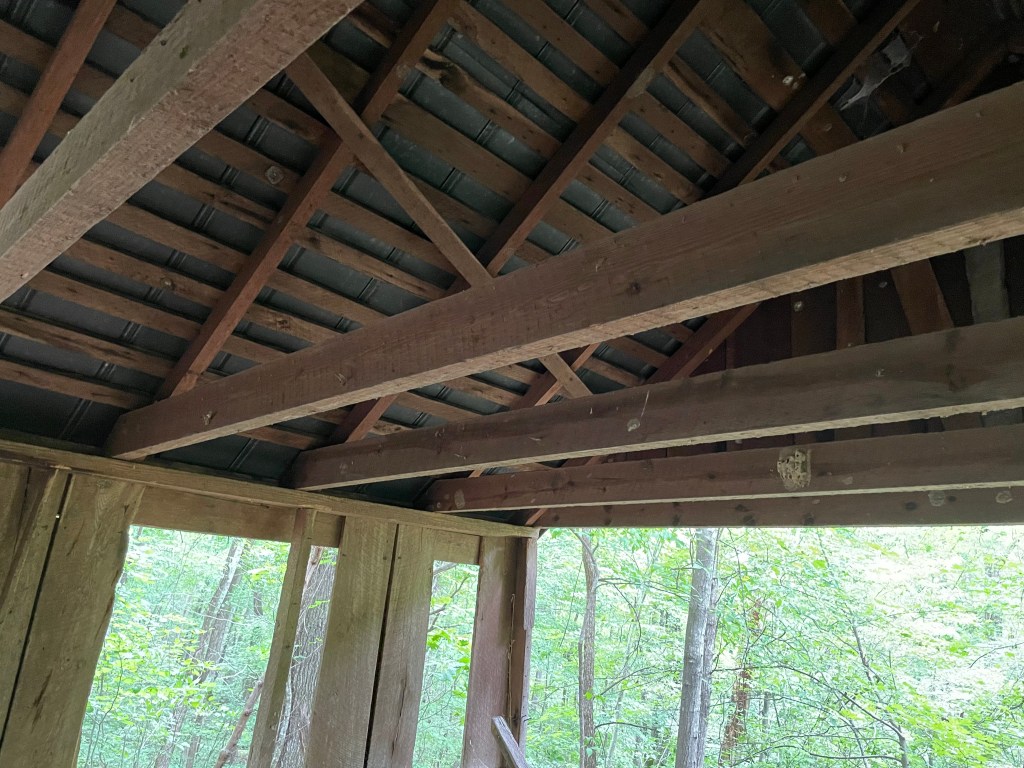
There is a lot of good century-old wood in it like these 2×6 joists.

————————

This coming year feels fraught with tension at home and abroad. I sure hope people stop fighting. I know that sounds like a simplistic wish for these complicated and deeply ingrained divisions, but it’s a starting place. People agreeing to not kill each other is always a good starting place. 

Peace in the New Year. 

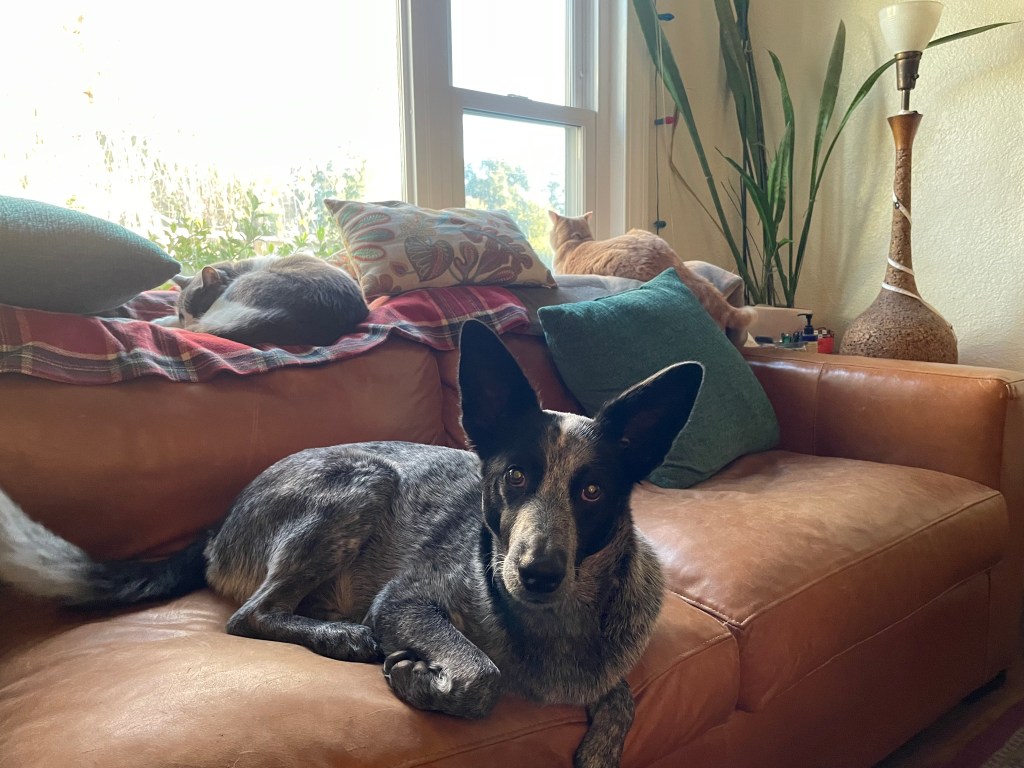
The couch under the front window is a favorite spot for our fuzzy family. Old man Buddie and little lady Ruby Lou sit atop while the incredible Sasha Moonbeam faces the camera.

November 25, 2023

It’s hard to remember what I did for Thanksgiving breaks those first few years when I was in college in Ithaca, NY. I was a mid-year transfer student to Cornell in January 1985 having done my first year and a half of school in my hometown at the University of Southern Mississippi in Hattiesburg. I tried to make it home most Christmases but it was a long train or bus ride just for Thanksgiving and too expensive to go by plane. In later years I went with friends, but there was at least one Thanksgiving, maybe a whole Christmas break when I wondered the campus feeling lonely with the other few who appeared as bundled miniatures stepping from giant buildings or walking across barren quads.

The flat-roofed, three-story cinder block coop I lived in was a former sorority house with architectural elements of Frank Lloyd Wright pasted on Soviet brutalism. The coop was on the North side of campus across both gorges from College town. There was a pervading sense of quiet especially in winter bundled against the cold with footsteps on new snow. Where footpaths paralleled or crossed the salted roads the sharp sound of wet, spinning tires came alive.

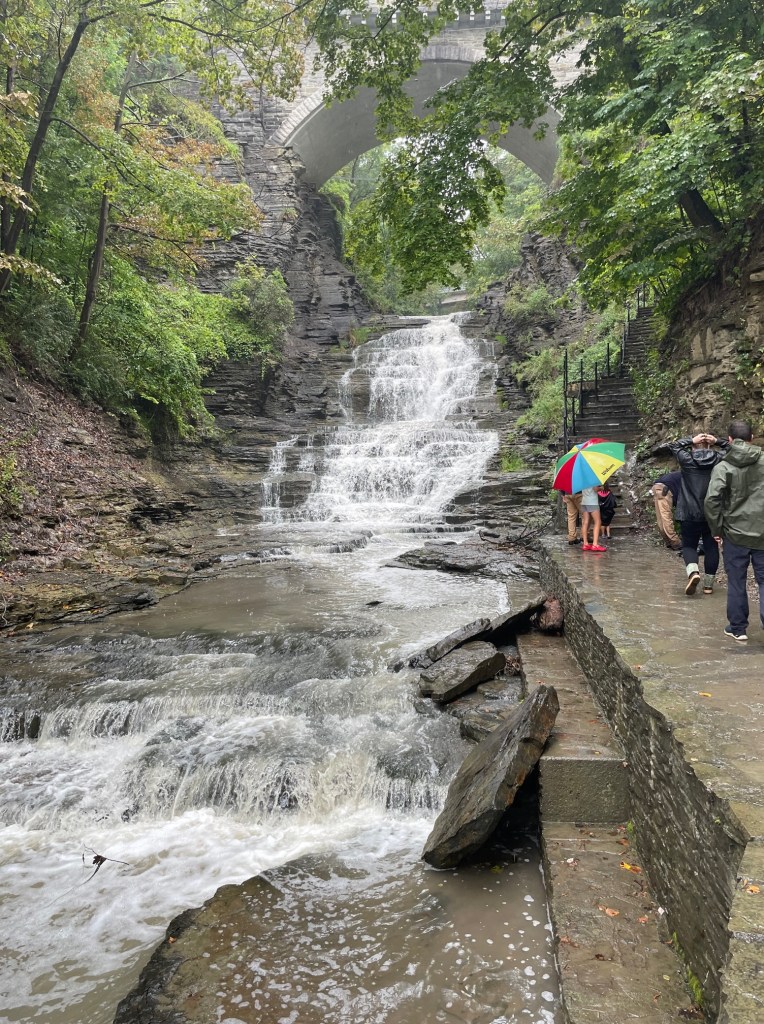
I never went over Thurston Avenue bridge without thinking of the students reputed to have thrown themselves into the gorge. It was said guards were placed on this bridge after chemistry exams. I assumed this was for all the hard sciences. No one thought hotel school students like me were in danger. We were the ambassadors for service-oriented capitalism and spent Wednesday afternoons drinking alcohol in Statler Auditorium for the two-credit, pass/fail Intro to Wine and Spirits class.

It was Philosophy that did me in — specifically Existentialism 213 which I took as an elective the second semester of my junior year. The professor was a charming, short, middle-aged man with a pockmarked face who slowly paced with a cigaret as he lectured. He hopped a seat on the front of his desk when he wanted to pose a serious question, taking a deep drag on his cigaret and giving us all an open, friendly look through thick glasses that made his eyes look watery and big. He’d swing his legs a bit like a child. It was halfway through the semester before I realized one of his black shoes had a four-inch thick sole so the length of his legs would match.

There were six books on his reading list. The Brothers Karamazov by Fyodor Dostoyevsky was the cheeriest of the texts. Then there was The Stranger by Albert Camus, The Will to Power by Friedrich Nietzsche, and the Concluding  Unscientific Postscript by Søren Kierkegaard. Jean-Paul Sartre had two titles: Being and Nothingness and Nausea.  

I understood very little of what Kierkegaard had to say. Still, of all the authors, his long essay gave the clearest prescription for becoming a more enlightened person. He said that the greatest despair of all is not knowing despair. That is, we all have despair but it is much worse to be in despair and not recognize it. 

Reading this I was hell bent on finding my despair. Apparently I had a great aptitude for this. I started to question everything about my existence. My grades started to drop. I succeeded so much that I had to take a leave of absence the next semester. I stayed in the 32-member housing cooperative sleeping late everyday while friends went off to class. 

It’s debatable whether one finds despair or it finds you. It was my first encounter with depression. The next time I wasn’t actively looking for it, it just showed up like a mobster picking his teeth and leaning against the wall waiting for me to come out of my door.

The second depression was much more serious. The gap in my soul was much wider than any of Ithaca’s gorges. Even today, remembering that person so completely taken by nihilism invokes a sharp fear.

Revisiting Ithaca always carries with it that memory. Yet, there is something useful in returning to places of your past and witnessing the change. This time I found a forest that grew up where a field once was.

I have reason to remember this field because one evening when I was still in college I was with a group of friends at Friendly’s — a chain of ice-cream-parlor diners that was high on our list of favorites. 

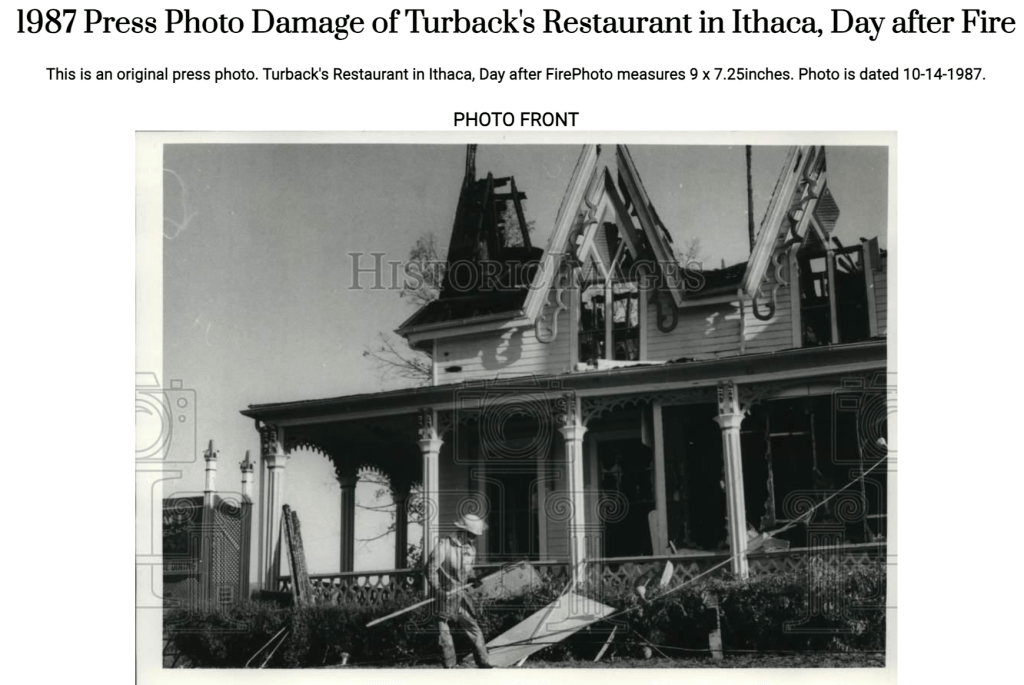
We’d just finished eating at the Elmira Road location. It was perhaps the last commercial establishment within the southern bounds of the city’s street lights. The bill had been paid and we were hanging out when a line of wailing fire engines passed by spinning red in the crisp, autumn night. For some reason we decided to chase them and ran to our one car and packed in. 

The night was black. The red lights ahead were a beacon that soon brought us to an orange conflagration. We pulled onto 327 which split off from Elmira Road and watch the dramatic fire from a safe distance across a wedge of unobstructed field. It was the beautiful ginger bread victorian that housed Turback’s Restaurant on fire. We could see the multi-peaked roof poking through the flames.

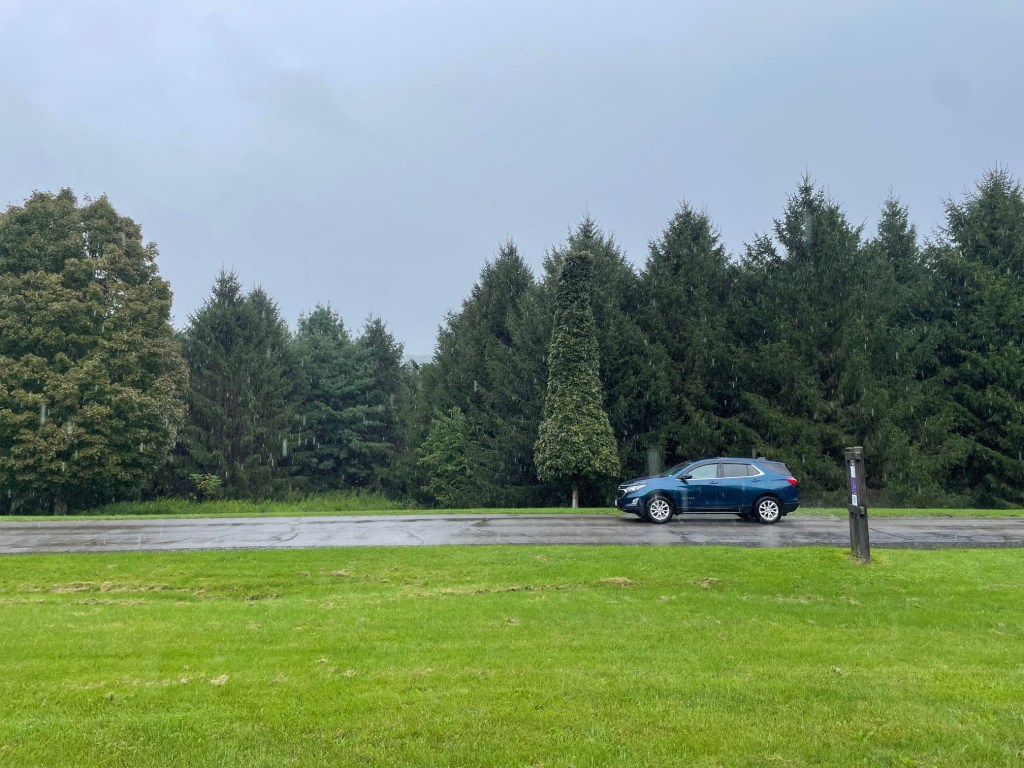
The picture above shows what was then an unobstructed field that we looked across to watch the fire. The trees that now stand there are a representation of the time that has passed. New as well is the road which is another entrance to Treman State Park. 

This is on the other side of those trees across Elmira Road. The Victorian was rebuilt but never occupied by a restaurant again.

Friendly’s restaurant took a longer time to die, as did The Nine’s Pizzeria and Bar, another favorite hang out. Reports indicate they both went under in the last few years. Time swallows all things. 

The Nines had everything I wanted in a bar. It was walking distance from my campus coop. It had pizza, beer and a pool table that if I was lucky I could hold all night. There was a regular band that became my favorite. Neon Baptist‘s preacher/lead singer slung a southern drawl full of dark prophecy and sordid endings that fit with my brand of pessimism and inspired me to perfect some signature dance moves with housemates. 

Time marches on. It’s not on your side or against you. The Thai Cuisine where I worked as a waiter for several years after college is also no longer in existence. The tiny strip mall that contained the restaurant as well as my optometrist’s office is torn down. 

Lex, the restauranteur has had other successful operations over the years and when I’m in town I go visit whatever his newest is. This time it was Mia, a popular upscale Asian restaurant on the commons. I went my last night in Ithaca this past September. I learned from the hostess that Lex had passed the restaurant on to a relative and moved to Syracuse. 

Talking more with the hostess, the thin face of an attractive young cook from 34 years ago pierced the extra padding and spectacles she wore. My younger face emerged to her simultaneously and we both laughed with the recognition. It was Bun, the sister-in-law of Lex and she told me her husband, Noi, who was the main cook at the Thai Cuisine is now a monk back in Thailand. My waitress was their daughter.

The Thai Cuisine was always a family affair. Lex’s mother who we all called Mom was a fixture when I was there. Lex and his brothers Max and Noi all cooked though Lex was most often the front-of-house manager. It was a busy place for many years after opening in 1988– one of the early Thai restaurants to bring this new delicious cuisine to the states. It took the cuisine seriously. The tables were white cloth and the staff was black tie. It was several years before Lex put any artwork on the walls. He wanted the focus to be on the food.

In the days before people were trying to kill themselves with Ghost peppers and Carolina Reapers, the heat of the dishes were always a point of discussion. We offered them served hot, medium or mild, with strong warnings about the hot.

Max, the oldest, biggest and jokiest of the brothers was cooking one day and he put on a serious face and asked if I knew the three kinds of hot. When I said I didn’t he explained, “You’ve got hot, Bangkok hot and then GOD-DAMN-HOT!” At this he exploded with laughter.

His two daughters who were four and six when I first met them are now professionals–I believe Bun said a lawyer and a social worker. I’m glad the older girl survived. She always arrived standing on the bench seat next to her father as he swung his big sedan into the parking lot at a high rate of speed and slammed on the brakes. When she came through the front door she often had messy hair and a big smile on her face as if she’d just gotten off an amusement park ride. Max’s trademark was fun.


Below are some things I’m thankful for. New bike lanes on several routes I take to the grocery store, the BART station and to the gym. And of course Sasha!

Sasha at the nearby school where we go every week to play.

October 21, 2023

That one-hundred dollar forged steel art pencil I bought this summer really hasn’t served the purpose I imagined which was to motivate me to keep my desk clean for writing. The photograph below tells the story. The steel pencil is buried beneath the clutter somewhere and I sit in bed typing these words. 

I had good intentions—not the sort that the road to hell is paved with. There is really no damnable offense here. Just clutter. If I had to use an aphorism to redirect this character fault I’d say cleanliness is next to godliness. That is more in line with my way of thinking about a higher power and how being clutter free is related to thoughtfulness and meditation. 

I also like to believe that if this relationship between god and cleanliness were true that my grandmother Knott would be very close to god. You could eat off the linoleum floor in her kitchen and a wet, hard candy that fell from your mouth onto her living room carpet wouldn’t bring with it a single hair or speck of dust.

Grandma was a god-fearing woman. She went to church every Sunday and would sit with the bible and read it though I sometimes wonder if it was primarily a sleep aid. 

The most enjoyment and inspiration I ever got from that book was as a discussion starter in a bible study group I belonged to with a bunch of (mostly) homeless men in the rectory of St. Boniface Church in the Tenderloin. 

Barbara Graves was the only woman I ever saw in the group and she was the leader. A Quaker, anti-war activist and bronze star recipient for her work for the Red Cross in WW2 Europe — which she later gave back in protest — she was eighty years young—compassionate, strong and good-humored she celebrated people speaking their mind. 

I think she probably had a straight and narrow path she followed like my grandmother but her’s involved listening to people’s stories that might include one older man’s regular recitation of working at a laundromat and giving blow jobs to customers at the back of the store. 

Entertaining such discourse would have been as alien and inconceivable to my grandmother Knott as an invitation to board a spacecraft and be taken to its leader. 

The bible study group always started off with a song and when I was chosen to pick it from the binder I always chose “Lord of the Dance,” because it had a catchy, exacting beat and our motley crew reminded me of medieval people who I could imagine ticking their heads back and forth to the sound of lutes and flutes and whining bagpipes. The dance would have been closer to hopping on and off one leg.

I’m not a religious person but I do have some faith in a higher power whether that is a collective consciousness or a million wings of monarch butterflies in migration. 

Recently, an offence to my non-religious nature has been reignited. I know this makes it sound like I look for opportunities to be bothered but I think I really do my best to not be offended but at times find myself suddenly worn down. This time it has to do with the “under god” version of the Pledge of Allegiance that one of my schools says over the loudspeaker every morning. 

To the credit of the principal, after my original complaint, he made the pledge optional by adding in the words “if you would like to join us”. Still, I don’t think it’s enough. There is a lot of talk about equity and what that looks like in the school district. By my way of thinking, in the case of the pledge, equity would mean not just telling the students that they have a choice of whether to join in, but also educating them on the other way to say it and why some people do not want to use the word god.

Previous to working at this school I worked at another school for four years where this version of the pledge was also said. At that school I was sometimes with a group of students when the pledge was recited. I’d either pause and leave out “under god” and return to synchrony with the students as they finished “indivisible, with liberty and justice for all” or sometimes I’d just drive on through out of sync and end before them. That would get odd looks and sometimes questions that gave me the opportunity to explain the different way to say it and why. 

Occasionally I’d be caught in the office with other adults and I would simply stop what I was doing and stand without speaking. One morning I was in the office crouched down filing papers in a lower cabinet when the announcement came on led by students in another room. “Stop, stand and face the flag. Put your hand over your heart and begin,” was the script used. 

The principal was in the office with me and that day I chose to not stand but simply stop shuffling through the files in respect of quiet. Seeing that I wasn’t rising, my principal looked at me quite pointedly and I rose though I did not join in with the words. The look she gave led me to write a note to her about my beliefs and why I did not like using the word god. 

While it changed nothing at the school, the principal apologized for offending me. When a new principal came the next year the pledge was no longer said and I felt a sense of relief at not having to go through the motions.

In 1954 President Eisenhower added “under god” to the original pledge that was written in the late 1800s. It had become increasingly popular in public use and Eisenhower wanted to add the words to protest growing communism. By the 1970s and presumably earlier there were enough protests that most school districts dropped “under god” and resumed the earlier form. In the heavily Christian deep south where I lived for all of my primary and secondary schooling “under god” was mostly not used. 

I don’t understand when people complain that “you’ve taken god out of school” since we have a long history of leaving deities out of it. One of the pillars of this country is freedom of religion and the separation of “church and state” and what fits more in the category of “state” than public education? 

It would be nice if a treatment of different religions and non-religions were added to the common core standards of education. Religion is an important aspect of humanity and tolerance for different beliefs is a worthy subject. Mentioning god to the exclusion of other beliefs does not have a place in the education of people representing all those backgrounds. 

In recent history, it has been common practice for presidents to end speeches with “and may god bless America.” Ronald Reagan began ending his speeches with it and all presidents since then have as well. To my annoyance Barack Obama, who I consider a great orator, continued the tradition. It’s pandering to the masses. Thoughtful Christians should rethink what it means to be all for one and one for all. 

———

I intend to return soon to the subject of Ithaca and my late summer visit. There is more left there to be said but something I’m beginning to learn with this blogging is that if I try to get everything in that I want to talk about I often end up frustrated with the end result of putting out nothing.