October 4, 2023

It’s been difficult to get back to the blog. I’ve been burning my candle at both ends. On top of that shifting from summer to work mode is never easy for the teacher.

My resistance to the chore of work has not been what it was last year, it’s just that it hasn’t fit in with my social life. I’ve been dating up a storm. I may have mentioned in an earlier post that Jillian and I transitioned to housemates about a year ago now. I hesitate to say that this is all we are because housemates is quite a lot and in many ways we remain each other’s number one support person. But I will say that not viewing ourselves as partners has taken a lot of the pressure off.

I’m about to slow down on the dating and take a more measured approach. It’s fun but exhausting. Over the summer I cast my net far and wide with profiles on three different dating sites—I even met someone for beer at a brew pub while I was in Tennessee. Just recently I put two of my dating sites on hold. I’ve been operating under the opinion that it is better to engage prolifically than to be extra choosey. There is just so much you can know about a person without meeting them. Even for basic attraction this is true to some extent. The animated individual holds the truth while the curated individual can never be known. 

With this in mind I’ve been on perhaps a dozen first dates in the past few months. Of those three turned into second and third dates and of those three only one had some romance which was nice but of course complicated things and currently has a dubious but hopeful status.

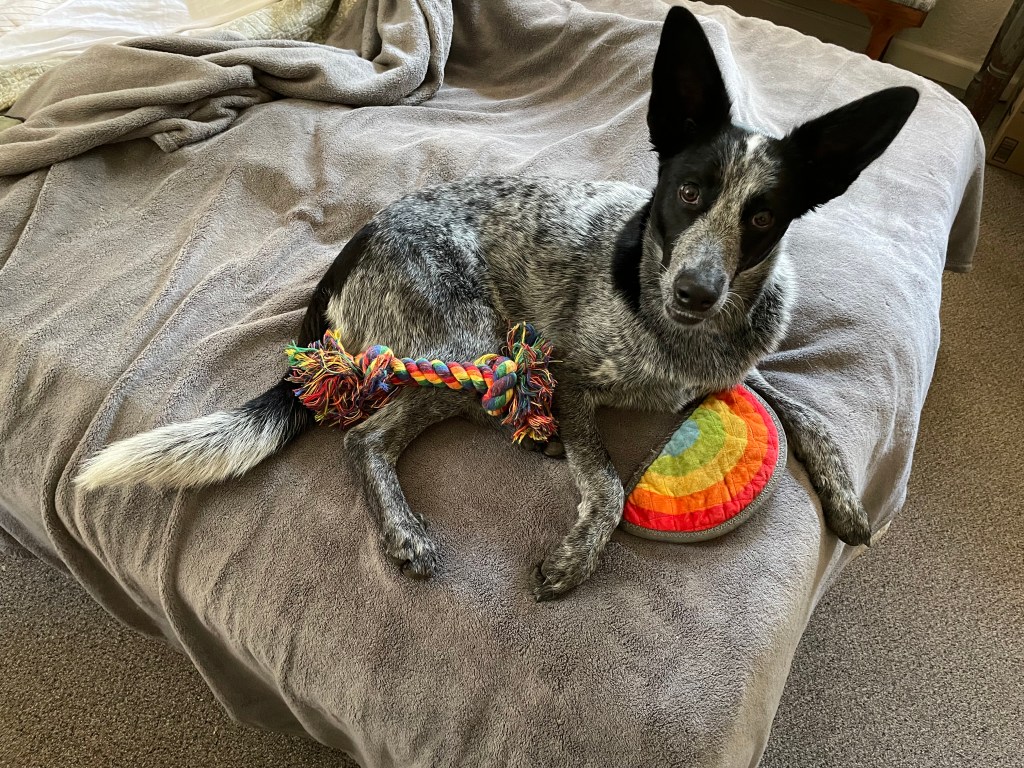
Whatever the case, I’ve got at least one or two new friends, but the energy for continuing this pace is waning. Life goes on whether you are dating or not. There are always things to do when I get home from work. Today it was pay my motorcycle license renewal which sat on my desk with a not-too-serious-but-annoying-threat to bump to a higher bill if it wasn’t paid ASAP. It was also necessary to suck up the cat fur that is beneath my bed. Peeks under there revealed that Ruby Lou, our little buff cat had made a broad nest of her own hair between the plastic storage bins. This—and lately my bed—have become Ruby’s favorite spot after finally giving over Jillian’s room entirely to the newest family member, Sasha, Jillian’s 15 month old, blue heeler cattle dog. My room is now cat central with Ruby Lou— technically Jillian’s cat—and my own cat Buddie making it their home base when they aren’t outside.

Sasha spins in circles when I come home. If traced with a spirograph they would make a dozen red, blue, green and yellow links as I point her toward the kitchen saying “back, back, back, back” so I can unload my mochila and bike pannier then make it to a chair to sit and properly give her some loving. The alternative to her spinning her way there with my repeated commands is to allow her to leap to my sides and belly, shredding my clothes and skin with her sandpaper pads and black claws with their razor sharp edges honed by the red lava rock in our back yard.

Sasha is also Jillian’s animal—more technically I suppose than Ruby Lou because I made Jillian sign a contract that she is 100% responsible for the dog before I agreed to have another pet. The fact that I love Sasha beyond words…(A cheap out for a writer. I might try to describe it at some point)… and that I have a big role in her play and exercise—as well as her financial upkeep—gives me nothing more than uncle status. I’m not allowed to call myself daddy. This is a firm rule for Jillian.

At times it elicits small pangs but it is not a harsh price to pay for having no responsibility which, otherwise, might include cleaning up mounds of poo in the back yard and helping to feed the beast four times a day. 

Blue heelers have their one person and that is definitely Jillian. Despite the absolute ecstatic excitement I’m greeted with by Sasha, her fierce protective nature extends to me and is demonstrated whenever I pass through Jillian’s bedroom door. If I should want to talk to Jillian or visit her in her private space, Sasha leaps onto the bed, crouches and begins a fierce growl.  I dare not approach with anything but caution. To get  close I must offer up my arm to be bitten which she does with expert constraint that says watch it buddy. Someone intent on harm would come across a dog more like a tornado filled with nails and plate glass shards with powerful winds shifting in unpredictable directions. 

————————

For my last blog post I wrote about the long wedding weekend I attended near my old college town of Ithaca, New York. I’d like to continue that here.

This homecoming-of-sorts was one reminder after another of time passing, decades measured across the lines on the faces of old friends—among them, the organic farming family, The MacDonald’s. The first of several notable reminders wasn’t in the wrinkled face of an aged one but the still fresh countenance of Parker MacDonald. 

Shelley and Tom’s youngest child was born a few years after I’d left the area. I asked Parker how old he is now expecting to hear something in the low twenties. When he told me thirty I was reminded that this was the age when I first considered I was really, in all actuality, a grown up and that, depressingly, there was no turning back.
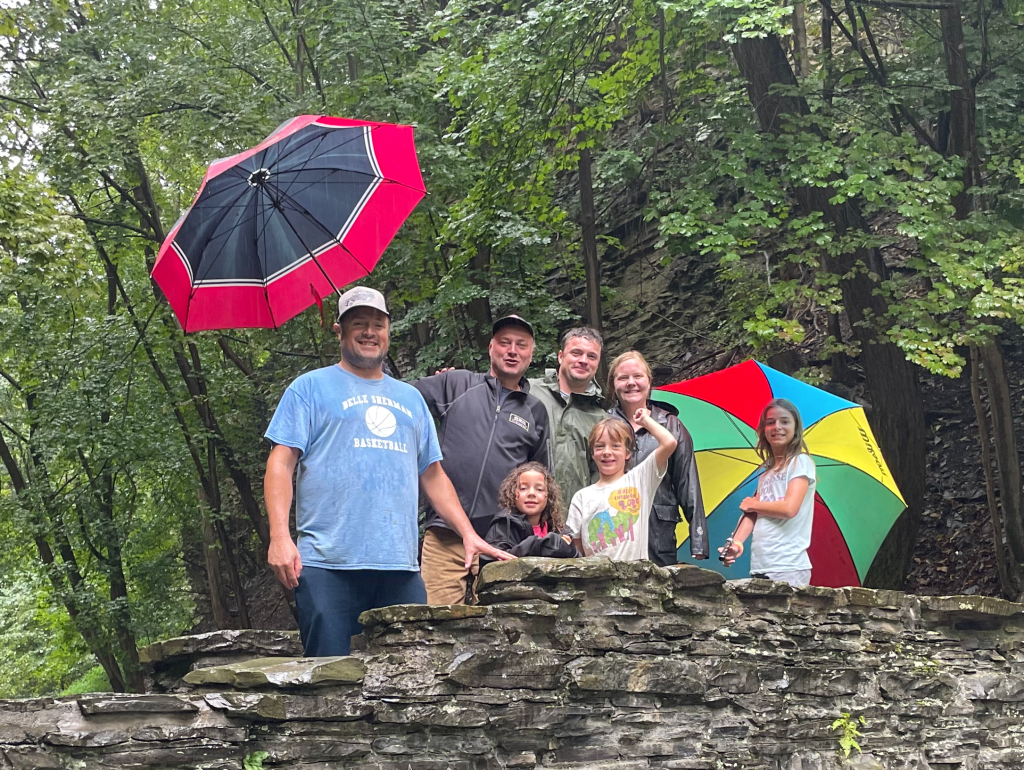
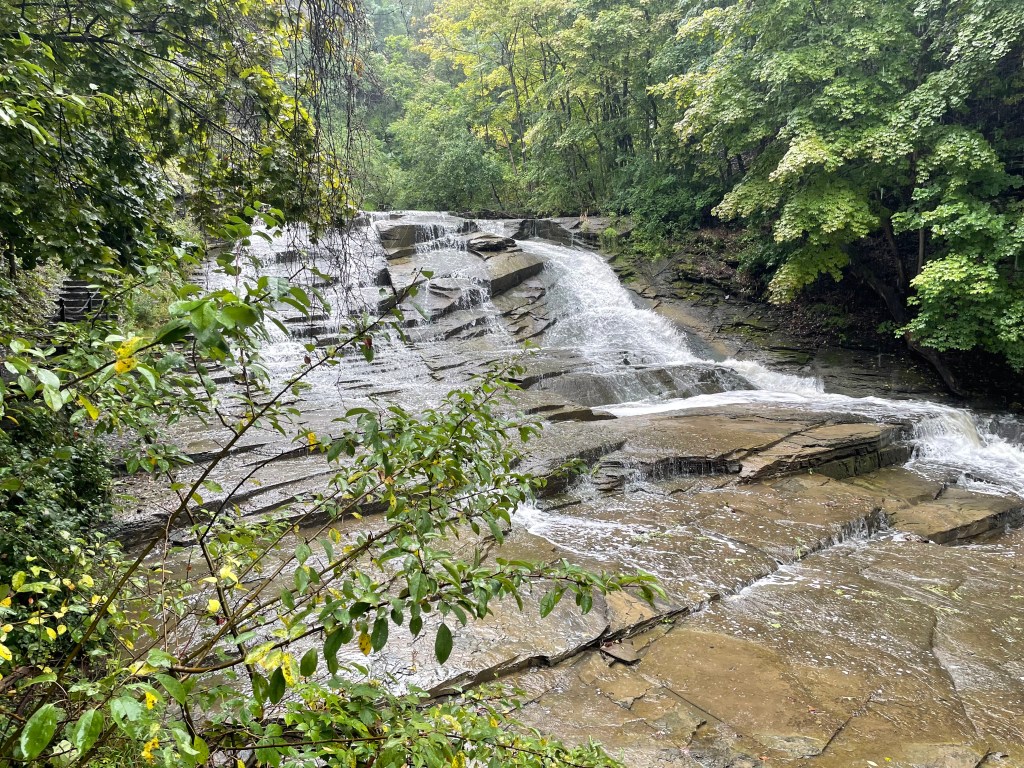
On my last day in Ithaca I went for Indian food and a walk in Cascadilla Gorge with some of the MacDonald children–and I mean the adults here. From left are Trevor, Lucas, Parker and his wife Binna. The three smart youngsters are all Trevor’s kids.
This is why they say “Ithaca is gorges”.

Parker was left in my care as a baby when his mom came to visit and attend an organic food event at Fort Mason in San Francisco. I’d made my escape from my beloved college town to the big city a few years earlier mostly leaving behind a bad case of who-the-hell-am-I?

I took the baby to the broad sloping lawn on the park above the buildings where a fine, large Beniamino Bufano statue happens to show a serene mother with a child in her care. Her peaceful face pointed out a rather large discrepancy as Parker was crying loudly and I was trying to do everything I could to stop it. I spread out the small blanket his mom had provided and laid him down still crying. 

I did some cooing and some empathic listening, responding with, “I know, I know.” I put my hand on his chest. I picked him up and rocked him. I repeated all the things I’d seen caregivers do in my still short life (still a few years younger than Parker is now). Nothing worked. His little face was red from all that concentrated effort to sing his one note aria with an all-too-brief pause to replenish the lungs between wails. 

Maybe that’s what gave me the idea that singing might help. But what? For a writer I have probably the worst memory for lyrics. I only retain the refrain in popular songs. After that, the words disintegrate into mumbling and made up lyrics.

The one song that I reliably knew was the theme song for the 1960s television series The Beverly Hillbillies. After about a decade of daily, after-school tv- watching I’d seen every episode three times. 

When I began to sing this it almost immediately worked. Parker stopped and listened to my story about a man named Jed. When I reached the end and the dreadful lack of melody about swimming pools and movie stars and the terrible, get-ready-for-the-bow, title-proclamation—The Beverly Hillbillies!—I started again before the baby would be jangled back into unhappiness. 

I continued to sing on repeat until, miraculously, his eyes grew heavy and he fell asleep. Even then I was afraid to stop. When I finally did the mother statue with the child made a lot more sense. 

Standing before me, 30-year-old Parker MacDonald felt very much like a hyperspace jump between the decades. It was a reminder that life is short and will be over too quickly. It’s a good reason to slow down and smell the roses or taste the grocery store samples—whatever is your metaphor of choice. 
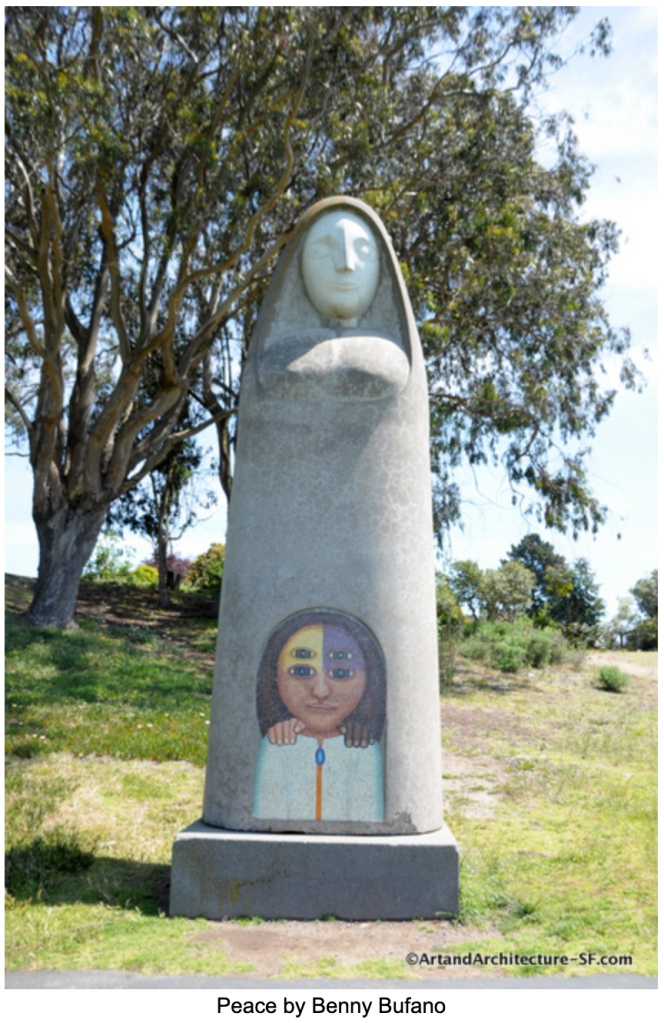
This is the sculpture at Fort Mason. Bufano is purported to have over 500 public sculptures in the SF Bay Area.
This is the Hand of Peace also by Benjamin Bufano. This is his largest sculpture and is on display at the Civic Center Park in Walnut Creek where I went with Jillian and Sasha for a field trip to see it. Scroll to the bottom of this link for a fun video about the piece and the artist: https://walkwc.stqry.app/story/192816

Much of Bufano’s work is about peace. With that in mind the answer to the popular question “Haven’t we learned anything about war?” seems to still be “No”. Here is a July article about the cost of the Ukraine War: https://www.aljazeera.com/news/longform/2023/7/8/500-days-of-war-in-ukraine-at-what-cost

The statistics and pure stupidity of blowing up people are a compelling argument for ending the war as soon as possible with negotiations that might include Ukrainian concessions for land and giving up the idea of it joining NATO which may be the reason Russian felt compelled to invade in the first place.

I can only begin to understand what might be fair having no expertise on the issue. Defense and revenge are both gut, automatic instincts, but so are love and compassion. Everything in between is a confusing business.
August 28, 2024

(one week ago)

It may be that in Ithaca, New York—a liberal, knowledge-soaked, university town—the best internet cafe on a Sunday night is McDonald’s. It was the only place I could find open and with internet…and it wasn’t even “open”. I had to sit in the parking lot cramped between my steering wheel to click out a daily write to this week’s partner in my writing group. A sign penned with a faint pink marker was on the outside door explaining that they were short-staffed and could only operate the drive-through. 

I’m back this morning, Monday, to Internet—if that can be a verb. It really might be the most convenient place given my location up the hill toward Enfield were I’m staying in a pickle-delivery vehicle — a 2000 Toyota Sienna—on Luke MacDonald’s homestead. (Note the a between the M and c. No relation to Ronald-the-clown who has been hawking American burgers since the 1950s.) 

Fortunately, the restaurant is fully staffed this early a.m. and as a bonus, the piped in music is playing hits that were a background to my transferring to the Cornell School of Hotel Administration here in January 1985. At the moment it’s Julian Lennon’s Much Too Late For Goodbyes preceded by Ashford and Simpson’s Solid. 

I’ve come back to my college town perhaps a half dozen times since I left for California in 1991. When visiting, I’ve always had a feeling of something unresolved, reminders of the mistakes I made, an extra internal organ sensitive to the terrible depression I experienced before I left. This time, however, it feels like my past here is a finished canvas. I can see all the parts like an elaborate piece of narrative art. There is beauty mixed in with the ugliness and pain.

I’m here to attend the wedding of my old friend Thor to his long-time partner Rachel. I first met Thor through a friend at my University housing coop where I lived from 1985 to 1988. One of my early adventures with him was to go slaughter a lamb for the coop’s formal dinner in which we all dressed smartly each Spring to enjoy an end-of-year dinner in our dining hall. 

I was co food-steward at the coop for several years with my first partner Cathy followed by Jackie another year. Together we planned meals for 32 people, scheduled cooking and clean-up, placed food orders, and made runs to the grocery store for things that could not be obtained through Sysco. Jackie and I could carry four full bags of groceries on my little Honda 250: a bag in front, one squeezed between and two hugged by said passenger instead of holding onto me or the bike.

Slaughtering and dressing lambs was not in my job description but this along with the normal responsibilities may be the closest I came to following the career path of a hotelie. The pay was not much—just free meals—but my parter and I could usually breeze through a plan with scheduling and orders in a couple of hours every few weeks. 

Slaughtering the lamb, while educational, was traumatic. Thor’s Aussie sheep farmer friend whose rolling pastures were some miles away had a lame (but otherwise healthy) lamb that we could have for cheap. Unfortunately, after tying the back legs for hoisting, the knife placed under the bleating babes chin was found to be too dull for the deed and guess who was chosen to hold the shivering little lamb while the utensil was taken back to the house for sharpening? I don’t remember if I immediately became a vegetarian but in certainly influenced the decision that lasted for most of a decade. 

I’d received my college degree by the time I started waiting tables at the Thai Cuisine. It was upscale Asian, black-tie service and I was eager to get in on the big wads of cash I saw my girlfriend bringing home. Waiting tables wasn’t the kind of work most hotel school graduates did. They ran restaurants—whole chains of them. They ran hotels.

Still, I was happy to have found a community which seemed more important than running off somewhere to be in a management training program. I’d also become something of a black sheep in the hotel school before I graduated. Rubbing shoulders with too many people outside the school had turned me into a critic of the corporate world. The liberal university had done its job of making me worldly, pro-union, environmentally-minded and critical of materialism. I wore a red arm band and protested to get the university to disinvest funds from South Africa. On a more personal note, I was scared shitless of being a manager of people. I couldn’t think of anything I was less inclined or capable of doing.   

After three years waiting tables, first at the Cafe des Amis, a delicious Tunisian Restaurant where I worked my last year of school, I was beginning to have a hard time putting on a smile. I was ready to try new things. 

While still working at the Thai Cuisine I began to sideline as Thor’s grease monkey in the VW repair shop he’d opened west of downtown in a space that backed up onto an inlet of Cayuga Lake.  It wasn’t an official job. I was mostly just hanging out and changing oil but also learning more complicated things if a teachable moment aligned with the opportunity to be useful. Sometimes I was just learning the names of tools to hand to Thor. 

With the lower half of his jump suit sticking out from under a car he might say, “Hey will you pass me that torque wrench next to the compressor?”  

Thor is a natural teacher. People like hanging out with him because beyond being a fun person, he’s likely to teach you something. Around this time he started a second job teaching car mechanics to high school students at a garage run by BOCES in Tompkins County. 

He also introduced me to the MacDonald’s, an organic farming family I became very close to over the years.

(to be continued)

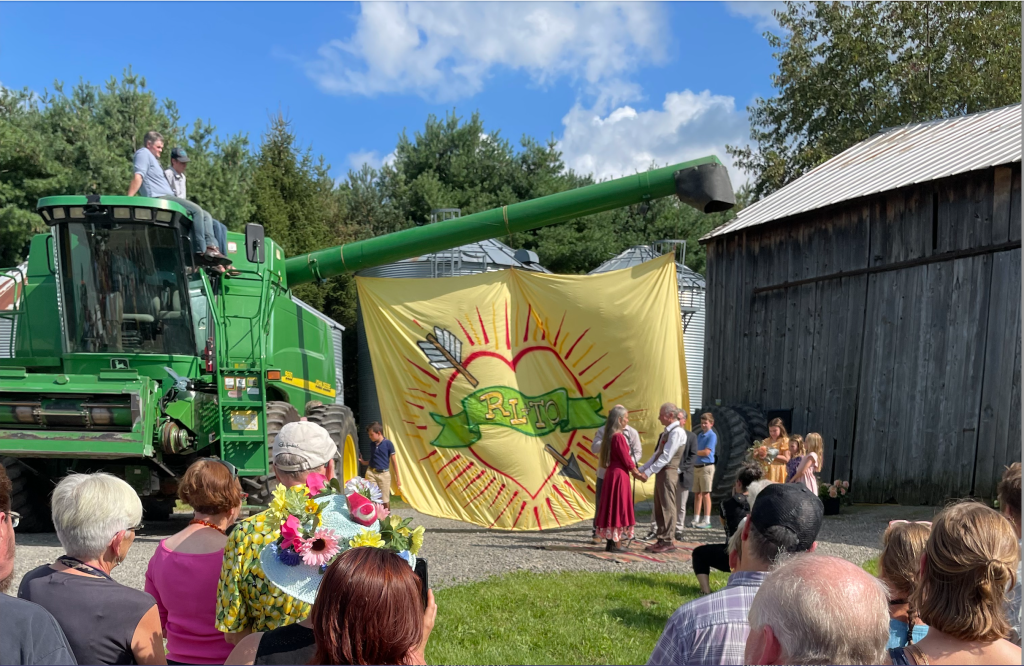
The groom arrived on a tractor and the bride on a giant combine that swung its grain arm out to reveal this banner with their initials inside a heart. Thor’s brother Troy and friend Bill led a beautiful, heart-warming and funny ceremony. A barn full of tables and food, a beer and booze truck, and a mechanic’s shop with bands playing music all night made for a great celebration with all the people who said “I do” to support and love the newlyweds.
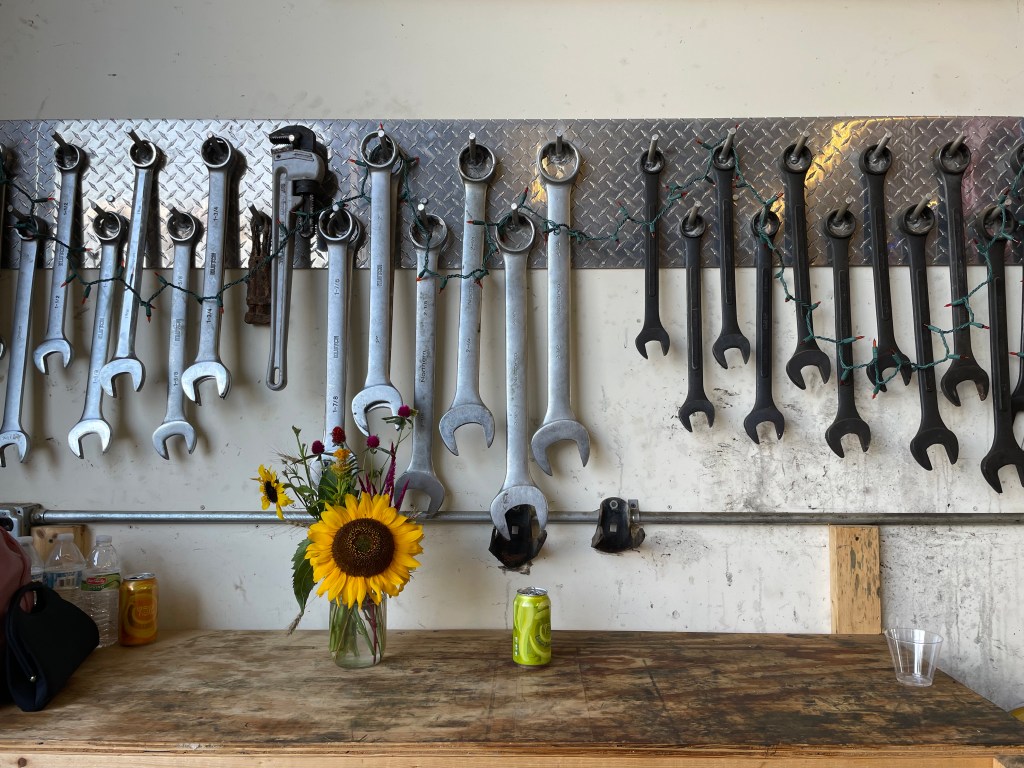
Thor’s a successful grain farmer now but still does his own mechanics. Bigger wrenches are needed for bigger machines.
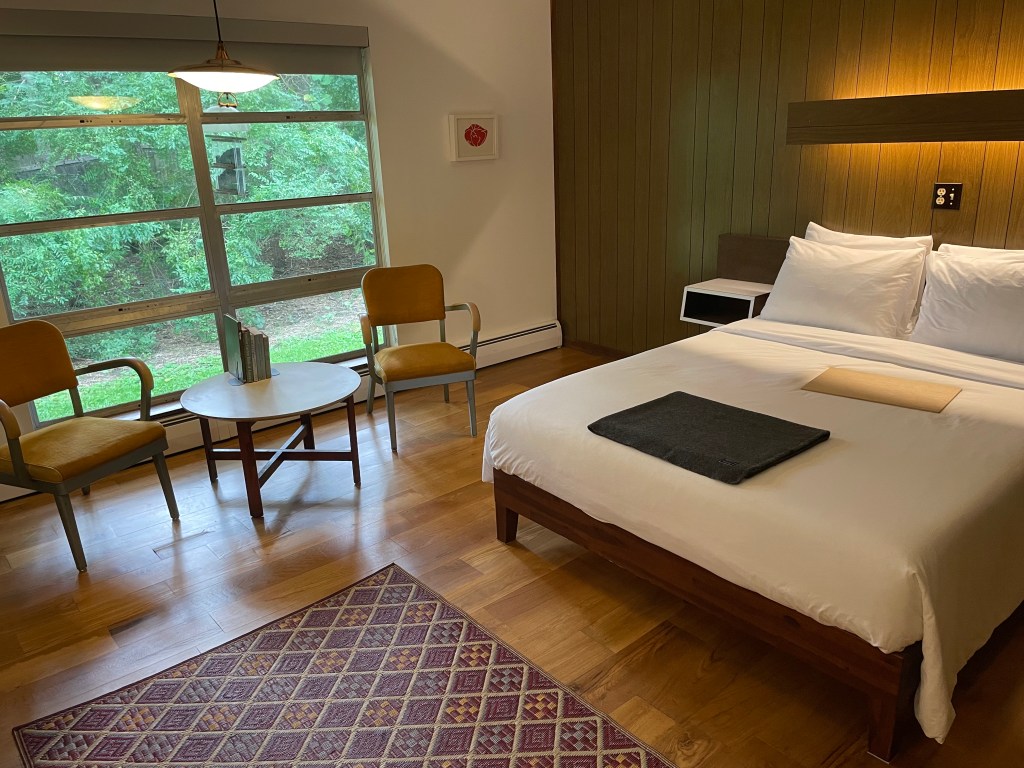
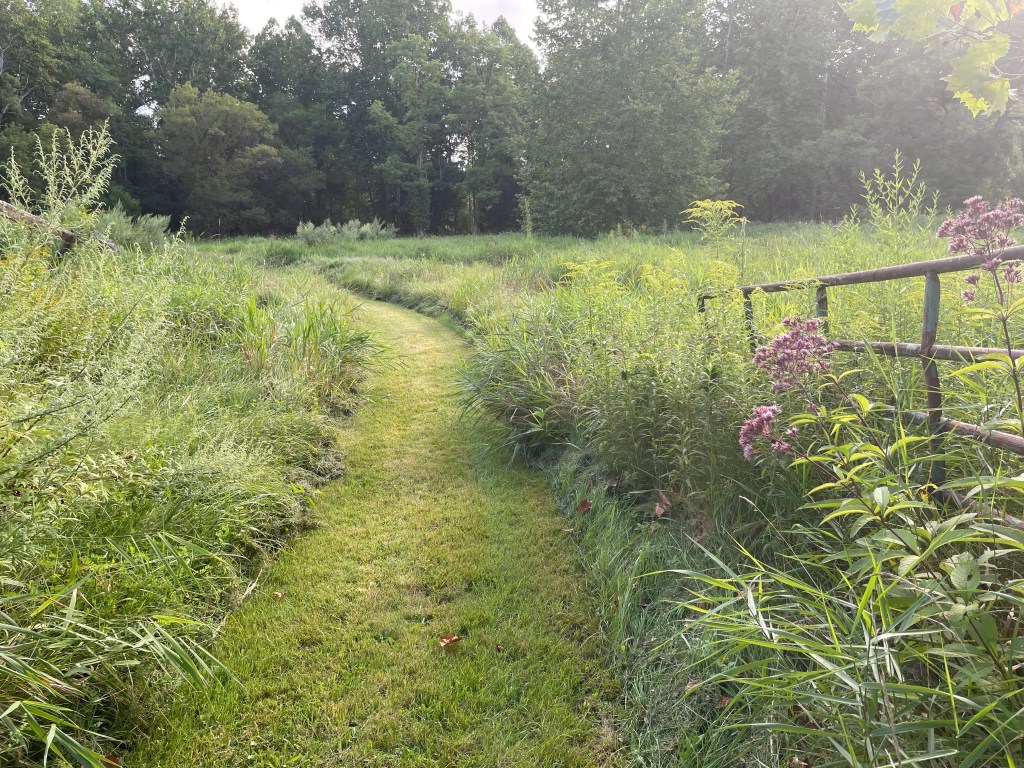
Out of town attendees were treated to staying in the beautiful, retro-style, Grayhaven motel. The motel maintains fourteen acres of wild marshland.
Paths are mowed for guests to perambulate.
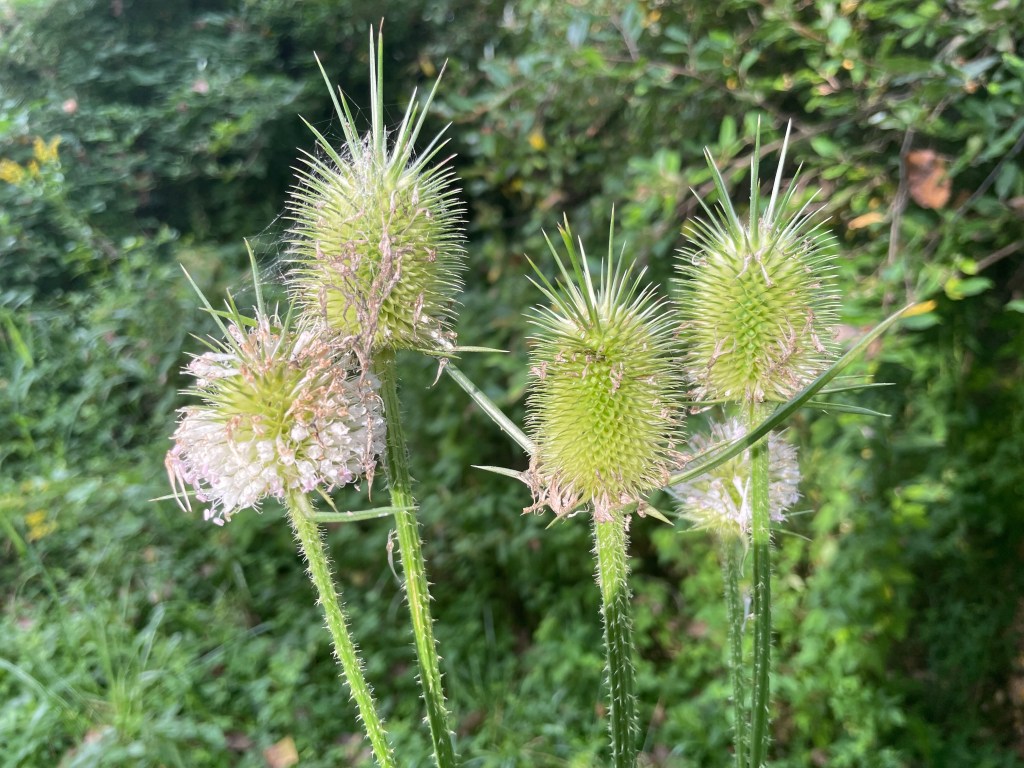
The wild, nature illustrations of one of Jillian’s favorite artists, Ernst Haeckel, came to mind as I walked the grounds of the motel.

August 13, 2023

There are a lot of dead poets in my life. Probably more dead than alive at this point since I don’t go to many poetry readings or workshops any more and mostly only read poetry by friends.

Rhett Stuart, Janice King, Marsha Campbell were all members of the Tenderloin Writer’s Workshop that took place at Central City Hospitality House in the 1990s and before me in the 80s when it was run by Robert Volbrecht. The workshop may still exist there with another facilitator though I haven’t been back in many years. Robert was a serious person who smoked and gave good comments. Janice and I smoked as well, along with others.  It would have been a cloudy room if not for the high ceiling. 

Mark Schwartz, a well known North Beach poet and open-mic host,  never came to that workshop in my time but sometimes showed up at the Tenderloin Reflection and Education Center (TREC) People’s Library where I volunteered. Dozens of others crossed my path over the years—many now deceased. I facilitated what I called the “Out of a Hat” writing workshop at TREC when it was in the old St. Boniface Neighborhood Center and later, when we were ousted, at the YMCA across the street. 

This morning I thought of something that Marsha Campbell said in defense of me once when I was accused of being opinionated. She said, “A person without opinions lives without ideals.” That has helped me to have compassion for myself over the years. 

Yesterday, I went to the city for breakfast with a friend followed by tennis with another friend. I did a bike/BART which is so much nicer than driving, if nothing else because I can get some reading time in, but also because I arrive more relaxed than when I lane split on my motorcycle all the way across the Bay Bridge arriving with a tight jaw and every nerve in my body set to react. 

The city is strange for me now. It’s filled with nostalgia for the excitement and possibilities it held when I was younger but sadness for the people I know who have died, people I have lost touch with and regret for all the mistakes I made. If nothing else, life is messy. 

I turned my electric bike off as I rode through the flatlands of the Mission district. Between breakfast and tennis I had three hours to kill. Memories associated with place popped up every few blocks. 

Out of the six places I lived in San Francisco, only one was in the Mission—a second story flat that was leveled to make what is now the rear parking lot of Rainbow grocery. But I always had reasons to go to the Mission —parties, readings, friends, shopping, barhopping, art, books, Dolores Park near Mission Dolores for which the Mission district is named. 

Rents have always been high in San Francisco. During my time from 1991 to 2002 I only lived two places by myself—my first nine months in a Tenderloin SRO hotel room and my last five years in a Tenderloin studio apartment. 

Inflation-wise I don’t have a good sense if things are worse. That’s what you hear but then that’s what you heard thirty years ago too. The streets are as rough as I ever saw them in the TL. 

By the time I left, I had golden handcuffs keeping me in my apartment. The rent was $650 — a hundred dollars more than when I moved in. But I was tired of the armor I had to put up when I stepped beyond the slamming iron gate of the building entrance.  It wasn’t armor for fear of bodily injury, but psychic armor for my accosted senses. Actual violence was pretty rare for the amount of humanity that ambulated on this corridor of Hyde street. But I was tired of stepping over passed-out bodies, being body-blocked by prostitutes, being asked what choo need? by drug dealers, and seeing every imaginable kind of human waste. 

Never mind there were often children skipping by, flower shops run by lovely people, the bustle of workers, delightful restaurant smells, access to busses and trains going every direction, my Buddha birds (pigeons) circling in the blue sky. 

I was working as a substitute school teacher in Berkeley and it made sense to be across the bay. It made sense to take my opinionated self somewhere else and to start fresh. 

I’m feeling a similar need now though I don’t think it’s necessary to move. I need a mental reboot. Maybe a long break from alcohol. Maybe a new job. 

When I was fired from work at a bank in Ithaca, New York after graduating from the Hotel School, I spent a month or so collecting cans on the street. There is really nothing more I’d like to do but keep it simple. Not without ideals, but I’m a little tired of my own opinions right now.

————————-

…and now a little so back Sunday

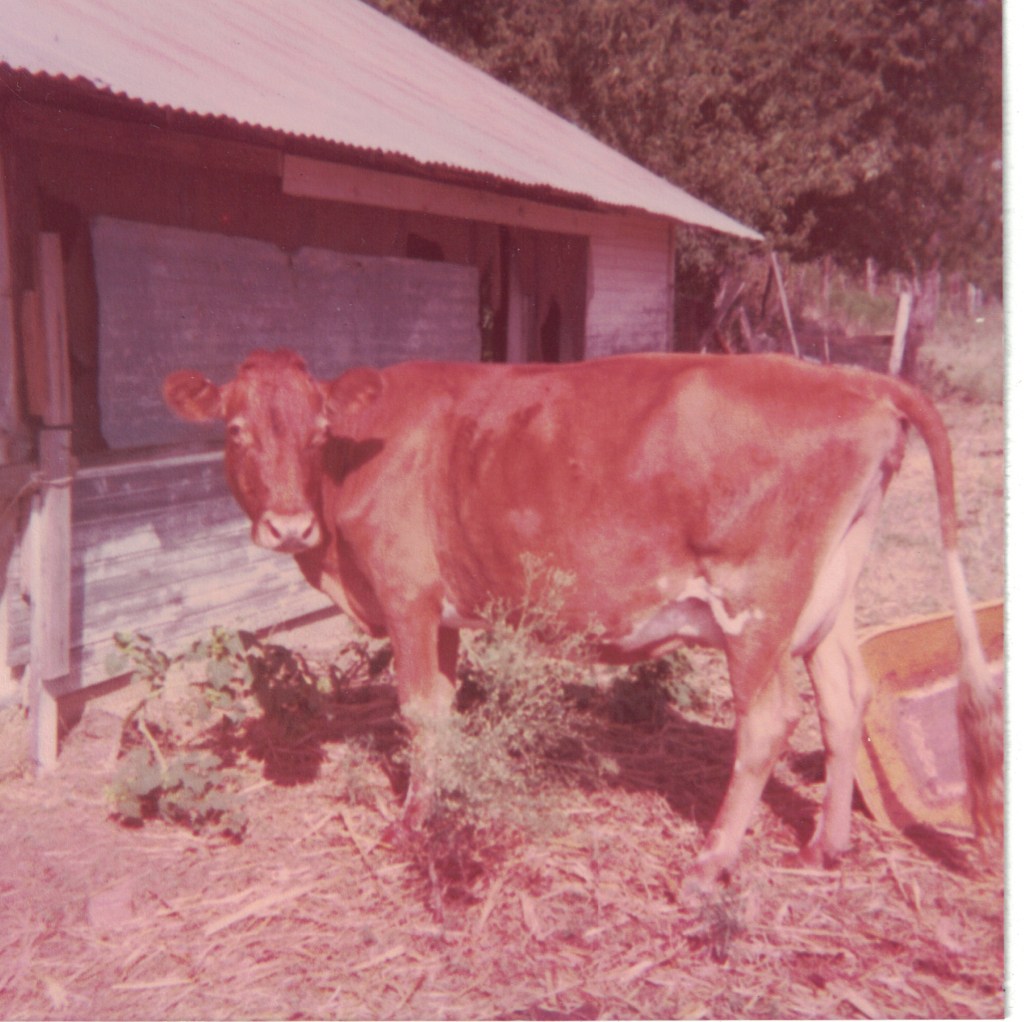
Here are some pictures from the fields of the ramshackle farmhouse in Denton, Texas where I lived for half of third grade and all of fourth and fifth. My summer trip of 2021 revealed that the house is not there anymore and most of the fields are part of a housing development that took its place. 

This is me and my sister Leslie on our quarter horse Sugar. Sugar was a former barrel racer in the rodeo and could turn on a dime and take off at lightening speed with a simple tongue click.

I named our family cow “Fern” after the novel, “Where the Red Fern Grows” that my fifth grade teacher read to my class. Fern was a red jersey and a sweetheart. Cows have to be milked twice a day and she often put up with the four hands of my parents sitting on both sides of her milking all teats at once.
Riding bareback with short legs on a big horse is a little like picking up a marble with chopsticks. Bareback was fine for walking about but trotting would likely send me over the side especially if you rode double with someone behind whose hands were holding your rib cage. That felt an awful lot like tickling. A canter made me feel one with the horse, but still a saddle is better for going fast.

July 28, 2023

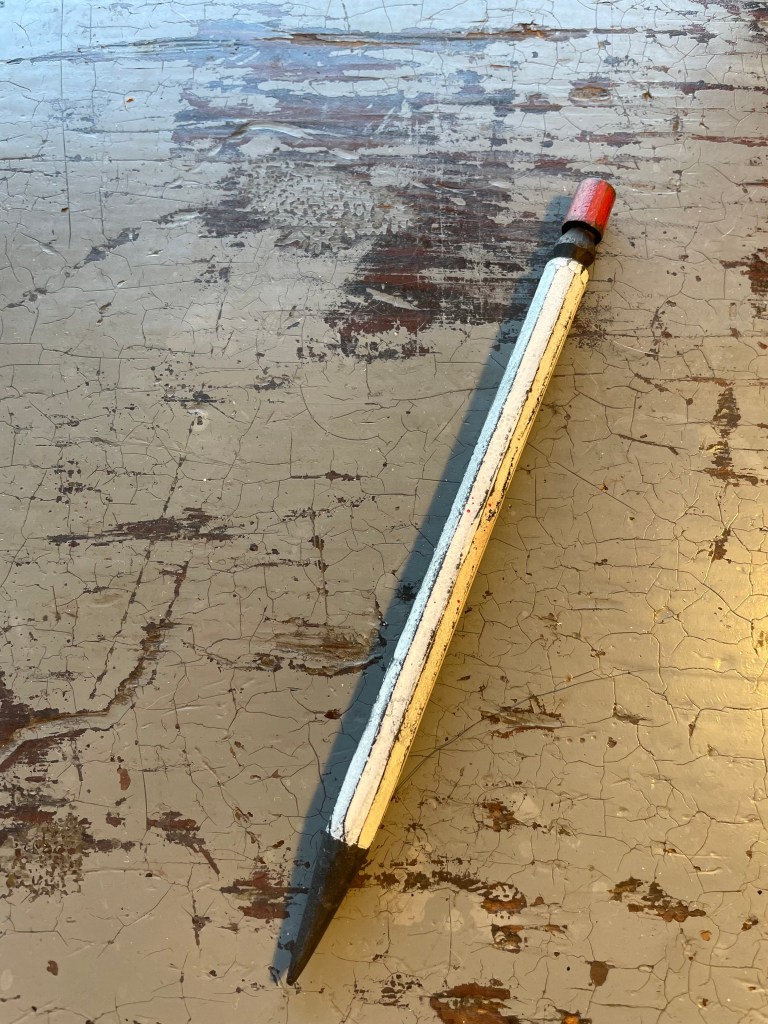
I bought this pencil at the Penland School of Crafts for a hundred bucks. It’s made of steel–pure art. You can’t write with it.

It is quite an extravagance for me to buy a piece of art, but beyond its gorgeousness it has a purpose that I dreamed up while gazing at it in the school gallery. I have a desk in my bedroom where I never work. It is used as a place to stack things and for my cat’s water and food dish. Buying the pencil gave me resolve to repurpose my desk as…a desk. 

I’ll still read the NYTimes and do Wordle in bed, but I want to have a place that I can at least play like I’m focused on writing and editing.

—————

I was at Penland to deliver my friend Alice who was taking a jewelry making class. She flew into Knoxville to visit a few days before and we spent some time working on the land. Our first day there was auspicious. 

We had just loaded up the cart with tools for trail blazing and were about a hundred and fifty feet from the shed when we heard the whoosh of leafy saplings, brush and sticks breaking like the clackety clack of a speeding train. We turned toward the sound just as a young bear shot into the saddle at the base of the knoll, its downhill momentum making her appear slightly out of control. She braked to a stop twenty five yards from us. 

I was of the opinion that she had been chased. Alice thought she was exhilarated from her downhill run. Whatever the case, the adolescent bear seemed slightly dazed. She had run toward noise, not away from it. 

Poor Valley Road runs parallel to the trail here and is close enough to see through the woods. The neighbor’s black lab was on the blacktop oating at Alice and I. The couple’s twelve-year-old was buzzing the road and fields on a dirt bike. I lifted my hands and yelled at the bear not wanting her to come at us in the confusion. (Bears are known to have poor eyesight.) She turned and ran toward the shed disappearing in the dense brush. 

I can’t say whether this was the same bear that I had in pictures from a previous post. Her coat looked less mangy and more fluffy and full, but otherwise she was about the same size. 

—————

It’s always nice to have other opinions when working on a project. Alice and I used some logs to line the trail toward the memorial site and then Alice had the notion that instead of trying to build steps up the knoll to the top, it would be easier to make a trail that followed a gradual curve along the less steep side. 

My chainsaw, newly out of the shop, was exhibiting the same problem of being impossible to start so we didn’t do clearing then but more reconnaissance. 

Top of the Knoll

—————

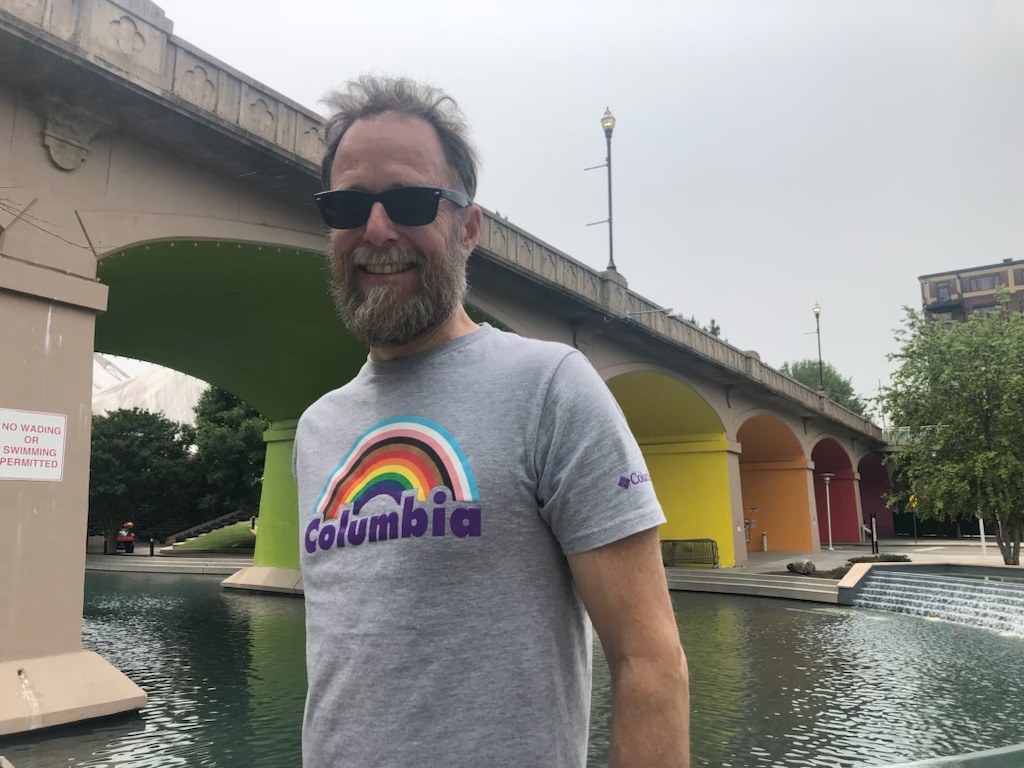
I didn’t appear anywhere in work boots and a yellow dress as I suggested I might to protest Tennessee’s anti-drag law. However, I did wear my rainbow t-shirt on numerous occasions which is about as much courage as I could muster to be an ally to LGBTQIA2S+. A rainbow shirt that wasn’t advertising for the clothing maker would be cooler but I bought it on impulse after listening to a speaker at a teacher conference in Long Beach. He talked about how we need to be active allies to communities under attack. (When I was in Raleigh I noted signs that said “Black Lives STILL Matter.”) 

A t-shirt or sign may seem insignificant but can make people who are targeted feel safer.

The idea that people in drag are sexual predators grooming the young is as absurd as the Boy Scouts of America saying that there is no place for gay men to be scout leaders or that queer folks should not teach in public schools. There is no correlation between sexuality and predation. The majority of child sexual predators are heterosexual as is the general population.

First off I should clarify that drag is performative whereas transgenderism is about identity. Drag performers are often not transgender. Dressing in drag does not denote any specific sexual identity. And neither drag or transgenderism denotes preference in sexual partners.  Anti-drag laws are as silly as telling people they can’t celebrate halloween or put a cheese wedge on their head at a football game.

While I’m appalled by Tennessee’s “Adult Entertainment Act” and see it as an attack on self-expression. I’m not sure all anti-trans laws are actually anti-trans. The issues are more complicated and plenty of people are jumping on board to create a polarizing atmosphere. Controversy and sensationalism sell. They are a cheap way to get a platform. A thumbs down is as good as a thumbs up when it comes to sponsorship and advertising. If anyone proved that the last U.S. president did.

One of the more controversial issues in transgender rights is transgenders in sports. But I bet if you asked if transgenders should be allowed to participate in sports, most people would say yes. The question is how can this be done in a way that honors their accomplishments and feels fair to everyone? 

Strict regulations guide the thickness of foam that can be used in the running shoes of marathon racers. Why do people expect there to be easy answers to how transgender people participate in sports? 

Some state laws allow female athletes to participate on male football and baseball teams. I think the idea is if no program exists then the unrepresented sex may join the gendered team.  I assume this would allow males to join female teams if there was not a male gendered team.

Male transitioned females wanting to join cis female teams or compete as individuals is new territory. While many transgender advocates would like for society to believe we all are who we say we are and who we change ourselves into with hormone replacement and surgery, much of the public is not in agreement, especially when it comes to bringing home trophies and medals. 

It’s one thing to identify at work, on the dance floor, or in the bedroom, but it’s another thing to say, “I am what I am” on the competitive sports field. 

There are compelling arguments on whether transgendered females have an advantage or not. On one side, some say the hormone replacement mutes any advantage male-born people might have in lung and heart capacity and size. But how do you measure this?

Stories about transgender males competing don’t make the headlines as much because they aren’t usually viewed as having an unfair advantage. It is commonly thought that males are superior in almost every sport due to speed and strength, but we haven’t had a level playing field to accurately make that assessment. I don’t think we can downplay our history which until recently did not include programs for instructing females in sports. When those programs became available, they were usually second string and underfunded. 

A girl that could throw a ball was a rarity when I was a boy…as rare as a girl that wanted to throw a ball…as rare as opportunities and encouragement to throw a ball.

As a side note, the tallest and fastest person in my fifth grade class, indeed in the whole elementary school, was a bucktoothed, gangly girl named Patty. I viewed her with equal parts admiration and freak-a-cation. 

Short, but not yet far outside the bell curve, I would go on to become the shortest boy in school until an amazing growth spurt hit during the summer between 10th and 11th grade. As a self-defense mechanism I got very good at picking out the slightest imperfections in my classmates. 

Why am I saying this? Because I believe that our societal obsession with difference is stopping us from making good choices. I don’t agree that the transgender female, Lia Thomas, should have been awarded the women’s championship in the NCAA Division 1, 500 meter free style. However, I do think she should be allowed to participate in competitive swimming. 

New rules push the controversy into an even more heated area. The international Swimming Federation (FINA) effectively wipes their hands by barring all transgender athletes from competing in professional women’s swimming, with the exception of athletes who “can establish to FINA’s comfortable satisfaction that they have not experienced any part of male puberty beyond Tanner Stage 2 (of puberty) or before age 12, whichever is later”. (Wikipedia) This does seem to allow the possibility for trans women to compete with men but it also encourages twelve year olds to manipulate their bodies before they mature.

In the future perhaps more sports teams will be divided by weight class or height like wrestling and boxing and not by sex. How much does football—as it is now—serve a high school boy who is short and under 120 lbs or the vault in a gymnastics competition for a six foot tall girl? 

My guess, is that when all is said and done there will need to be rules for each particular sport at each level of athleticism from intramural to professional, peewee to senior league. There will also be new sports developed. We’ve already seen an expansion of sports in the Olympics. Is it mere coincidence that pickle ball has become the most popular sport in the United States. What’s next? 

—————

I celebrated my 58th birthday with family who took me to El Toril Mexican Restaurant in Kimball, TN for fine dining and Karaoke. This might have been a safe place to try dressing in drag or maybe a more urban area, like nearby Chattanooga. Of course, protest isn’t about being safe. 

Restaurant employees stuck the sombrero on my head and then smashed a piece of whip cream- topped cinnamon bread in my face. It took me 20 minutes to get it out of my beard and off my glasses just in time for my turn to sing Closer to Fine by the Indigo Girls. I didn’t know this would be in the new Barbie movie. I was blissfully ignorant of how bad I was until I listened to a recording.

Direct action protest where people are confronted with their prejudice and fears takes incredible courage. I think the early 1960s Freedom Riders and Lunch Counter Sit-ins that protested racial segregation are great examples.

The San Francisco Castro District is widely considered the mecca of gay culture and activism. I was just in the branch library and there was a display of drag history. 

Asheville, NC seems to be similarly loud and proud. On my recent drive back from Penland I went through the town. In that brief visit, I encountered a half dozen or more transgender people. 

I will leave it to the beefy, well-groomed bearded man wearing a halter top, sandals and a flowing ankle-length skirt to say whether he was dressed in drag or transgender. Maybe gender fluid is a safer description for everyone I saw: a lanky red-haired teenager with a light kilt and bordello/pirate-style puffy sleeves; a pretty Whole Foods worker with long, dark hair and a short, plaited maroon skirt, black leggings and undershirt topped with a white crochet cover-up; a group of four youth evenly matched of each sex, bending genders toward the other. 

Minority and non-conforming groups need allies everywhere, not just in the south. On a recent community bike ride that featured a lot of low-rider and chopped out bicycles I hung toward the back of the group at the start of the event going from Pleasant Hill BART to Todos Santos Plaza in downtown Concord. Some young homies at the back were playing sexually explicit rap music and drinking 40-ouncers as they rode. A man driving in a Miata waited for us all to roll through an intersection and one of the young men looked back at everyone riding behind and smiled saying, “You know they say gays drive Miatas.” 

I wasn’t sure if this was meant to denigrate gays or Miatas or both but it didn’t sound like it was just a statement of fact — as in Gays love their Miatas. Not that that would be much better. Generalizations are offensive but people do them — especially members of the group being generalized. Paul Lynde could get away with saying that better than Johnny Carson — if either were still alive. 

Anyway, I’ll wear my rainbow shirt on my next ride and pull up next to the homies. 

Here are pictures of what I’ve been doing on the land: 

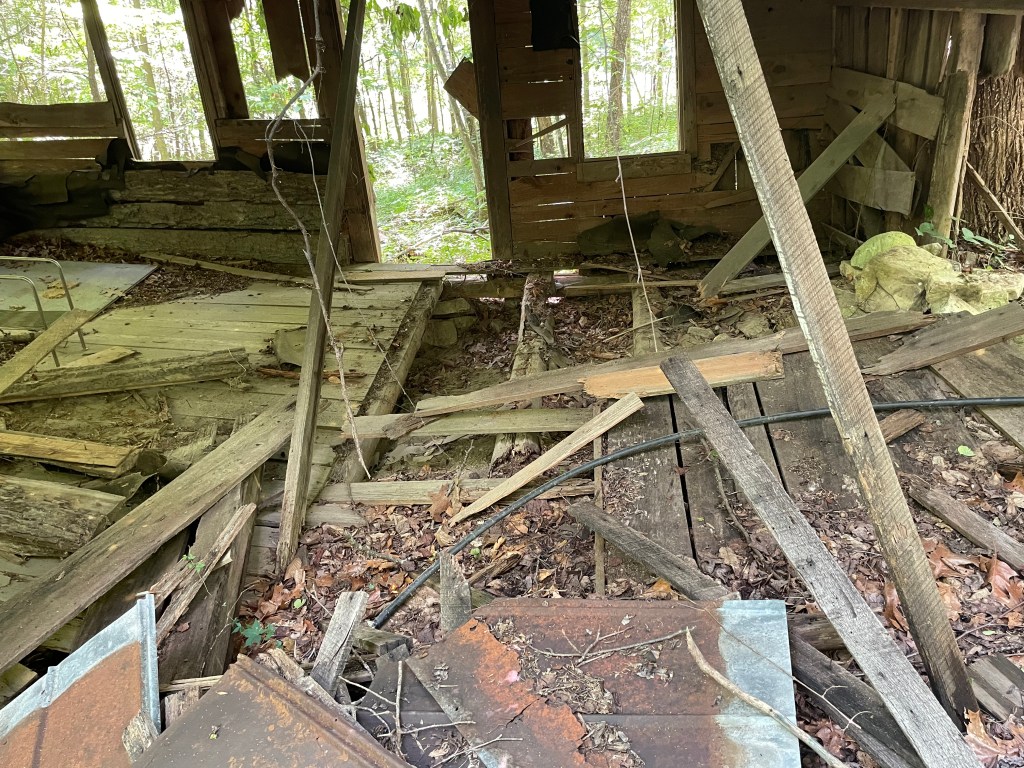
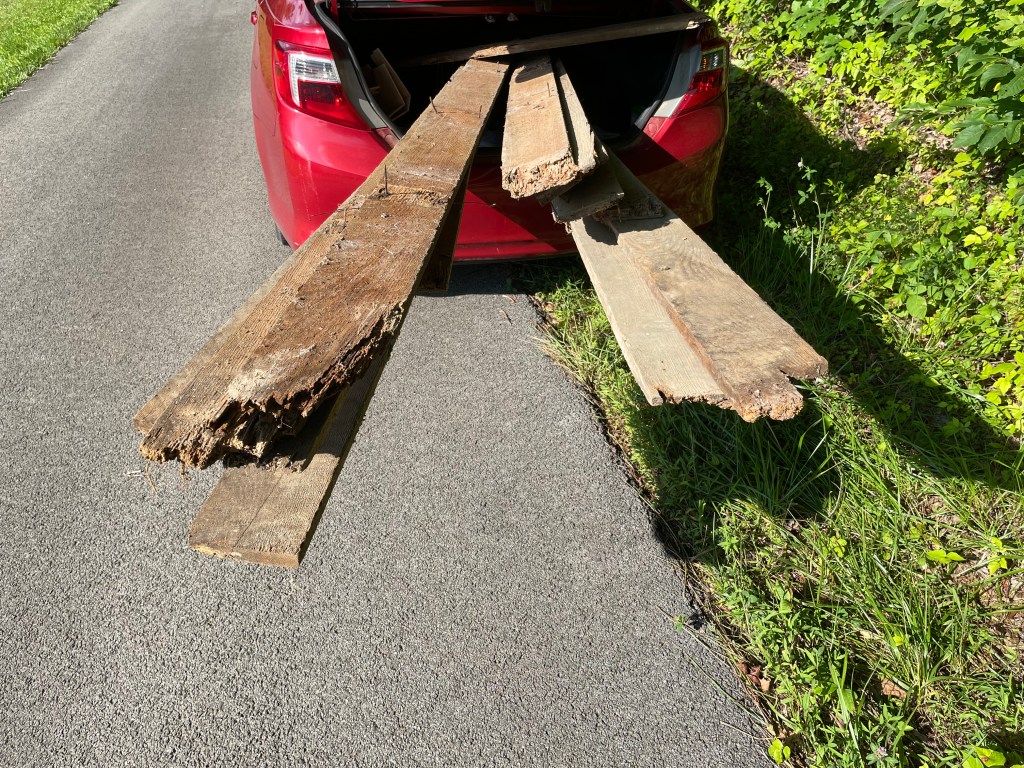
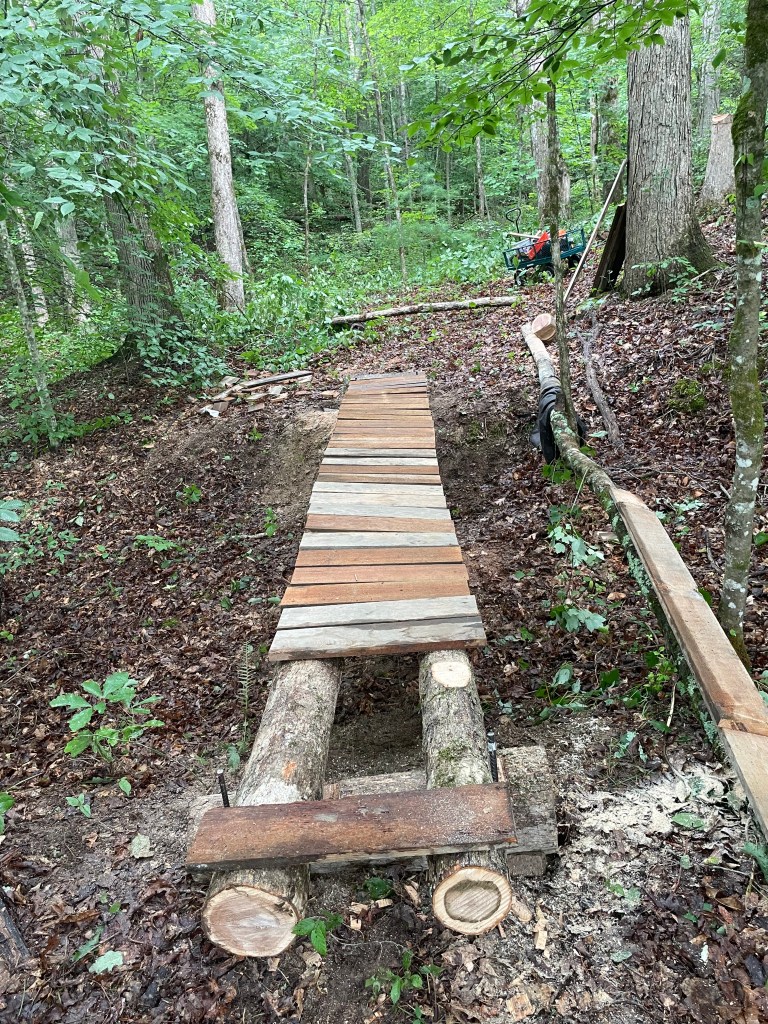
I took out a section of about 12 floor boards from the Sheridan cabin to get enough wood for my foot bridge.
I was able to fit the boards in the trunk of my aunt’s car for the quarter mile drive to the footbridge site.
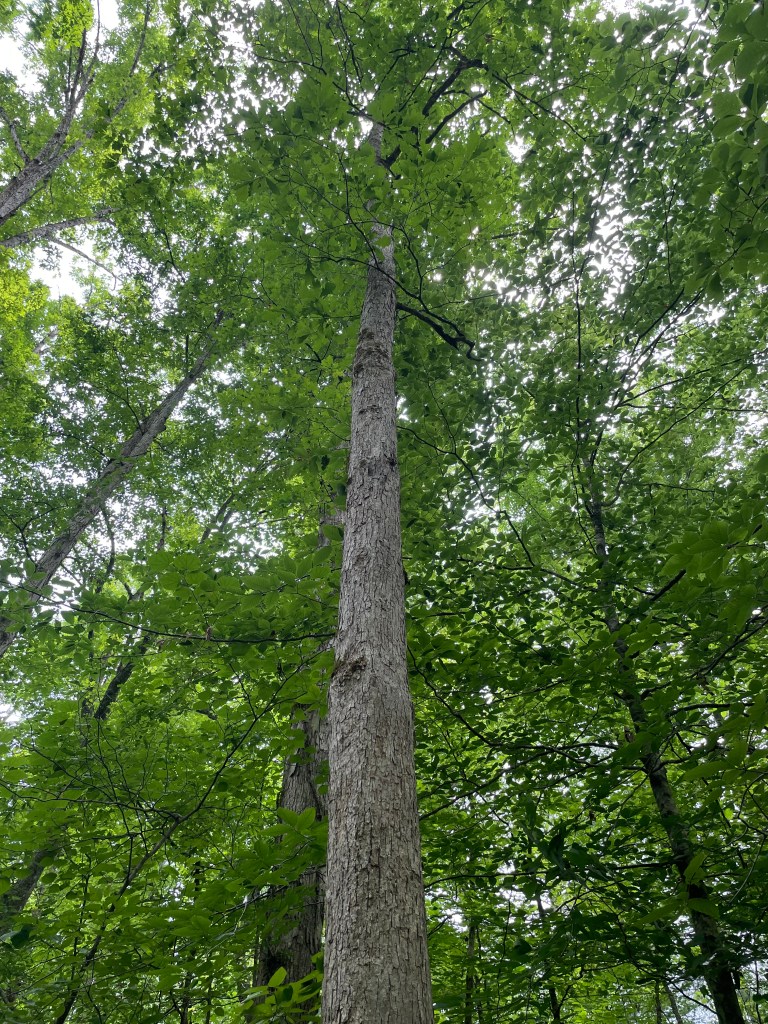
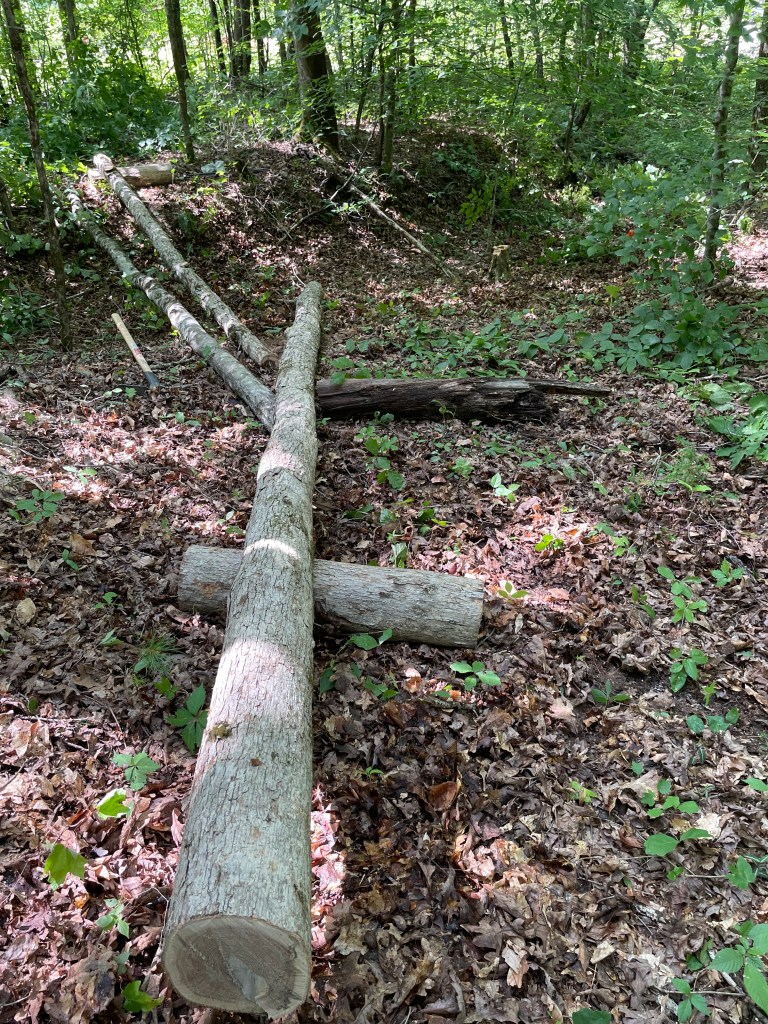
I picked this 55 foot, 10 inch oak for the structural beams of the bridge. It was straight and just a few feet from the bridge spot. Oak weathers well and will last longer than the more plentiful poplar trees.
Numerous instructional videos later, I was able to land the tree in the exact place I planned without getting it hung up. I cleared several small trees in its falling path and put guiding marks on the tree with the chainsaw before making the front wedge and final cut.
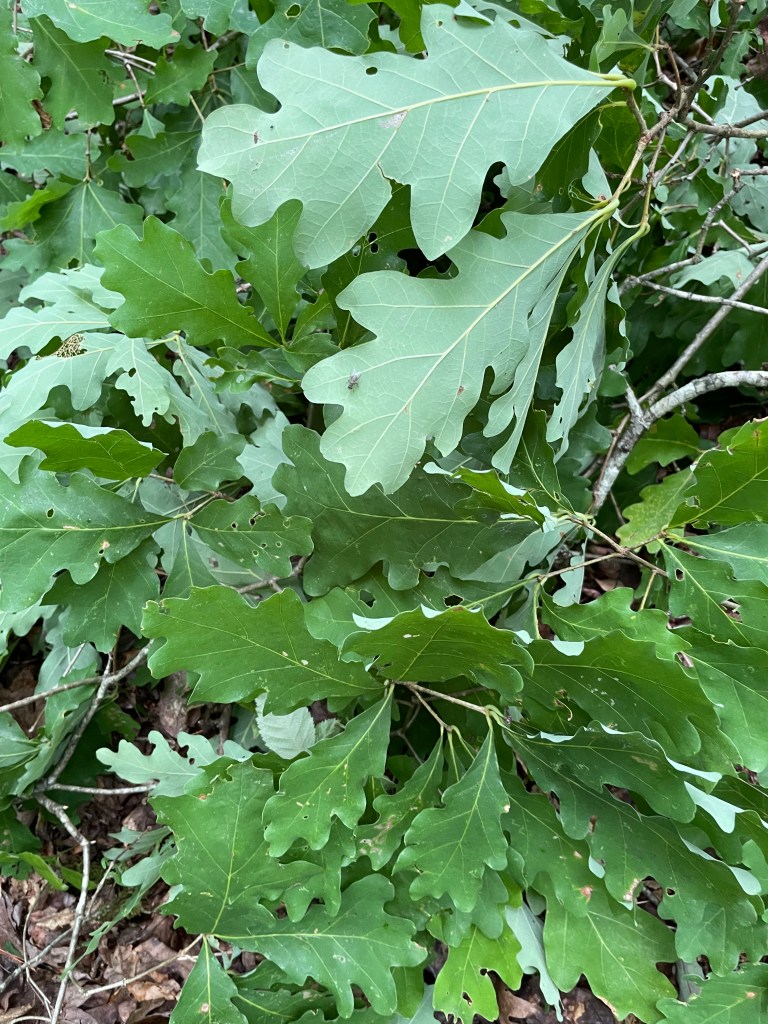
I wasn’t able to get a good look at the leaves until it was on the ground.
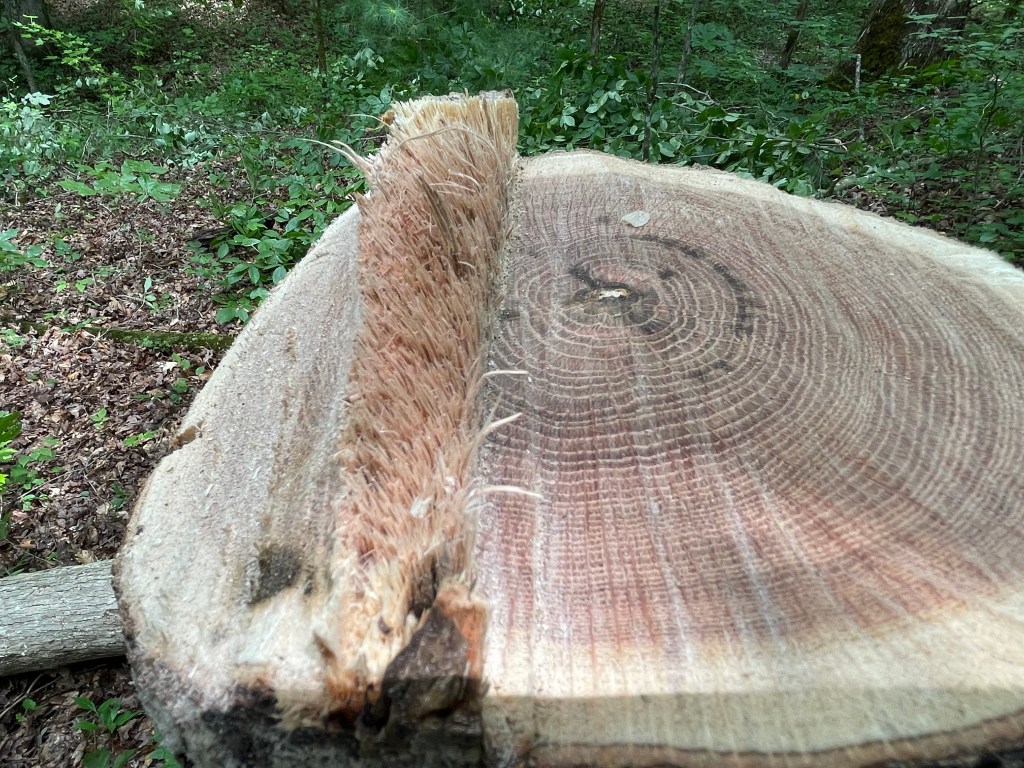
The all-important hinge directs the tree to fall safely. It guides the tree in the intended direction and doesn’t completely release until the tree is near or hits the ground.
The tree I picked had been a double at some point in it’s life. I cut the tree high to save the hollow log for possible use as a vice in case I have logs I want to split with the chainsaw.
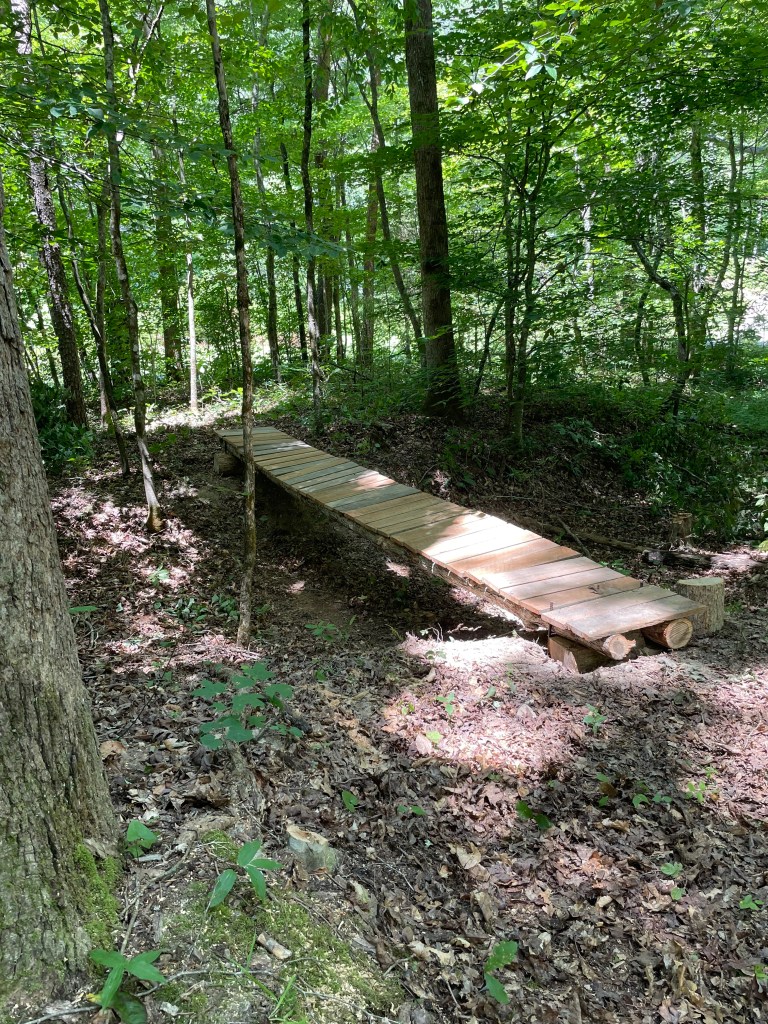
I cut two 17 foot logs to span the gulley. Short logs aided me in placing the longer logs. The heavier of the two was probably about 225 pounds.
I added to my small collection of battery operated tools with this 6.5 inch radial saw.
I could get three planks from each floor board.
My other completed bridge was the one cut from the fallen pine near my shed.

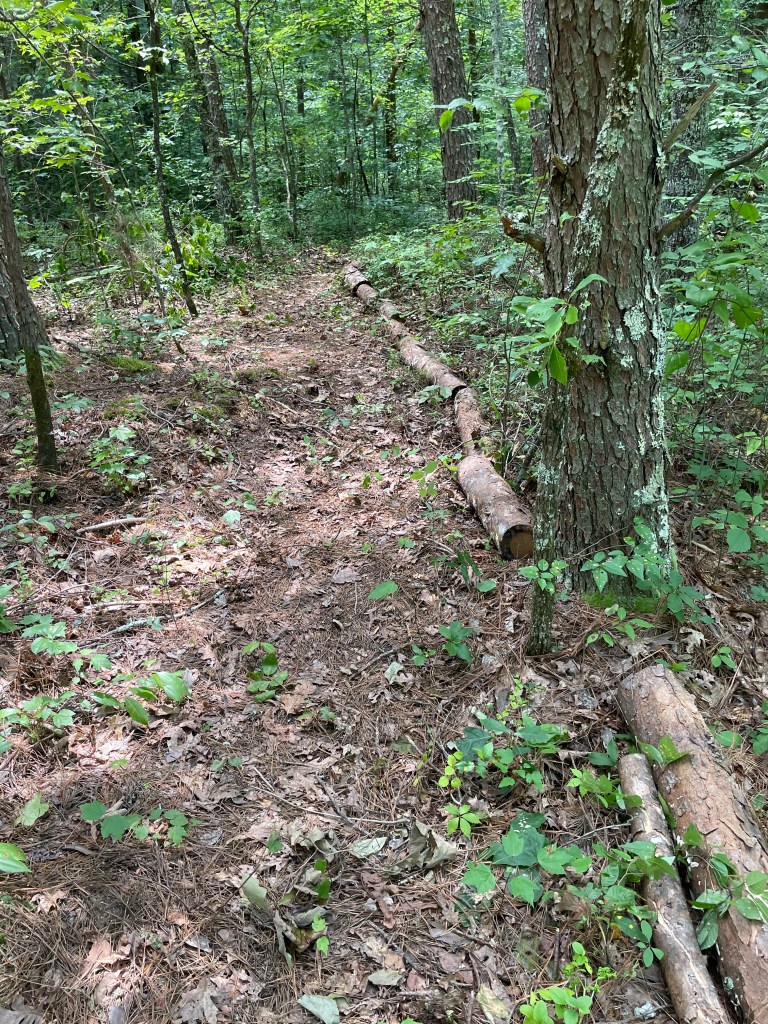
I used logs to line some of the trails.

I started clearing new trails. The first set is going east near the shed. The ones after that are for the proposed trail that winds around to the top of the knob.

Before
After
Before
After
Before
After
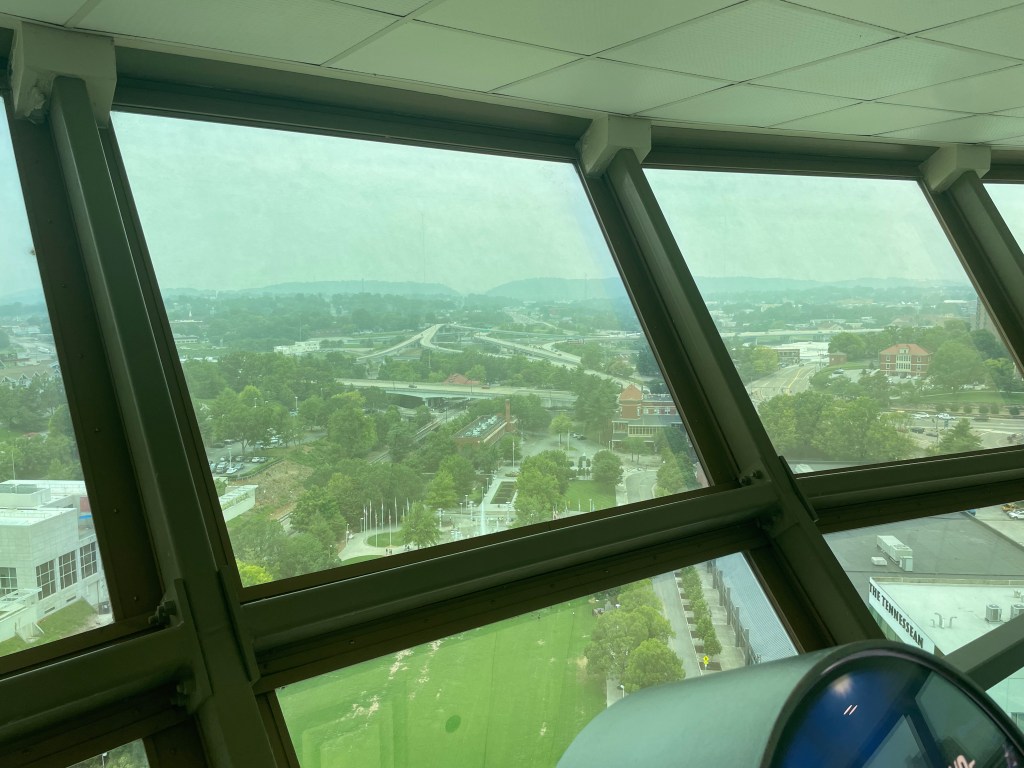
This is me playing “angry hillbilly” about a friend calling the Knoxville 1982 World’s Fair site a ghost town.
The fair is where I heard Walter Cronkite before I saw him. “And how’s the baby?” he said in his deep, resonate voice. I can’t tell you how many times my dad shushed me over him.
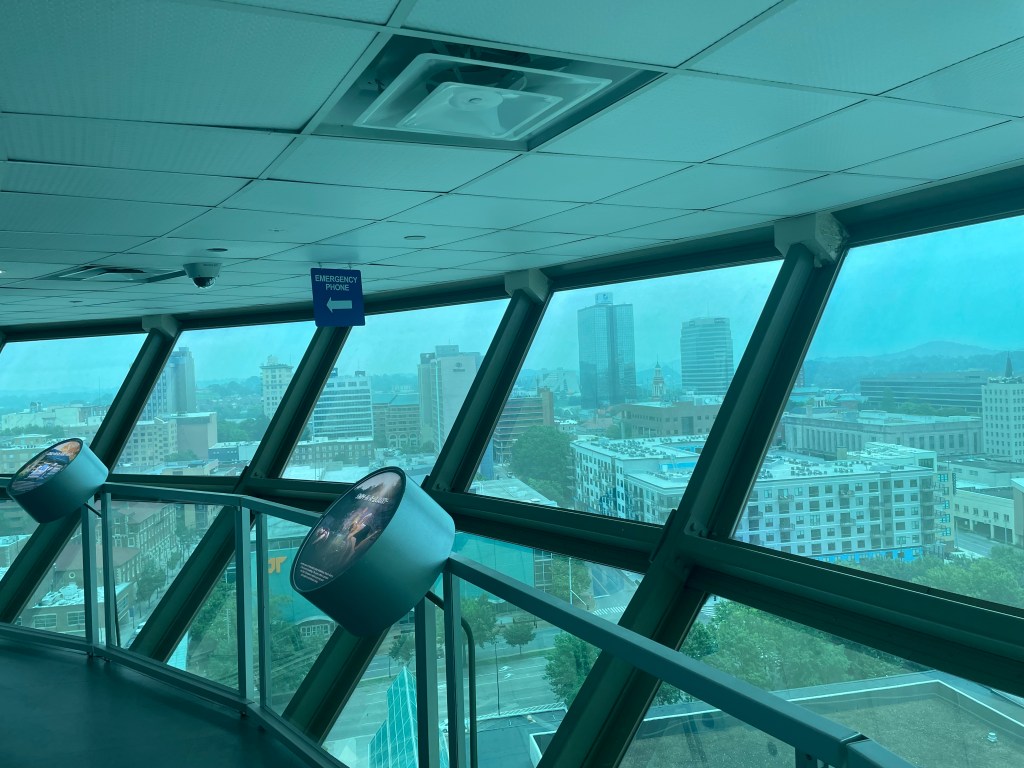
Views from the sphere.
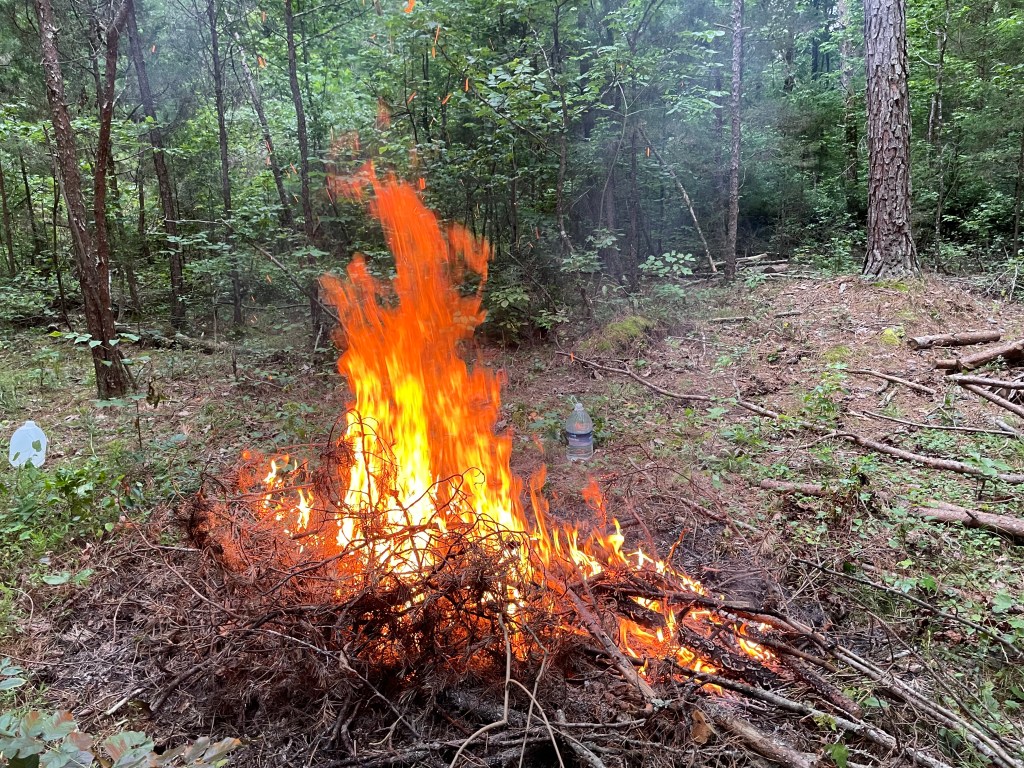
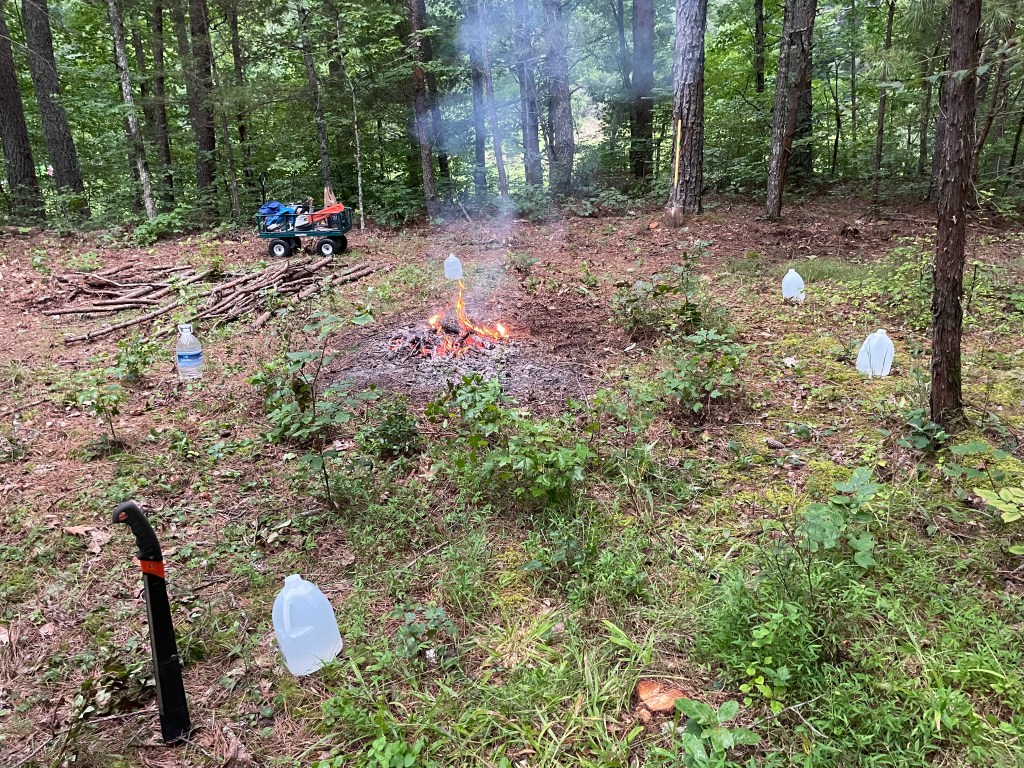
I did my first “controlled” burn on the land at the proposed cabin site.
This picture toward the end of the burn shows the five gallons of water I placed around–just in case.

A little ELO…just because.

July 17, 2023

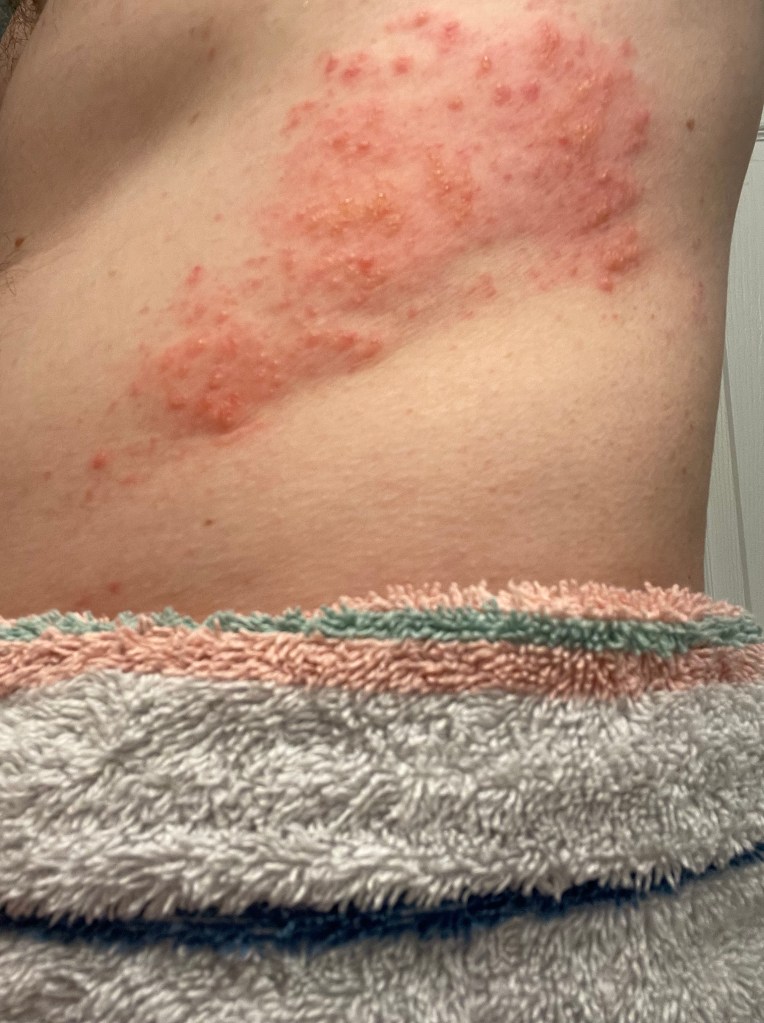
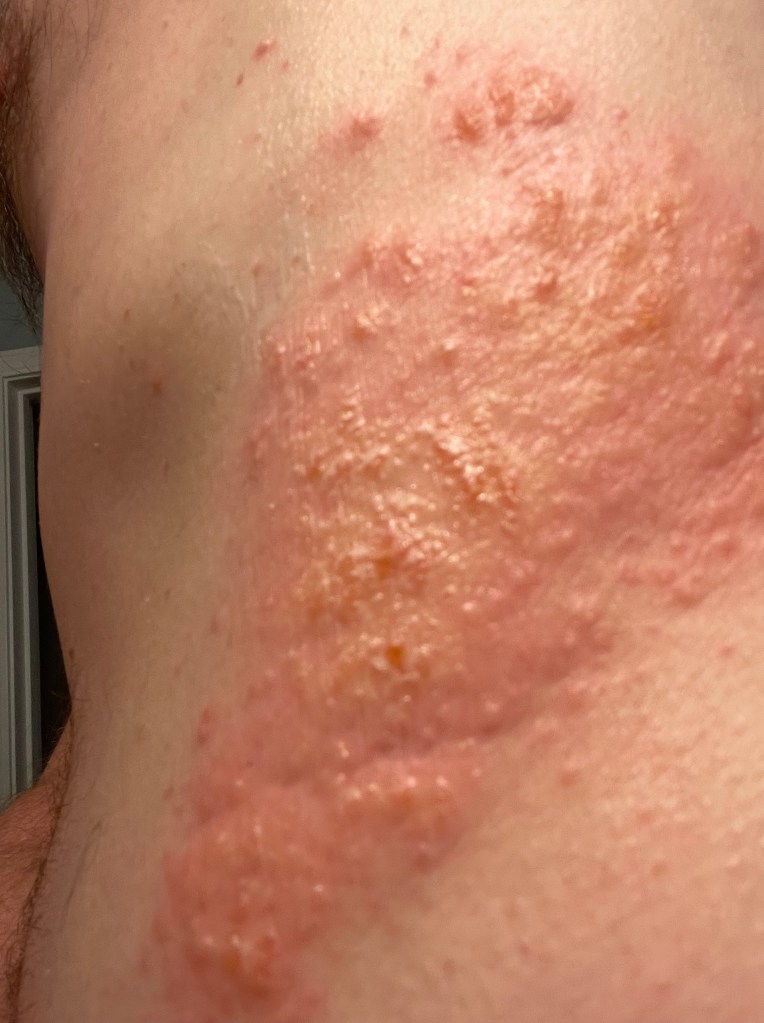
I got into some serious shit on my land. By shit, I mean poison ivy. I’m posting a picture of my left flank which suffers the largest lesion. The picture is at the bottom of this post so you can easily avoid it if medical photography is not your thing.

The cause — sheer stupidity. I’d guesstimate that about fifty percent of the ground cover on this land is poison ivy. I tend to remove it from trails when it gets above boot level. Then I use leather gloves to pull it up or a pick ax to chop it out by the root. 

I’m so habituated to seeing it everywhere on the ground that I had a large brain fart about how the word ivy—right there in its nameimplies something that climbs. I just wasn’t thinking about it when I became interested in all the small and large vines barber-polling up many of the trees. I wondered if they were hurting them.

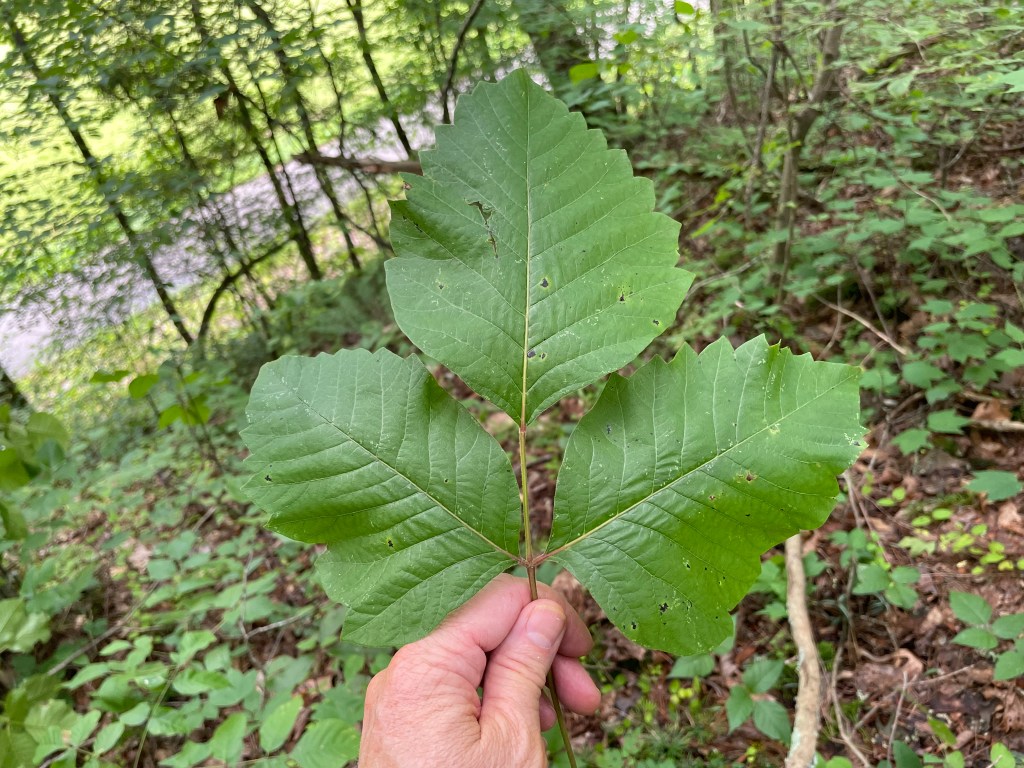
I picked some of the leaves from the most predominant vine and held them up in my bare hand to take a picture for google photos to ID later at home. When the words poison ivy came up I said to myself, “These google photos are misidentifying plants. I know poison ivy. It’s all over the ground. I’m looking for a vine that climbs! Geesh Google, how stupid can you be?”

Two nice photos of me fondling poison ivy bare handed.

Also, my brain-data-base did not make important correlations with popular animated and action-based media that often portray poison ivy climbing up columns at break neck speed or in more hyperbolic depictions as bulging, zombie veins growing like earthquake fissures under a person’s skin.

A wikipedia search of climbing vines stated that they do not, as commonly thought, choke the life out of trees. Nevertheless they get into the canopy and compete for light and can eventually kill a tree that way. 

Virginia Creeper is also fairly common on this land and like poison ivy it is a climber. Here are the two together. “Leaves of three, leave it be. Leaves of five, let it thrive.” Virginia Creeper is not poisonous. As for the poison ivy, I would rather not leave it be. I’d prefer to get rid of it–at least on walking trails. However, there are good things to be said for it–it’s a native plant that fights soil erosion with its extensive underground root network.

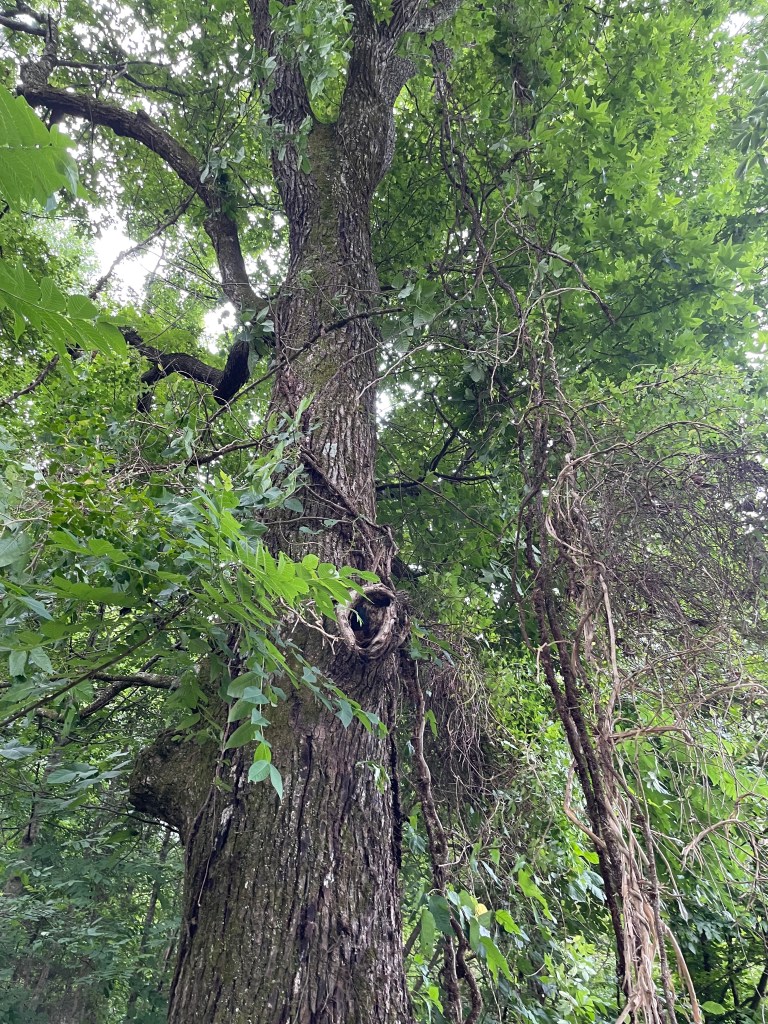
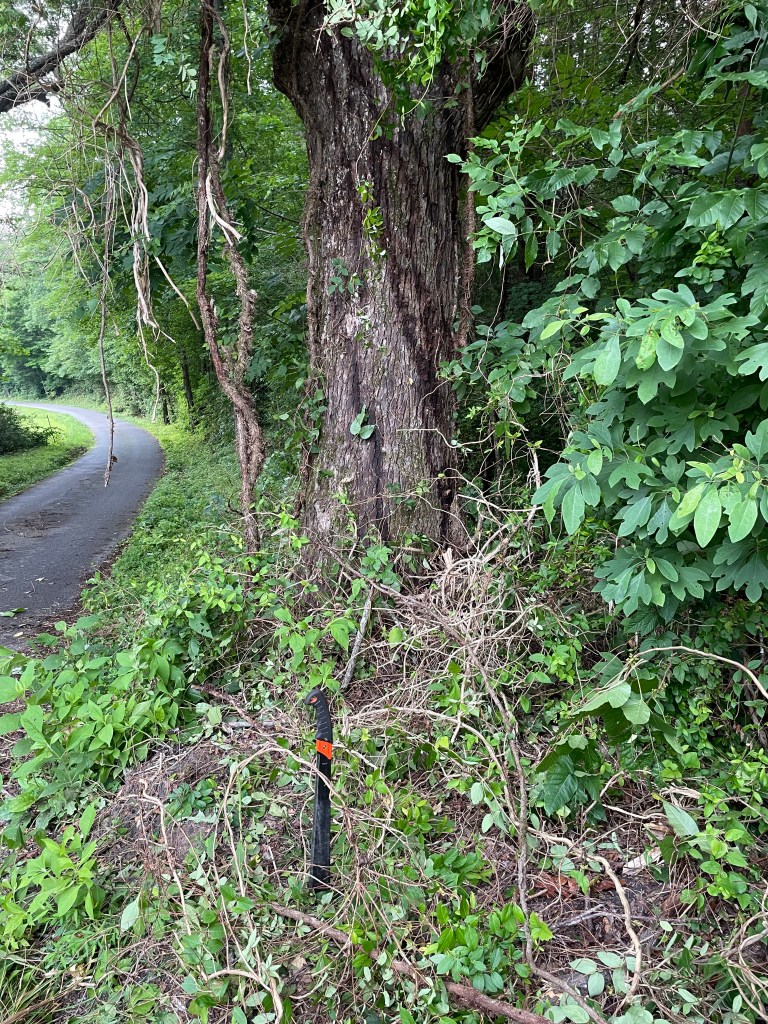
The next day, after poo-pooing Google’s plant identification, I spent close to an hour pulling down dozens of vines that were engulfing a large oak next to the road. The tree is one of the largest on the property and sits next to the neighbor’s mailbox. Its predominance make it the perfect place to start a vine removal campaign. I’ve still not determined if this is an important program to undertake in forestry health, but for this single tree it seemed like a good thing. 

By itself the tree has a lovely canopy and while I like the look of bare vines as they spiral up a trunk, these were leafing out at different levels giving the tree an ugly bibbed and girdled look. 

Feeling properly motivated for this bit of beautification I ignored further ponderings about what its vine might actually be. Instead I focused on how it would look when I was done. With machete and, again, bare hands I set about the task. Ninety percent of the vines were poison ivy.

Going at it I reflected on my experience watching Tarzan and other movie characters that swing on vines.  I appreciated the realism when I remembered a character who tugged on a vine first to see if it would hold before trusting their weight to it. 

After cutting a vine from the base of the tree, I experienced a satisfying popping sound as I peeled it off the trunk, separating hundreds of short, horizontal tendrils that clung to the tree off each side of the vertical creeper. When the pulling reached the first fork of the trunk the vine would hang free. At this point, about half of the vines could then be pulled down like a rope dropped from a great height (attendant with a shower of duff). Some vines, however, had continued on a more circuitous route, criss-crossing large branches in ways that tied them securely to the tree. The thicker of these could support my weight and, being a fool, I swung around the base of the big oak and even tested a foot-on-trunk assent.

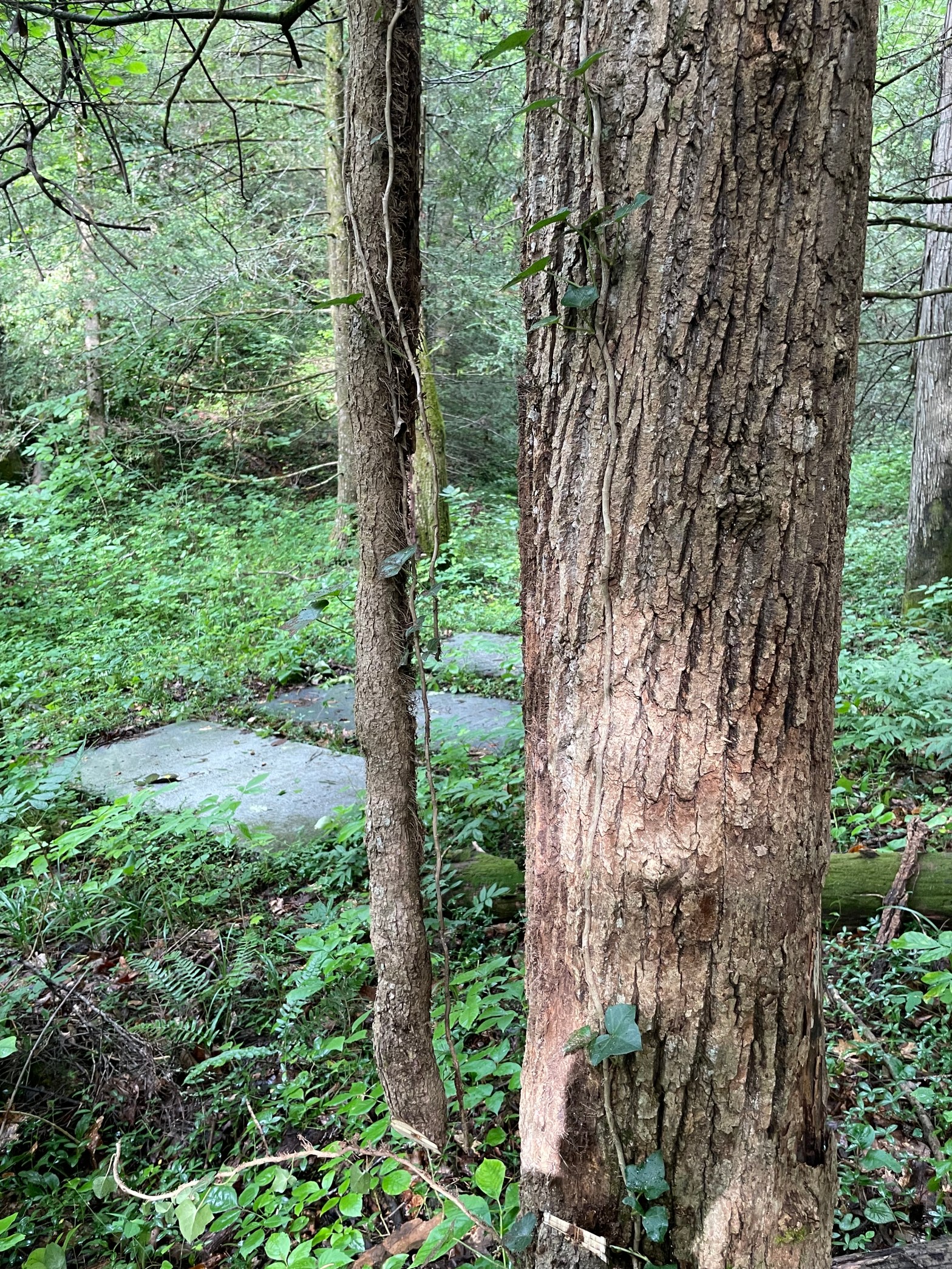
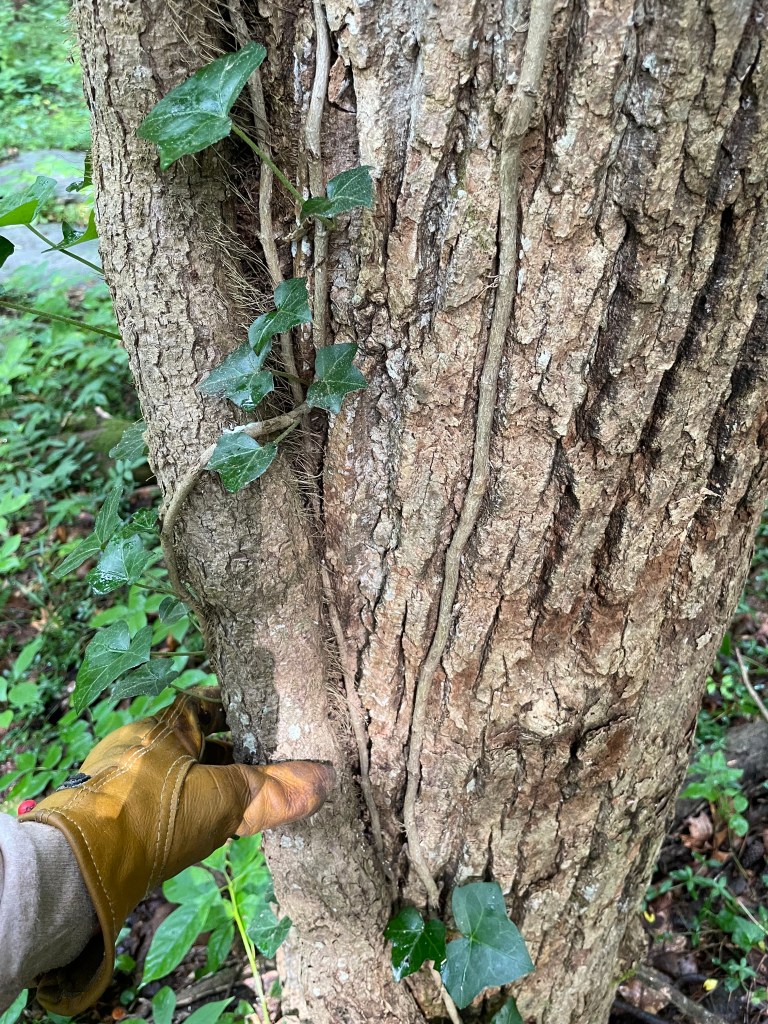
Pulling vines from the bark did not appear to injure the tree (only me). These marks are likely due to water collected around and under the vine during a recent rainstorm.
My hand is on a poison ivy vine. Common ivy is growing next to it on smaller vines. I found poison ivy vines three or four inches thick on my land. They are woody inside like a tree. Another good rhyme to remember–“Hairy vine, no friend of mine!” Good job Eric! You are wearing a glove!
The vine hangs next to the host tree after I cut it. Family memorial stones are in the background.

The next day I had a small red bump in a few places and noted a sort of heated tingling in different areas. I thought this was a sign that I had gotten into a small bit of poison ivy somewhere, NOT that my body was preparing for a full on war with armies of haptens, cytokines and chemokines amassing lines of warriors across battlefields of my flesh, on side flanks and inner thighs. Nor was I aware that scouting parties had ventured out along all my appendages and would soon begin engaging in guerrilla warfare on spotted islands surrounding my belly. 

Four or five days in, the dermal carnage seemed to reach its goriest with the largest wound weeping yellow tears that dried to my shirt with crystals. During the second week my skin smoothed out and became less grotesque, but its itchiness reached its zenith.

I resorted to fighting fire with fire. Two a.m. hot showers that  threaten to give me first degree burns can best be described as euphoric. Shower wand in hand, temperature set to scorch, I bring in the heat with a flagellating rhythm to douse the main battlefields then back burn and lay waste to any skin that would otherwise be taken by the urushiol-invoked monsters of war. 

Body steaming like a scorched earth, I turn the shower dial down to the coldest setting and bring on the cooling rain. 

Water off, I step from the shower, pat dry then walk about naked. Only when I’m completely air dried do I meticulously cover every patch, spot, dot and line of red with Calamine Lotion. 

I’ve experimented with most remedies — Cortisone 10, Diphenhydramine Hydrochloride, Green Goo, Aloe Vera, Aveeno Lotion. They all can help—especially in the day time when I’m active and my focus is somewhere else. But at night, when I’ve got nothing but my thoughts, Calamine seems to be the thing—with ice packs and the blessed air conditioner turned low. 

I got a prescription for Prednisone last Wednesday, but if it’s helping I haven’t noticed. The itching seemed to get worse when I started taking it, but I’m afraid to stop because what if it is helping? 

I’ve been back from Tennessee almost a week now. The physical challenges due to my hip problem and the poison ivy kept me from completing as much on the land as I otherwise might have but I do have progress to share. Another post will soon follow. 

I’m so happy to be reunited with Sasha. I don’t think I’ve ever experienced such a pure, uncomplicated, longing for another living being. 

Left Flank Rash Progression

Day 2, Post Exposure
Day 3
Day 4

June 24, 2023

I’m in Corryton, Tennessee, at my aunt’s 55+ senior condo — part of a attractive, 12-unit development surrounded by farmland. I’ve been here a week now. Last Saturday I took a Greyhound bus from Raleigh, NC, where I was visiting family. The eight and a half-hour trip landed me in Knoxville a few minutes after midnight. For $65 it’s really a pretty good deal.

The other two Greyhound options were more than 15 hours and more expensive. The red-eye that leaves Raleigh just after midnight is $163. Go figure? Usually misery has a price discount, not the other way around.

Actually, Greyhounds are much improved from the days when I took my first solo trip as a 13-year-old in November 1978. The date is retrievable because someone told me there had been a mass suicide at a place called Jonestown. (Suicide at gunpoint.) Trailways was a national bus line back then but the competition didn’t seem to do much to improve the experience. Smoking was still allowed and the back of the bus was often like a barroom. 

Now drinking and smoking are prohibited and boisterous behavior is usually not tolerated. The AC was a bit much but I always bring extra layers when venturing to indoor spaces in the south. I gave a soon-to-be fifth-grader a long sleeve shirt. She was trying to make a heat tent by stretching her t-shirt over her bare knees and sock-less feet. 

————————

I’ve put my cabin-building dreams on the back burner. My current focus for the triangular piece of land is to get to a place where I’m carrying a walking stick more often than a machete. Right now only about a sixth of the boundary line is hikable and there are no established trails that bisect the property over the central knob. Ideally, those trails would have carved-out steps where the incline is steep.

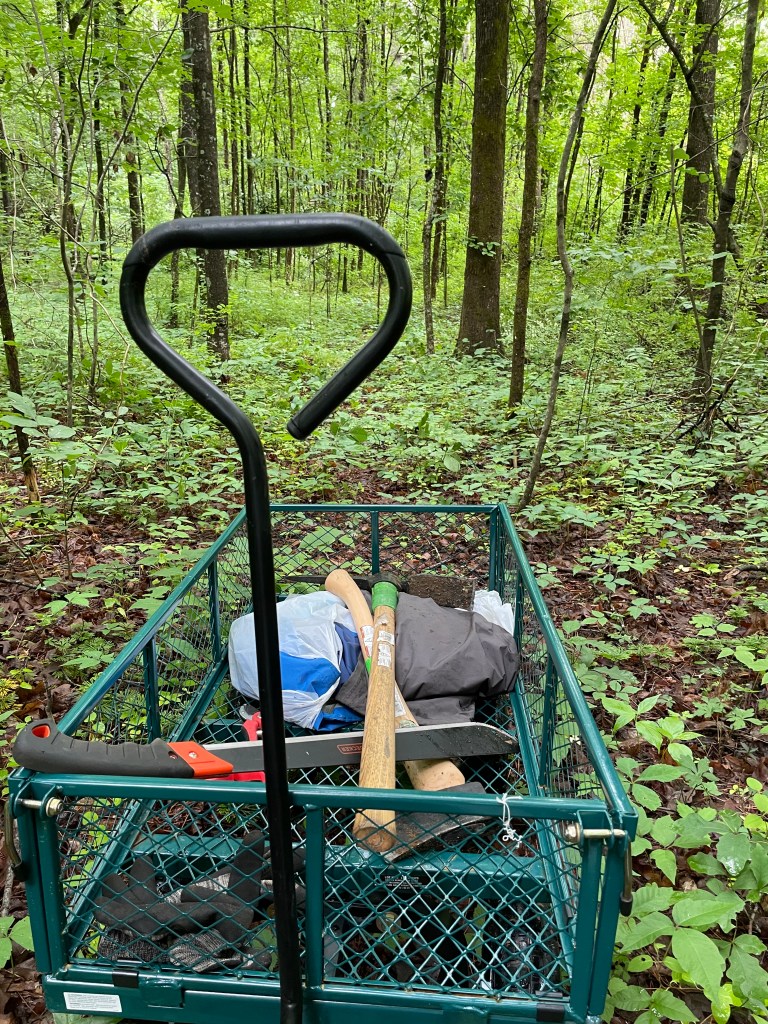
I bought a utility cart to drag all my brush and tree-clearing equipment with me as I work. I can already tell this will be a big time and labor-saver. I can’t believe I didn’t do this sooner.

On Tuesday, I made my first trip to the land. I removed the wire mesh and steel cart out of Aunt Linda’s car, assembled the sides and packed in my chainsaw, more fuel and some new tools.  I cleared the path from the nearest spot on the road to the shed. A light rainstorm in the morning kept the spider webs down. Small saplings, poison ivy and other ground cover had popped up since my last visit. 

There are new, low-hanging branches and thorny vines that grab my clothes.  I assume the thorny vines are a wild rose but I’ve never seen them flower. There are also plenty of newly fallen trees. 

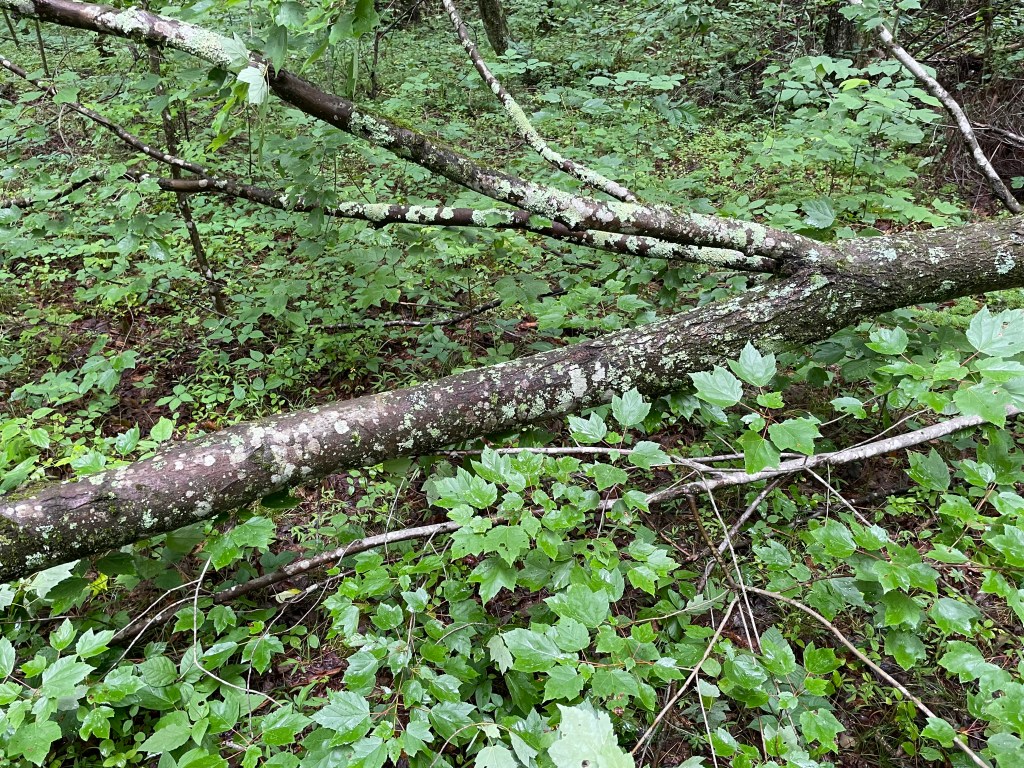
These two top trees have fallen but are supported above head-height over a trail. They’ll fall eventually and most likely not when anyone is standing under them, but it’s probably better to be safe than sorry and cut them down.
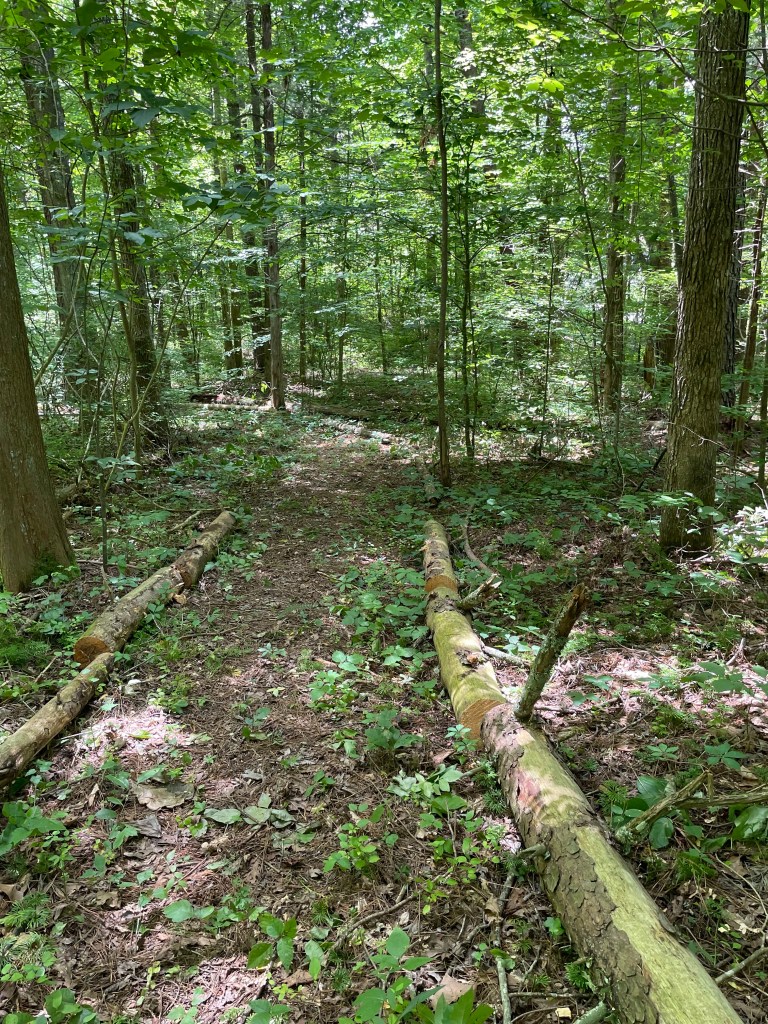
This is what a mostly-cleared trail looks like. It’s not well-defined but free of most impediments. This is the one that goes from the shed to the imagined, cabin-spot.

This land would be considered a tinderbox out west, but there is enough moisture here that it is not a high risk. Still I need to get serious about better land maintenance. It was a dry spring until a few weeks ago. 

I’d hoped to clear some of the newly fallen trees from the already established trails, but after I got all my equipment to the shed (where it will stay during my visit), I couldn’t get the chainsaw started. This has been an issue since I bought it and it’s not because of user error or being a novice. After about a hundred pulls I gave up. 

Shed trail with lots of ground cover still to remove.

Realizing it would be best to get the saw to a shop as soon as  possible, I packed up, locking the cart and everything else in the shed. 

My cell phone wasn’t getting good reception probably due to the rain. When I got closer to Blaine I pulled over and called the Ace Hardware in Halls where I’d bought the saw. They are backed-up for two months on repairs but I was told I could bring it in for a quick check. 

A buff, young, 6’5”,  giant-of-a-man pulled the cord over and over as effortlessly as if it were the string on the back of a talking doll, but he wasn’t able to get it started either. He tried switching off the choke and pulling the spark plug just as I had. No luck. I couldn’t leave it there but he recommended I call around to some other stores. 

I found a place that could take it about thirty minutes away in southwest Knoxville. By the time I left, it was rush hour. 

Traffic jams are no longer just a big city problem. It took me over an hour to get back to the country roads outside of Corryton where it finally cleared up with about ten miles to go. 

With plenty of non-chainsaw work to do I went back to the land the next day. I pruned the path that goes from the shed to the flat prospective-cabin-spot. By the time I got there my right hip was aching and giving sharp pains every time I lifted my leg.  I pushed through and did some sporadic clearing on one of the two, partial, paths to the memorial stones. 

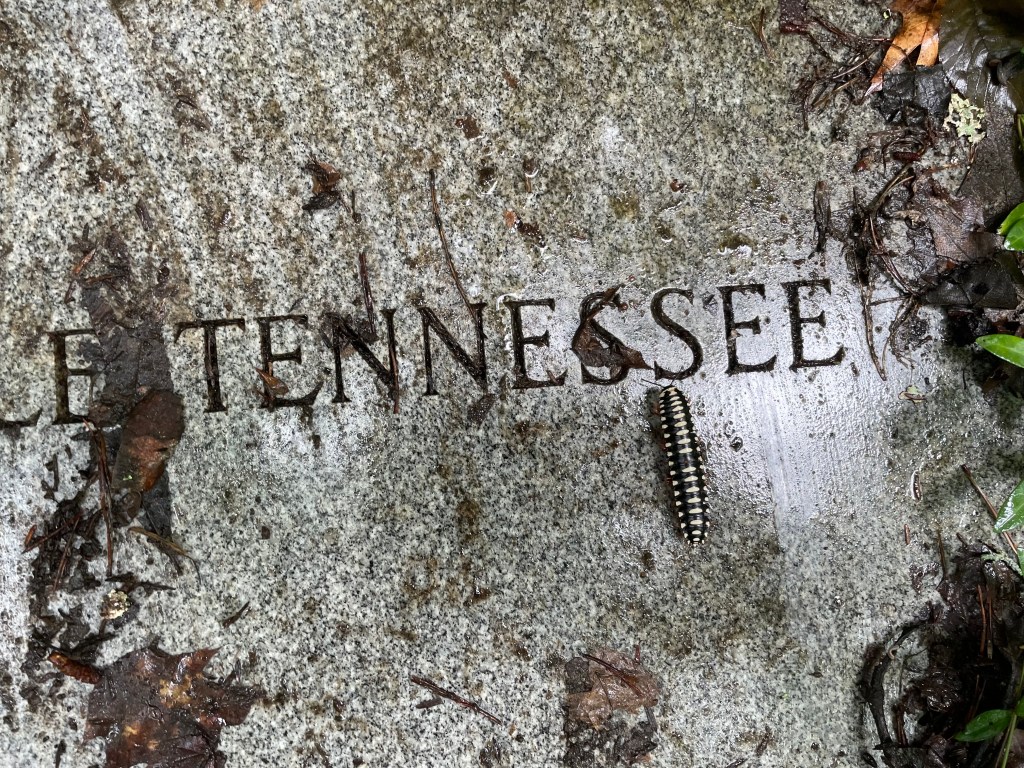
At the granite slabs, I pushed off a thick mat of wet, fallen leaves and then hobbled back to the cabin-spot pondering whether to clear the trail down to the prospective driveway. The hip was telling me not to be a fool. 

I’d tweaked it a few weeks before–twisting at an odd angle at the climbing gym. It was a noticeable sore spot but I always have a half dozen of those.  

The plane ride to Raleigh made it worse. I was in the middle seat stuck in an odd pose. The big guy on my left took both arm rests and I tried to be conscious of sharing the other side with a woman on my right. My feet were spread around my backpack. My arms became t-rex appendages as I tried to make good use of my time doing computer housekeeping  on the fold-down table while balancing pretzels and drinks to take advantage of refreshments when the steward rolled by with her cart. At some point the hip started to sing an aria of pain.

It didn’t help that I visited a climbing gym in Raleigh and another in Knoxville on Monday where I climbed through the discomfort. I’m usually the oldest person bouldering. As mellow and encouraging as most climbers are, I often feel like I have something to prove. 

As my hip picked up its operatic solo during the second act on my land, my biggest proof is that my body is not as supple as it once was. 

I made an appointment with The Joint Chiropractic, a chain of 700 offices across the country. They have quick walk-in service whereby they manipulate you into pretzel shapes and with sudden, violent motion, snap things into place. I felt great and wasn’t limping when I got off the table. I bought a pack of eight visits. The doctor recommended ice and a hard-foam, body roller. 

After about two hours everything hurt again and it was hard to walk, but I’m going to stick with the procedures. I figure, if it’s making me feel good for two hours then it’s probably on the right track. 

I’m disappointed that the chainsaw and body are keeping me from getting more done. I’ve been here for almost a week now but only spent about four hours on the land. The upside is that I’m getting this blog post out!

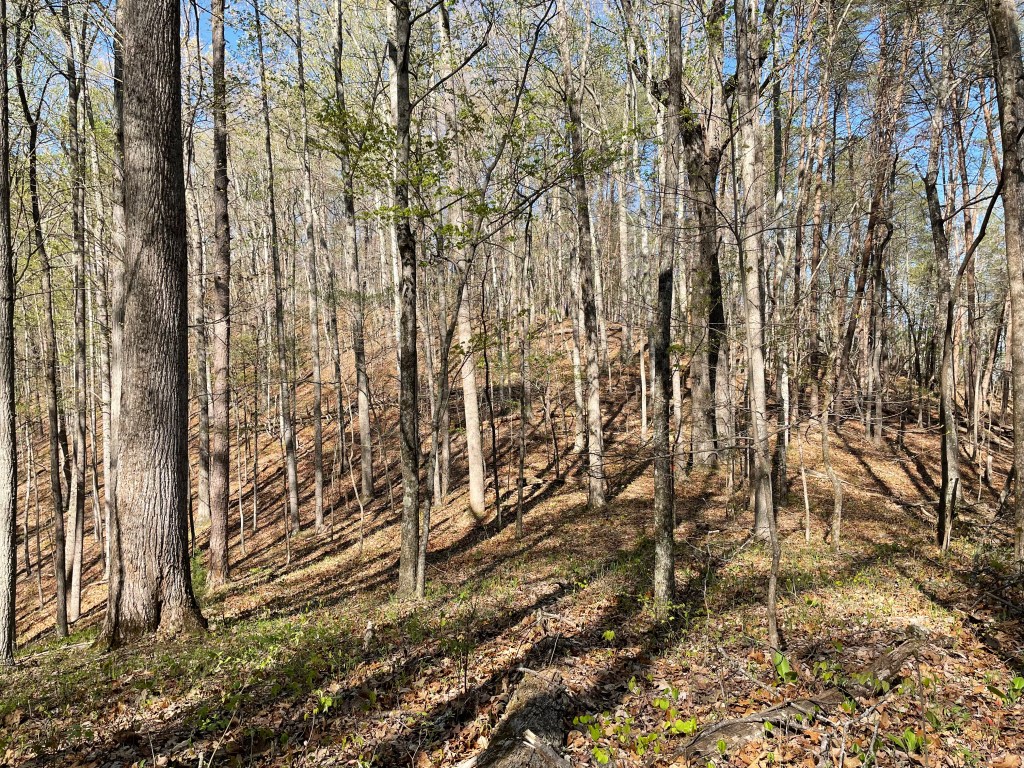
When I was here over Spring break the trees had not leafed out and I took advantage of the relative clearness to find more of the boundaries. I brought a metal detector with me and was able to find the buried barbed wire fence that runs for about ninety percent of the northwestern border. I marked trees all along the way and now have a more exact knowledge of this, the longest, side. 

Where trees grew around the old barbed wire they helped keep it above ground. Pre-spring explosion, early April, was a good time to find boundary markers.

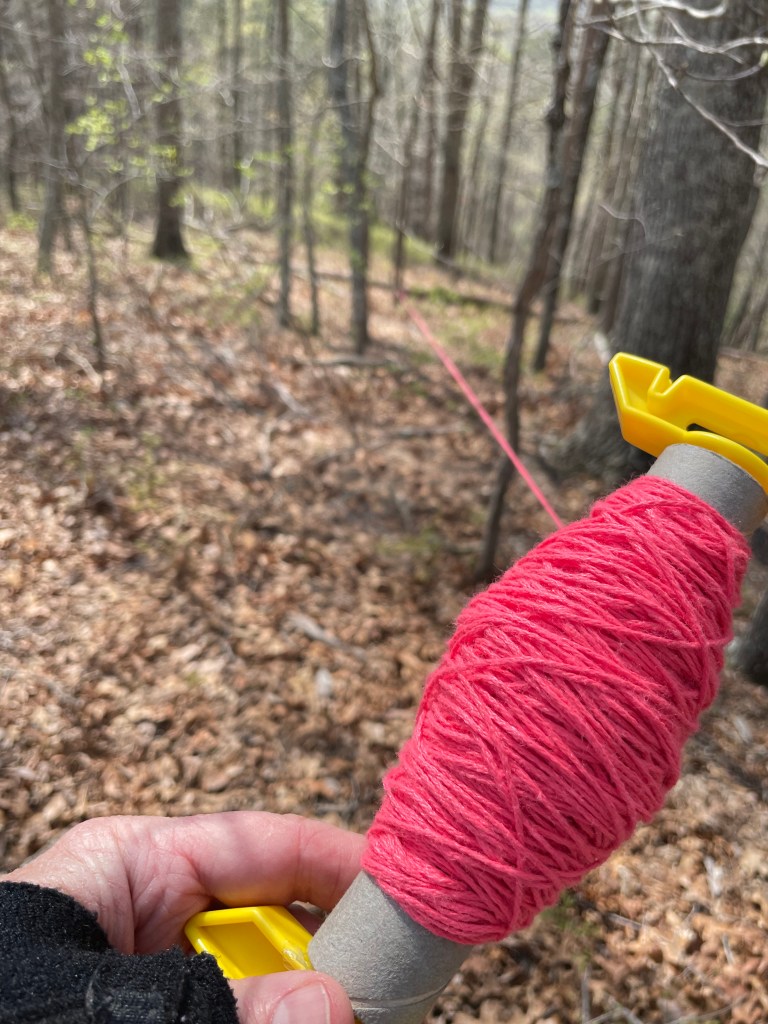
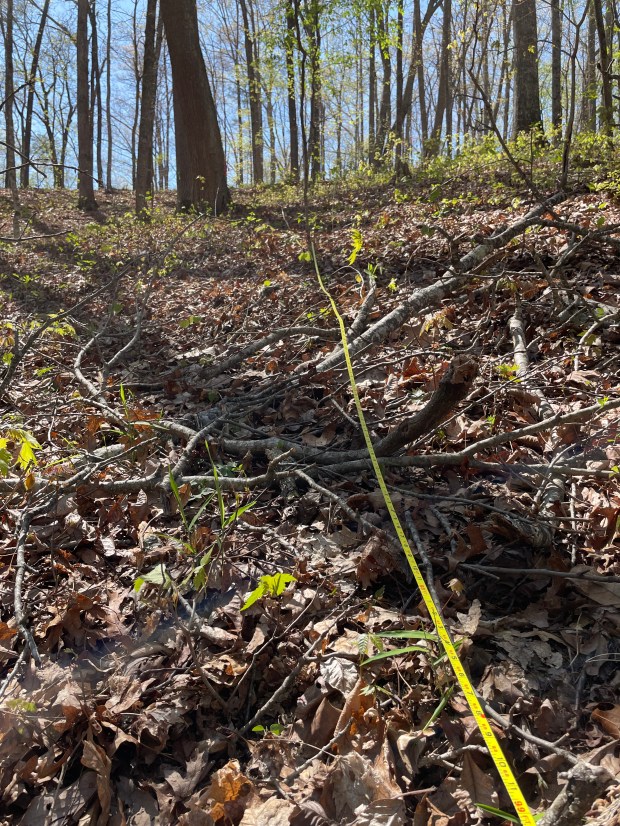
Once I’d marked the boundary I went back to measure to make sure that my corners were correct and that the distance from each other matched that on the survey. At first I used a 250 foot string, but it was difficult to manage. It didn’t lay flat on the ground, easily became tangled, stretched or curved and was a pain to roll up and unspool. The next day I switched to using a hundred foot tape measure. It was all-around easier.

I even found a “set stone” indicated on the survey thanks to the help of a friend who told me that a “set stone” is exactly what it sounds like — a stone that is usually marked with a dab of red paint and small enough to be moved around and set in place to indicate something like a boundary. 

Set stone with dabs of red paint on one end.

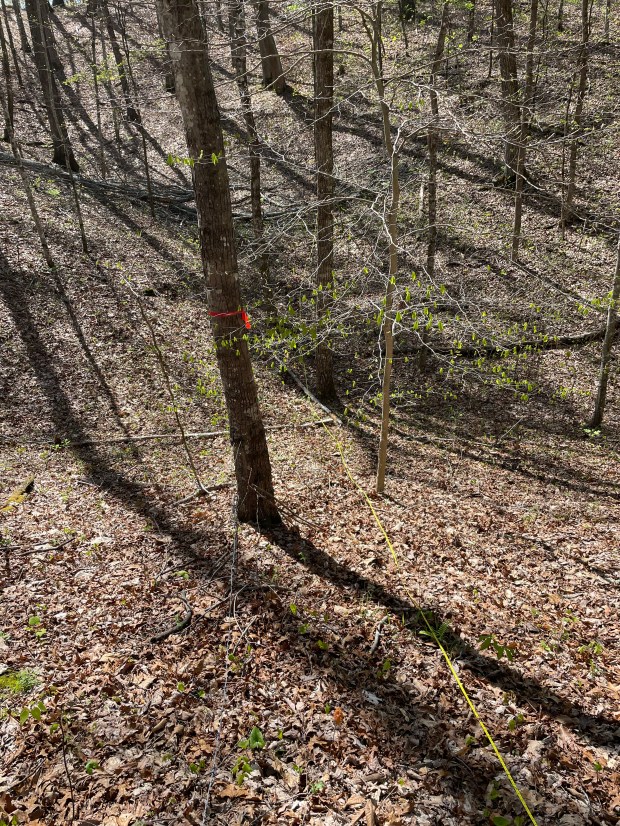
I met with the older couple that recently bought the land on the east side and we took a ride on the road that leads to the top of the knob on their land. We talked about where we believe the road intersects my boundary. Then we walked through the woods together where they had found the corner pin – a piece of iron rebar pounded into the ground and tied with red marking tape. 

This couple would like to buy this corner of the land to have their road free and clear of my property. I haven’t suggested a price, but, unless it is inordinately large, I’m more inclined to give them right-of-way with the hope that I could use the road too. It’s useless to talk price or access at this point. We really need to get our common boundary re-surveyed to know exactly what is theirs and mine. Unfortunately they were sold the land believing that the road is entirely on their property. 

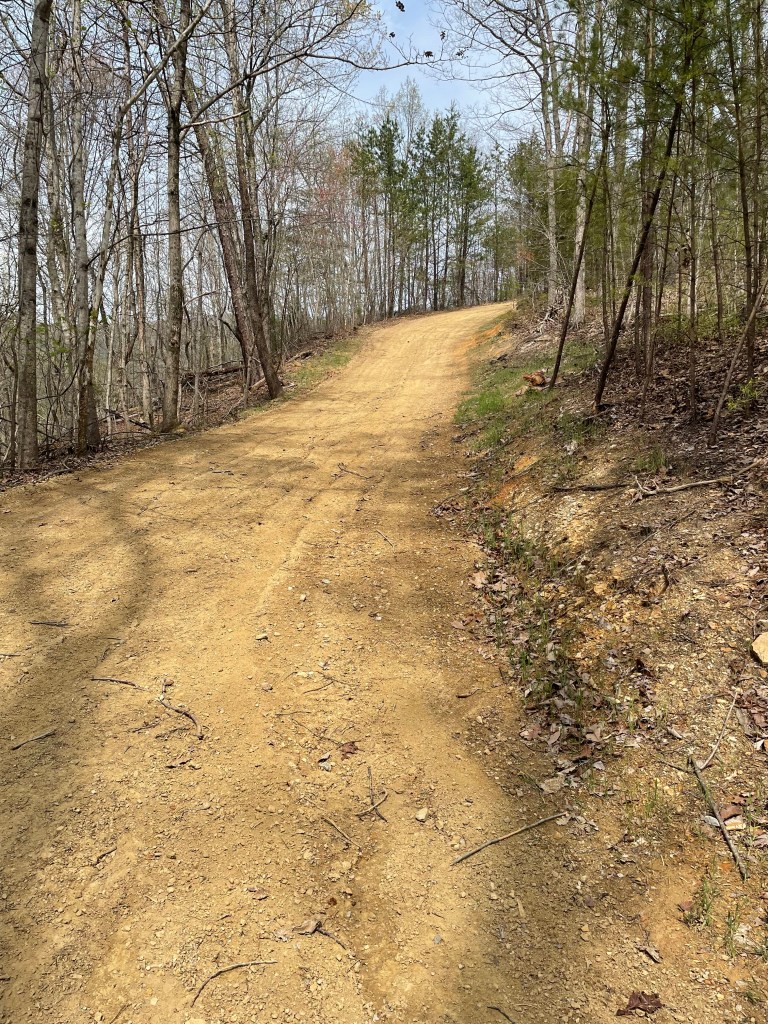
This dirt road on the neighbor’s land leads to their highest point and where they’d like to build a bed and breakfast. Their full time home sits three hundred feet below this highest point along the paved county road. They are not disputing that this dirt road curves onto my land for a small portion. The only question is what to do?

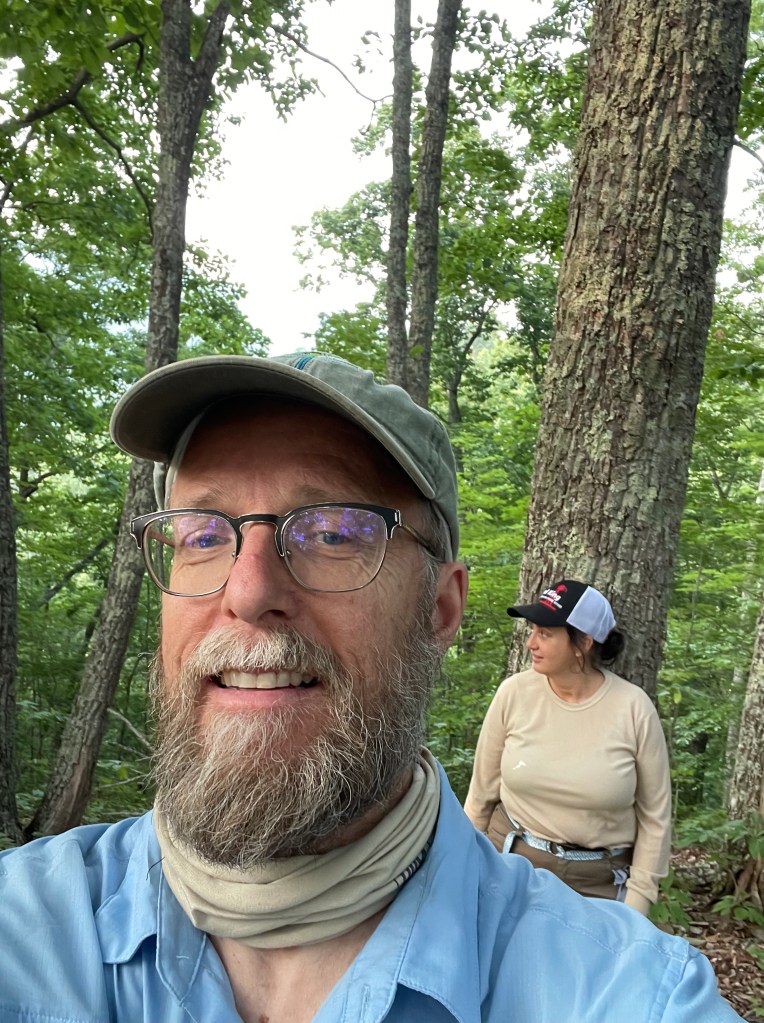
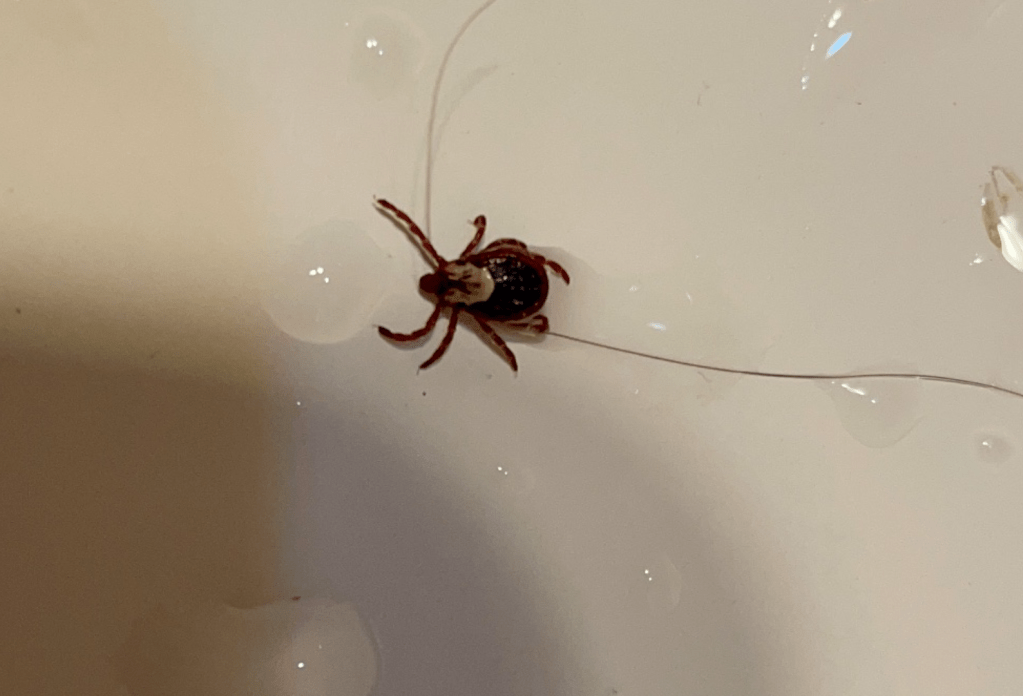
I’m happy to say that while my time has been short traipsing around the woods, it has been tick-free (WARNING–tick pictures below). I bought some additional shirts and pants for land work and have been more careful about securing clothing: sticking pants in socks, wearing a light neck gaiter, covering my hair and spraying DEET-based insect repellent around my ankles and wrists then rubbing a handful into my face, neck, and ears. I finish off by running my still DEET-damp fingers through my hair. 

New white pants and T help me see ticks before they find their way to my skin. I was wearing a white, nylon swim cap under my hat. If the weather wasn’t cool it might not have been manageable.

Ironically, just before my trip I got two ticks just brushing through high weeds on the roadside in Tomales, CA. It was only the second and third time in my 32-year stay that a tick has latched onto me in California—and the first time was just a few weeks earlier in Briones Park. Maybe all the rain we’ve had has brought them out? 

Funny, the two ticks that I got the same day were two different species – a Pacific Coast tick and a Dog Tick. I got them both off after about four hours so I’m not worried that they transmitted harmful bacteria (it’s generally agreed that it takes at least 24 hours for the bacteria in their guts to make it into their hosts.) 

I did use the bites as an excuse to get a round of an antibiotic, Doxycycline, to have on hand just in case I get bit by the lyme-carrying, black-legged tick or find any species on me that I think may have been attached a while. 

Speaking of dangers in the wood (thought this one worries me less), this adolescent bear was spotted across the road, about fifty yards from my shed next to my neighbor’s house. Here are the pictures the neighbors took a few weeks ago:

It feels good to get a post off again after that long blank stretch. Summer solstice was unmarked for me on Wednesday except for a radio announcer who mentioned it. I know solstice is the official beginning of summer but, for me, it means my school break is almost half way over. Still there are plenty of possibilities for new beginnings, adventures, rest and relaxation.  I hope you find lots of that good stuff. 

I’m only about fifty pages in, but this is a gorgeous book I want to share. Take care. 

June 11, 2023

I don’t like saying it—being a believer in human redemption—but it’s been a good week for the death of diabolicals: James Watt, Pat Robertson and Ted Kazinski. I’m sure they have loved ones who have better memories of them than I do.

Cary Grant is dead too. Turns out he’s been dead a while—since 1986. As it happens, his costar in the film North By Northwest, Eva Marie Saint, is still alive. She’s 98.

In the great urn of ashes, Grant’s are still on top. His memory is still in the hearts of many, but even he will eventually blow away and be part of the cosmic ash that makes up stars.

Its theorized that the Brazilian rainforest is lush and fertile due to winds blowing sand from the Sahara across the Pacific. Fertility relies on the infertile. Mr. Grant is still fertile. Clara Bow and Fatty Arbuckle of the silent film era less so. Both my parents and my friend, Rhett Stuart, all dead 14 years now are unknown to most, though very much still in my mind. 

When I was housemates with Rhett, living at the bottom of Hayes Street in San Francisco, I sometimes heard him weeping late at night when a friend or relative died. The last of his era were dying out, the way—if I anthropomorphize—I imagine Martha, the last passenger pigeon on earth might have felt in the Cincinatti zoo before she died alone in 1914, her genetic code and the billions of her kind who preceded her never to be seen again. 

“I don’t know if I want to live in a world without Dinah Shore,” Rhett wrote when the actor passed—a statement that resonated particularly with me since Dinah and I are from the same small town of Winchester, Tennessee.

My grandmother Flora, born in 1908, four years after Cary Grant, lived a long time after him. She died in 2007, six months shy of her hundredth birthday and thirty-five years after my her husband, my grandfather Sterling. 

This death theme came about from a simple Wikipedia search after rewatching North By Northwest with a friend this past weekend.  Lord knows (if I were a religious man) I’ve been searching for a theme these five months or so since I last blogged. There was a moment during Spring break in April when I visited my land in Tennessee when I had a post ready to go , but I held it back.

It hasn’t been writer’s block as much as publisher’s block. After tromping around on my land in April, I  took off an extra week from work to tromp around a particular million-plus-populated-southern-metropolis in search of a relative who became homeless around Christmas. After writing extensively about my search, the ethical dilemma of revealing someone else’s life situation without their permission reared its head. I had the feeling of being an interloper. Was I capitalizing on my relatives tragedy just to get a story? What part of it is my story? What is my responsibility? It was too confusing to digest.

The thought came to me—is any of it important? Anything mildly amusing? Where do I set my writing bar: an interesting bowel movement or nuclear holocaust caused by the war in Ukraine? 

While I was in Tennessee the state government ousted two black legislators for violating the chamber’s rules of behavior. I was never so ashamed of my home state. They couldn’t even profess “well rules are rules” because they hadn’t kicked out the white lady legislator who had done the exact same thing as the black men. 

Then there is the anti-drag law that was passed but has since been ruled unconstitutional by a Trump-appointed Federal judge. Tennessee legislators make me want to show up in a yellow summer dress wearing bauble earrings with my beard and work boots on. I’m just glad most of my Tennessee friends and relatives feel the same way I do. I’ll be there in a few days.

Previous to going to Tennessee I was already reeling from a feeling of existential insignificance. In late March I went to the California Association of Bilingual Education conference (CABE) at the Long Beach Convention Center. I brought copies of my story The Easter Thingy to read at an open-mic in the enormous vendor’s hall in the convention basement. An attractive space was designed for this — a large rectangle of artificial grass surrounded by a white picket fence with park benches around the perimeter.  I handed out copies of my story as people gathered inside the “park”. Others milled through the nearby rows of educational book publishers, tech companies and public school districts vying for new teachers. The vendor’s hall was a place where you had to be careful of eye contact or pausing too long at a candy bowl lest you be hooked into a spiel. 

The open-mic was actually in the style of a poetry slam with audience judges using a 1-10 scale to determine a winner.  The ebullient MC happily gave me permission to read an excerpt from my short story along with a few other readers who didn’t fit into the slam genre. Everyone was welcome. But it was strange being judged with numbers and competing with others truer to the slam form. 

Despite the kindness of the host, I felt out of place with my sad, though educationally-thematic story. I was an old white guy reading about societal disparity of wealth and race while young women of color with shaven heads slammed about coming from that place. As a storyteller, it’s difficult to ask for a seat at the table when I’ve been told by many, it’s my turn to shut up and listen. History’s a bitch. 

Then, as if a glutton for punishment, on the way to a musical jam session I snagged an empty five gallon plastic water drum from beside a cooler. I had in mind my days of playing such a drum with my first grade students as well as the free-form drumming I participated in over the years at San Francisco’s hippie hill, the cable car turn around and aquatic park. What I found instead at this “jam session” were numerous, highly trained and talented instrumentalists and a leader that looked pointedly at me while addressing everyone and said, “If you are playing a drum for this song you need to stick to a beat that goes bumbum-bum-bum-bum——bumbum-bum-bum-bum.”

The universe seemed to be telling me to shut up even though the theme of the CABE conference was “Testimonios: The Power of Our Stories”. 

I’m accostomed to being a minority in my profession. I’m often the only male in the room and, especially at my last job, sometimes the only ‘Merican white male. A teacher who I consider a friend often used the pejorative “old, white men” with me sitting just a few feet away. At first I was flattered because I thought she might not consider me one but then as the years wore on I started to wonder, am I a fool?  Well, anyone who really knows me knows I am, but still…

I don’t bemoan woke people the way Florida Governor Ron DeSantis does. I appreciate woke. I just don’t want to play a game of musical chairs where everyone is fighting for a seat and some don’t even get to play. That seems backwards. I might be able to get on board if that was his message. As it is, it’s almost humorous to listen to DeSantis belittle “woke” because he is so much asleep. 

Anyway, the impetus to get my words out was withering away with depression and a nagging feeling that this financially sound, supposedly mentally-stable, white guy,  didn’t have anything important to say about my life let alone anyone else’s. I felt particularly impotent in regards to the plight of my relative who is exhibiting signs of a mental health crisis and refusing most help other than the kind that I, at least, am not prepared to offer.

There is a growing movement in many cities to force people into treatment. London Breed, the current mayor of San Francisco (and real-life persona competing for best comic book name along with Elon Musk) seems to be in this court. I’ve wavered over the years. We all cheered when the character “Chief” throws a massive piece of porcelain plumbing through the wall to free himself in the novel-made-movie One Flew Over the Cuckoo’s Nest, but seeing a naked person smeared with feces, ranting at the world in downtown San Francisco, makes the Cuckoo’s nest more palatable, albeit without frontal lobotomies. 

Governor Ronald Reagan is widely blamed for opening the doors of the mental institutions in California. I don’t know enough about the story to know whether he was just trying to lower taxes or if he genuinely believed in the patient rights movement, but laws changed to make it more difficult to commit people to institutions. Typically, severely disturbed people or people in crisis are taken in by hospital psych wards and then released after three days. 

Nevertheless, it seems like holding people against their will is really just a red herring in the debate about treating the mentally ill. There is a great deal of space between forced commitment and hands-on mental health care. How much of mental health treatment is really just a housing issue? 

When Gavin Newsom was running for mayor of San Francisco he was advocating for a program he dubbed “Care Not Cash” in which people would be given housing instead of monthly general assistance checks. The thought was to give people housing instead of money to spend on drugs. Many advocates for the unhoused said people weren’t spending the money for drugs but for getting basic necessities like food. They also said that people didn’t show up homeless in San Francisco (which the business community claimed) but were being evicted or priced out of the rental market when they moved. 

Something about our society wants to have these chicken-and-egg arguments that don’t really do anyone any good. In reality, every possible scenario imaginable about homelessness can be found—from the old lady evicted from the studio apartment she’s had for thirty years to partiers who arrive to live off the fatted cow. 

Ultimately “Care Not Cash” was just a good slogan. There wasn’t the will to house all the homeless people nor likely would it be possible in a city that so many people want to live in. What is possible is strong rent control and flipping the narrative of new construction from a small percentage of new units being “affordable” to the majority or all being affordable. 

Personally I like the idea of experimental, culture-shifting solutions like compulsory work service in different sectors like the society imagined in Ursula Le Guin’s The Dispossessed. How profound would it be to require a doctor to be a trash collector or a vegetable picker for a month out of the year? What kind of shift would happen in our collective conscious? 

Not long after I came to San Francisco I started seeing Shepard Fairey t-shirts with a stylistically, minimalistic picture of Andre the Giant and the word OBEY. Fairey is the artist that went on to design the HOPE poster Obama used in his presidential campaign. The clever OBEY design inspired people to think about what it means to submit AND to resist. 

In the context of people who are homeless due to mental health issues and/or substance abuse it’s seductively simple to think we can solve the problem by just making them submit. A full nelson would do nicely—the wrestling version of a straight jacket. 

But making people submit rarely turns out well. The recent death of Jordan Neely on a NYC subway by the hands of one who would have him submit is a good example. Whether this case was specifically racial is hard to know, but angry white men have wanted angry black men to submit for a long time.

America can continue to wall itself off from its problems. We can go back to sticking people in institutions that have a different name other than “prison” or “jail”. Those with money can get in gated-communities and hide behind those walls coming and going in giant SUVs with their own security details. But there will never be enough mental institutions, prisons and gated-communities to escape the masses of people in poverty and crisis. 

At the same time the laissez faire of anything goes does not work either. Just spend ten minutes at the corner of 6th and Market in downtown San Francisco sometime and you will see what I mean. But San Franciscans, don’t let your experiment in containment-zone-street-debauchery swing you too far the other way! 

We all need to come clean about what creates homelessness. It’s not just drugs and mental health. It’s also the debauchery that takes place in private homes on Nob Hill, at Mar-a-Lago, in Washington, and every upscale, Great Schools, seven-out-of-ten-rated-community in this country. The haves and the have nots is widening. This is not a sea parted by Moses to the promised land. It is an enormous, cultural chasm with people falling to their deaths left and right. 
Part of the wonder and beauty of being human is that we are all different. We all have different perspectives, come from different places and have different experiences to draw on. Maybe if we could see that, if we could see that each of us is a Martha, that each of us is unique and a species in and of ourself we might be able to stop what sometimes feels like a rolling ball of nihilism that may make us all like Marthas—the next extinct species on Earth. 

January 16, 2023

Pt. Reyes, California

I have a 31 year history with Point Reyes National Seashore. By Christmas time, 1991, I had been living in a San Francisco, Tenderloin hotel room for four months and I was ready to get out of town. I’d met my friend Rhett just a few months earlier. I don’t think we had yet established our routine of Monday night dinners together but we were bonded enough for me to ask him to look after my cat, Lily, who I’d brought with me from Ithaca, New York. 

Rhett was a cat person anyway. Among the many artifacts in his single room occupancy (just a half block from mine) was a framed picture of Noodle, his Blue Point Siamese who had passed away a few years earlier. Her collar tag was push pinned to the wooden frame. 

A series of Golden Gate Transit buses took me from downtown SF to the tiny unincorporated town of Olema which is a half mile walk to the Visitor’s Center for the national park.  I hoped to get a camping permit or find out the general lay of the land. The hour and half car ride was a three or four hour bus trip then. This was before cell phones with maps and before the internet—at least for me. I can’t say how I knew about the Visitor’s Center—likely word of mouth and the White Pages. Surely a government agency wouldn’t advertise in the Yellow Pages? Anyway, there was no way to let my fingers do the walking from the drop off to where I was heading. 

It was getting late, around 3 p.m., when the bus pulled away on the eve of Christmas eve. I had a school backpack with my sleeping bag, water, and some snacks. I carried my tent separately. The visitor center was closed up tight. I went to a trailhead that pointed downhill into the deep, dark woods and thought if I’m going to a place called Sky Camp I probably want to go up. That logic, or the fact that I already didn’t know where I was, had me turn around and go back to the road. I walked about a mile and was stopped by a police officer—or maybe it was a park ranger. Anyway, I remember he had a gun. He wanted to see my ID and took it back to his car.

“Did you know your license has been suspended for an unpaid traffic violation?” he asked returning.

No I didn’t and I had to think for a bit before remembering that I had gotten a ticket in New York City before driving across country. I was in my newly purchased, but short-lived, 1968 VW van sitting in a clearly marked no parking zone waiting for a friend to come out of somewhere. I was shocked that the meter maid gave me a ticket instead of just asking me to move along. Later, I couldn’t fathom a good reason to pay the ticket since I was moving to California. 

Anyway, the Pt. Reyes officer confiscated my license. I was astonished that California cared about a fine I hadn’t paid in New York, but I was beginning to understand that long arm of the law metaphor. I might have learned something from an earlier incident. 

An unpaid ticket for illegal bathing in a gorge outside of Ithaca had resulted in a bench warrant for my arrest a year or two before. In this case, the ranger had warned me and three of my friends that he would track us down if the tickets went unpaid. I was the only one who didn’t comply. Sure enough that same ranger showed up one night at my door and I had to post bail right then and there for him not to take me to jail. A few weeks later I paid the fine in front of a judge and got whatever verbal reprimand he had to give. 

I never did pay the New York City ticket and it was ten or fifteen years before I stopped being nervous that the infraction would catch up with me in the form of hundreds of dollars in interest and penalties. 

The Point Reyes officer let me go after asking me questions about where I was going and what I was doing and if I had any weapons. I showed him a pocket knife. 

It wasn’t the greatest interaction, but at least he set me straight about where I needed to go. I doubled back to the trail head and then saw a board that showed where Sky Camp was along with all the other camps on the trail that would eventually lead me to my final destination for the next day — the Point Reyes Youth Hostel.  I took a paper map that was in a pocket on the board. I’m not sure how I’d missed all of it before.

It was dark when I got to Sky Camp—close to a three mile hike. Fortunately the night was clear and the moon was full. But the camp really was in the sky and there was a fierce, cold wind blowing and the campsites were on hard ground surrounded by smooth boulders. I decided to try the next camp which,  if I had known how to read a map better, wouldn’t have been Glen Camp. It was five miles away, mostly downhill. 

Glen Camp was protected by woods but dark and damp. I reasoned that being attacked by a mountain lion or bear, though unlikely, would more likely be here if it was going to happen. Moonlight hardly made it through the trees. 

I set up tent and slept for a few hours but woke up freezing. I knew I’d be miserable trying to make it through the night, so I broke camp and started hiking again to stay warm. 

Eventually I came to a clearing and there before me was the Pacific Ocean glowing blue in the moonlight. The trail skirted a massive boulder and I climbed onto its side and laid down. The air had warmed. A soft breeze was coming off the ocean. I fell asleep but woke when it started to get cold again and started walking to what I hoped was next—Coast Camp. 

It was more than six miles along the open cliffs above the seashore. The trail followed twenty feet from the edge and then snaked around intermittent ravines. It was dark around the ravines which became tunnels of trees, but I could still make out the glow of the trail. I was concerned that my headlamp batteries would die and tried to use it as little as possible.

Morning light gradually grew and it was full on daylight by the time I hit Coast camp. I was overwhelmed with fatigue having just hiked about 18 miles. I thought about pitching my tent there, but decided to push the two more miles to the Youth Hostel. I figured that would be my reward and I’d be out of the elements. Even though it was clear and warm I was ready to have a roof above me. 

Not having had much experience with hostels I didn’t know they generally close in the morning after chores are done and don’t open until late afternoon. I’d have to wait until 4 p.m. to get in. I spent the next six hours lounging around the outside of a closed education center not far from the hostel. I’d brought a book to read. I don’t remember what. Maybe it was one of Carlos Castaneda’s or Zora Neale Hurston’s or it could have been Lila by Robert Pirsig. I think I’d already finished everything Ann Tyler had written by  the time I moved to California. Anyway, I didn’t want to do much exploring in the area. My swollen feet made that decision. 

At four o’clock, one last problem revealed itself. The desk clerk wanted to see identification to check me in for a bunk. I told her my story and she asked if there was a reference she could call. Rhett was the only person I knew in San Francisco and she dialed the 415 number and I heard his deep, somnambulant voice vouch for me as an upstanding citizen. There was only one other person in the hostel besides the clerk. He was about my age and had a car which was a good thing, because the next day was Christmas and the hostel would be closed.  After a relaxing evening before a fire, surrounded by books and warmth, the next morning he gave me a ride to Stinson Beach where I got another Golden Gate Transit bus and arrived back home to the Balboa Hotel, with its smell of Barbersol and sautéed onions, as the sun was beginning to set on the city.

For the past three decades I’ve returned to Point Reyes many times, alone and with friends, for day trips and overnights. We even managed to get Rhett out to the youth hostel—not an easy task given his perennial car sickness and the winding roads to get there. 

I was at Limantour Beach in Point Reyes two days ago during a break in all the storms. Water falls were coming off the cliffs. I saw about a dozen bouys that had broken loose and washed on shore. This sea foam was churned up by the rough surf and the wind made it tremble and break apart, rolling away like tumble weed.

I hope you are having a wonderful Martin Luther King, Jr. day. Not that I’ve illustrated it in this blog post, but breaking the law is sometimes a good thing. 

December 31, 2022

Even though I’m an atheist, deities somehow still make it into my subconscious. I was feeling slightly self-satisfied as if the gods of weather had chosen my winter-break flight plans (scheduled for last night) over the poor fools who had chosen to travel around Christmas. Their flights were canceled left and right. Almost all of Southwest Airlines shut down. Yet warmer weather and rain were predicted for Chicago when I would be laying over on my way to Tyson McGee Airport in Knoxville, TN. 

Then the pestilence gods weighed in and took Pelé and several other notables, and for me, they tapped my shoulder with a case of COVID. (Okay, who am I kidding. The gods didn’t tap my shoulder. They just threw out a trail of coronavirus dust. Who am I to be tapped?)

I briefly considered traveling with COVID, but quickly decided that would be morally reprehensible. Also, I’d be miserable. My head was feeling like it had been trash-compacted with cotton. All fluids bypassed my brain without even a smidgen of capillary action. Oh for a sloppy sneeze!

I canceled my flight and the nine days I planned on spending in eastern Tennessee. There was about a 30 minute period of reverie when I suddenly saw those nine days open up before me without obligation or plan. That quickly turned to boredom as I was quarantined to my room and did not feel like reading or writing or throwing away old texts and emails or doing anything that might make me feel like life has a purpose. 

So I tried to watch Sleepless in Seattle. I liked When Harry Met Sally so I figured I couldn’t go wrong. Right? …Wrong.

Why is it that some movies just don’t hold up? It moved at a snail’s pace and I kept hitting the 10 seconds forward button and then resorted to sliding the bar at the bottom of the screen. When was I gonna get hooked? I’m a lover of romcom, but this was lite on both. I gave up.

I switched genres and latched onto The Outfit. I always love watching a person that seems to have their shit together no matter what and this tailor, or I should say cutter, could thread a needle while gangsters tromped by him in his back workroom. Maybe it’s my theater background, but I also love movies that are heavy on dialogue and take place in one or two rooms, for example: Ma Rainey’s Black Bottom, Glengarry Glen Ross, and, of course, My Dinner with Andre

After that, it still wasn’t bedtime. It’s getting dark at about five o’clock.  I still had a few hours of wakefulness. About a month ago I started listening to a sleep podcast called Sleep with Me but that’s mostly for when I wake up at three in the morning. Scooter, the host, calls himself your borepal and he is very good at guiding you through the deep, dark night with his squeaky dulcitones and meaningless meanderings–his words. Sometimes I put him on before I go to bed but I don’t generally have difficulty falling asleep then. And even Sleep with Me, boring as it is, would not have put me out with my cotton head at this early hour. 
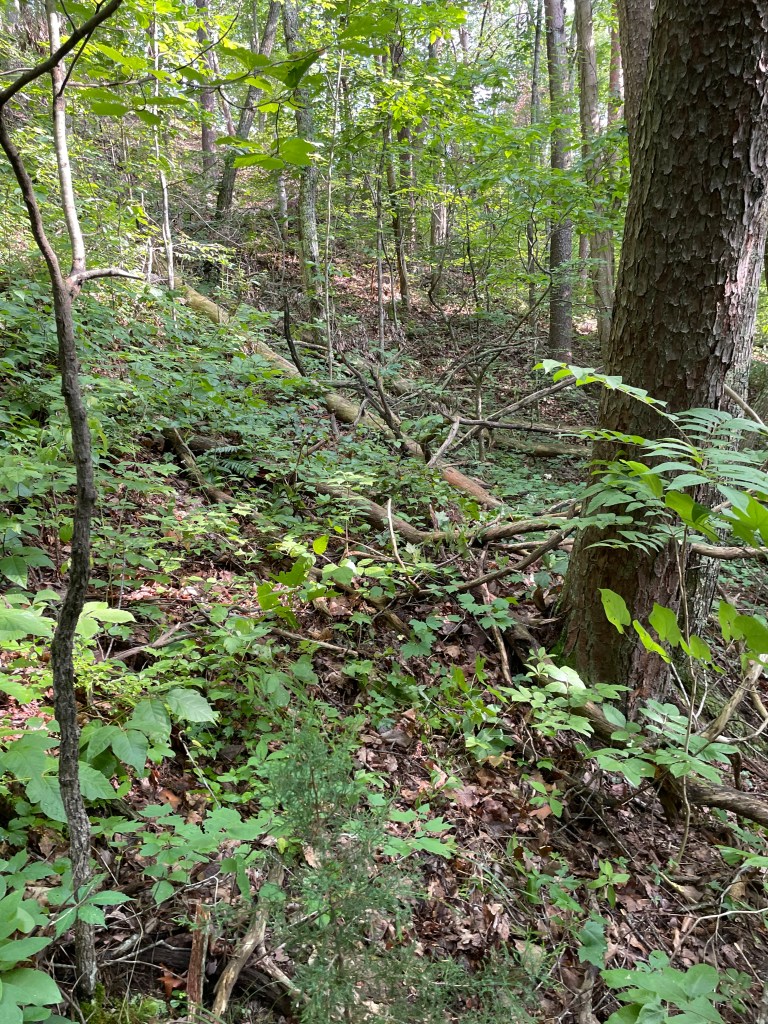
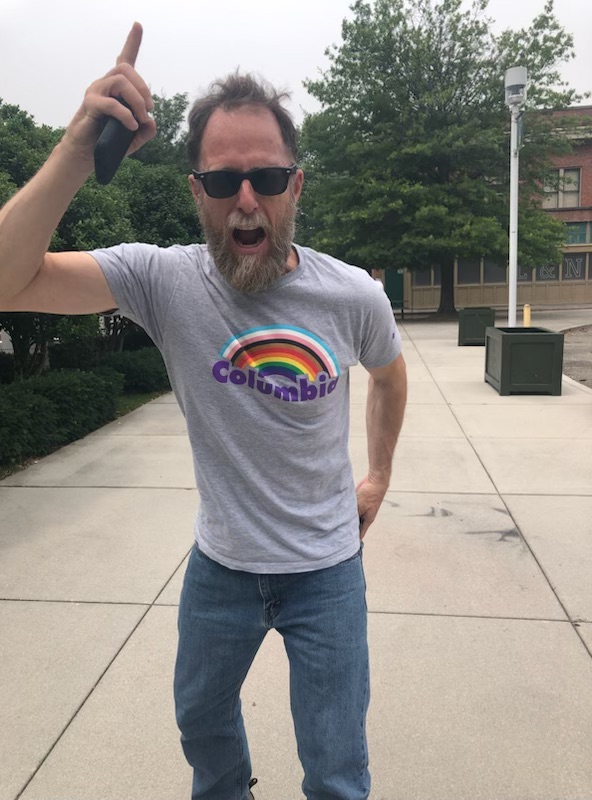
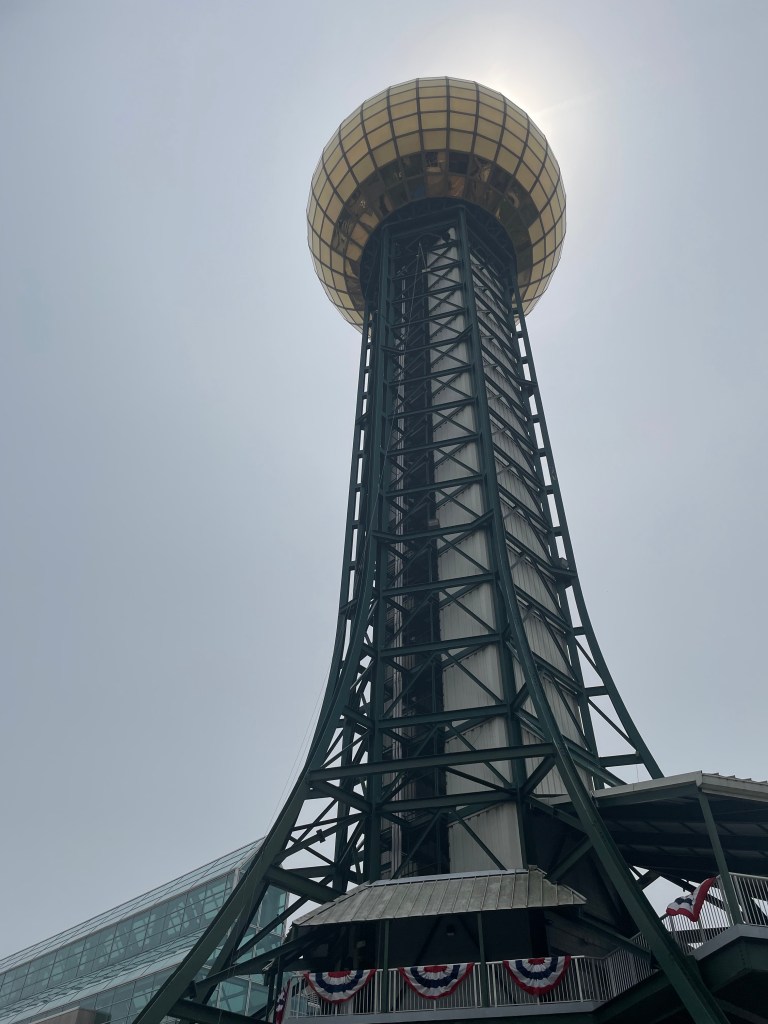
So I went back to try another dose of romantic comedy—something more updated. I latched onto About Fate. It may not be memorable, but it charmed me and it was a nice palette-cleanser after the darker movie. Still it was The Outfit that made it into my dreams.  I was in a dimly lit room with stacks of different size black, white and grey paper on an old, polished oak table. The stacks were not neat rectangles but with triangular points of the paper laid at odd angles atop each other. I evaluated paper size by turning the stacks without actually lifting any of the sheets. There was some sort of puzzle I was trying to figure out. It was all about slow and careful consideration like the main character of the movie.

Now, here we are. It’s noontime Saturday and it has been steadily raining for 15 hours or more. Rain is hopeful like the new year. 

Another day in bed. More movies to watch? I’m not reading much although I did read my book group’s The Rosie Project which is going to be made into a movie that I’m sure will fit in the romantic comedy category. It’s a fun read. 

I may try to rebook a shorter trip to Tennessee if I test negative soon enough in this vacation. My head has started to leak, releasing much of the built up pressure. At one point last night I felt something like a wet, pointed feather trying to wiggle down into my lungs. It made me cough for about ten minutes and I wondered if that is how the deadly virus works its way into people’s lungs—a thin, hollow dart covered with hairs that subsequently open and expand to release the whole team. 

I covered the cold spot on my chest with my hands and stopped listening to a podcast We Were Three about a woman who lost her father and brother — both anti-vaxxers — to the disease.  I’m vaxxed and boosted. I’m safe. At least, that’s what I told myself. But I didn’t want to relate too much to the deceased whose symptoms were being described through phone texts discovered after their deaths. I may be an atheist, but the power of negative and positive thought, short of being magical, is well-established. 

—————————

Here is the big news I’ve been waiting to tell you — THE BACK PATIO PROJECT IS DONE!!!

This last photo shows the patio after the first rain. I picked a three-day window to paint the concrete which included temperatures above 50 degrees and no rain. But the directions also said, don’t wash the paint for two weeks while it is curing. I’m pretty sure rain counts as washing. There are some bubbling spots now and places where Sasha’s little claws have scratched through the soaked paint. I’m not sure why I chose not to follow the manufacturer’s directions since I knew there would be rain. Did I think the gods would give me special treatment? It was likely that and a dose of impatience.

It only took a few hours to roll out the red so it won’t be much sweat to scrape up the bubbled spots and put on another coat this spring. Experience is a blessing. Maybe that’s the lesson for the new year.

Best wishes for your coming projects and dreams. Welcome 2023.