I first started this post 40,000 feet above the Midwest somewhere on a double-aisled 767 jetliner on my way back from Tennessee. Through swaths of cloud I could see the land covered with snow like a white jigsaw puzzle on a black table top. The pieces that weren’t yet put together showed dark, curvy edges—a river and its tributaries crossing the otherwise rectangular allotments.
This whole business of flying is a remarkable thing and I felt particularly thankful to be alive on this second leg of my journey after a harrowing short flight from Knoxville to Atlanta on a smaller aircraft. We were in the midst of a massive east coast storm and it was bumpy. News stories and images were still fresh of a jet plowing into another plane then flaming down the runway. Another lost an escape door 16,000 feet in the air.
Our ascent was bad but the descent worse. It felt like riding atop an avalanche on a 100,000 pound sled at 400 mph. I asked a flight attendant on the way off the plane how the ride rated in scariness from one to 10.
She smiled and said, “That was pretty bad. I think it was a solid eight.”
I was thankful she hadn’t said nine or 10 because I needed to know that things could get worse without dying if I was going to keep flying.
If I’m still at this regular Going-East business when I retire in a year or two I’m more likely to take a slower, statistically more dangerous, but psychologically easier method of travel. I’d like my mode of transport to be environmentally greener too, but short of riding in an electric vehicle with all the seats occupied or a Greyhound or Amtrak also at capacity (three scenarios not likely to happen) the comparisons and calculations I’ve found don’t point to one mode of transportation being much better than the other. I sometimes imagine a low-flying glider released from a giant sling shot.
Realistically, walking or biking is the least impactful way to go from California to Tennessee. It’s a far-fetched proposition although I must mention that my friend Marlow made an annual 1000 mile round trip on a recumbent bicycle with a trailer and a greyhound dog from Jackson, WY to Moab, UT. He did this for seven years. The first few years it was a 2400 mile round trip to the Arizona/Mexico border until he decided he didn’t need to go that far south to comfortably winter in a better climate.
The options for travelers in the United States may be the worst they’ve been in fifty years. Available destinations for intra and interstate travel on busses and trains is less than half what it once was. How ironic is it that you can’t take a choo choo to Chattanooga? The Amtrak goes to so few places its website treats destinations like expensive hors d’oeuvres on a five star restaurant menu.
The blue plate specials on Greyhound are a better deal but still limited. They don’t have as many buses or lines as they used to and many of their terminals have closed. When I travel by Greyhound to or from Knoxville I have to wait at a city bus stop next to a parking lot at midnight. Then if I’m coming to Knoxville the ride share to Corryton just 20 miles away costs almost as much as the bus ticket from Raleigh 360 miles away.
None of this is terrible news for people who have means and money, but this continent has become less traversable to poor people. When you get on trains and busses it’s no surprise why they are often less than half full.
In terms of combating climate change a full bus or train is better than a full plane or a single electric car. The problem is we all want to individually wipe our hands clean but attacking the problem requires a group effort and collaborative thinking.
——————-
To pick up where I left off on my last post about doing a few smart things, number one among them was ditching my plan to demolish the old Sheridan cabin during this trip. I realized that even if I could get it down in some fast, probably dangerous—or at best merely destructive way—I’d barely have enough time to tear it apart, sort the usable lumber, and store it in a manner safe and dry from the elements. I only had a week.
With this decision I slipped into a more thoughtful place. I began to look at the cabin as an interesting problem rather than something to conquer. As I began to work I let the knowledge of what was required manifest organically.
This laissez faire attitude extended to other areas that might otherwise have been stressful. Unbeknownst to the highway commissioner he may be doing me a favor in his failure to approve my driveway application that is almost two years old. Same goes with the new neighbor who has a road going over my land and was sold the property with the idea that it was his free and clear.
How to deal with that and the other are not cogs in the wheel but large gears that keep me from jumping into things too fast.
Besides, there is no rush to do what may never get done — specifically build a new cabin using parts from the old. In acknowledging this I freed myself from any anxiety on the subject.

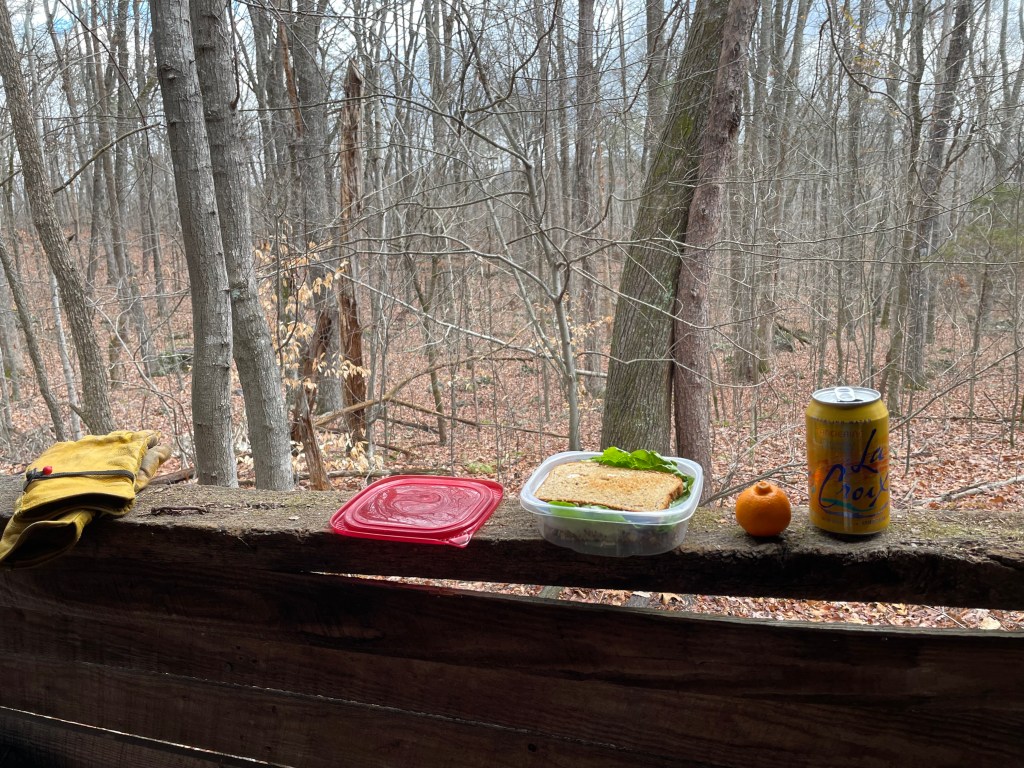
Smart item number two: I recognized that a deconstruction site needs room to move around in safely as much as a construction site does. Doing so not only helps avoid twisted ankles, it also saves time from stumbles and obstructed pathways.
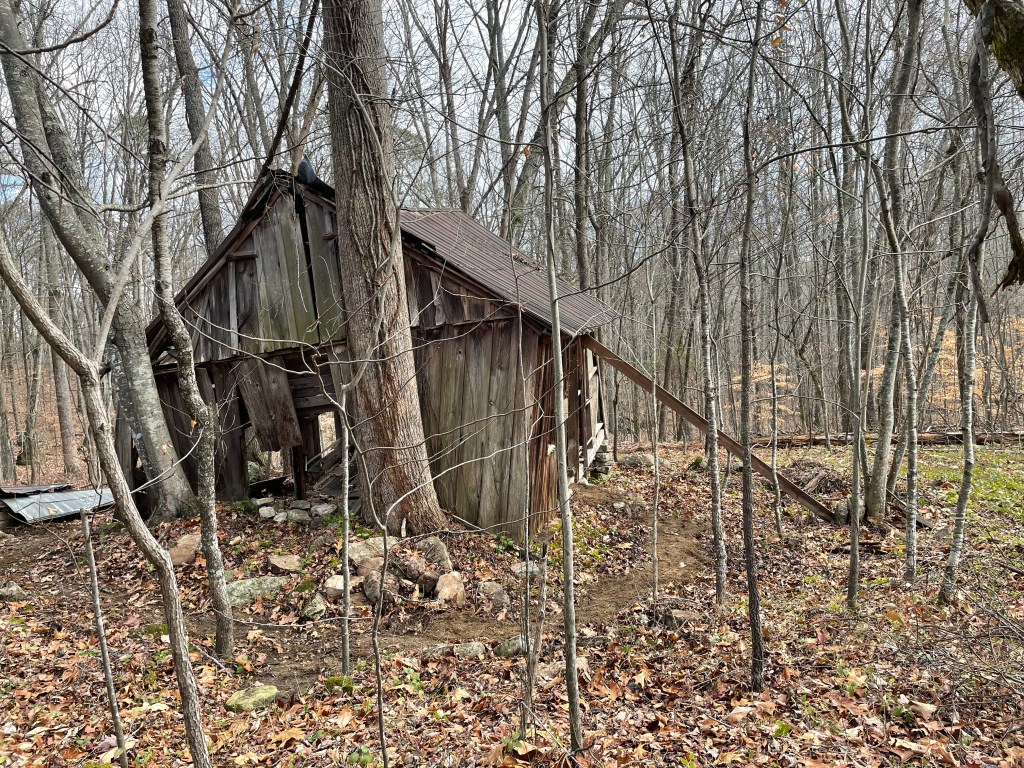
With this in mind I started tearing apart the fallen walls and roof of the part of the cabin that had come down several decades ago. The original structure was a backward L-shape and it is the shorter line of the L that fell and pulled with it about half the wall on the north side along with a good chunk of its roof. I’m guessing this room was a kitchen area because there is a rock structure at one end that could have been a fire place and a metal roof panel on top of the heap had a section cut out for a chimney.

I cleaned this fallen area working through the heap. I pried the metal roofing off, then knocked apart the battens from the rafters. It came apart easily since most of the fallen lumber is in different stages of decay. The wood got progressively worse as I got closer to the ground. In some places it was simply saw dust made by decades of insects and bacteria.


The demolition was difficult my first day because I was using less than ideal tools—a long, round pry bar and the back of an axe as a hammer. Both contained an unnecessary heft and imprecise bluntness. I returned the next day with an actual hammer and new pry bar that was flat and could grab the nail heads easier.
I took occasional breaks from this back-aching work to straighten up and look at the roof line where I intend to begin disassembly next summer. Over and over I assessed if I would be able to run a line between the trees and attach to a rope with enough lead to allow me to work on the roof and still keep me safe should it fall out from under me.
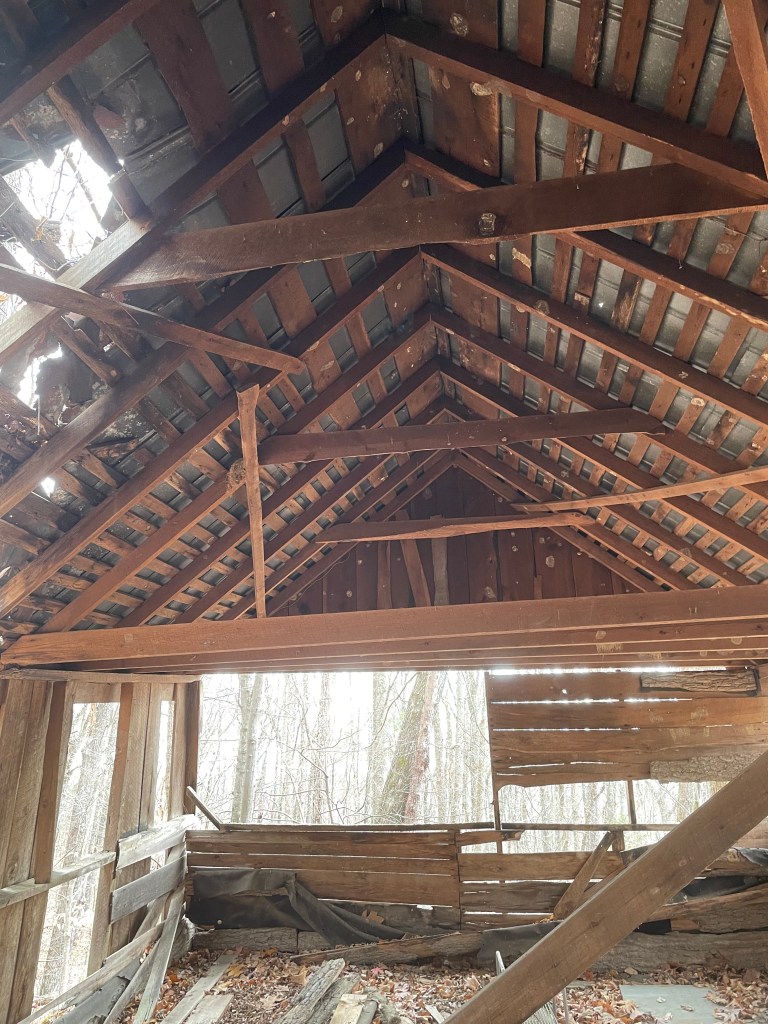
I also took time during these breaks to assess the lean of the cabin. It was clear I was safe working on the fallen side, but working inside the cabin or on the opposite side facing the lean was not without the possibility of it falling on top of me.
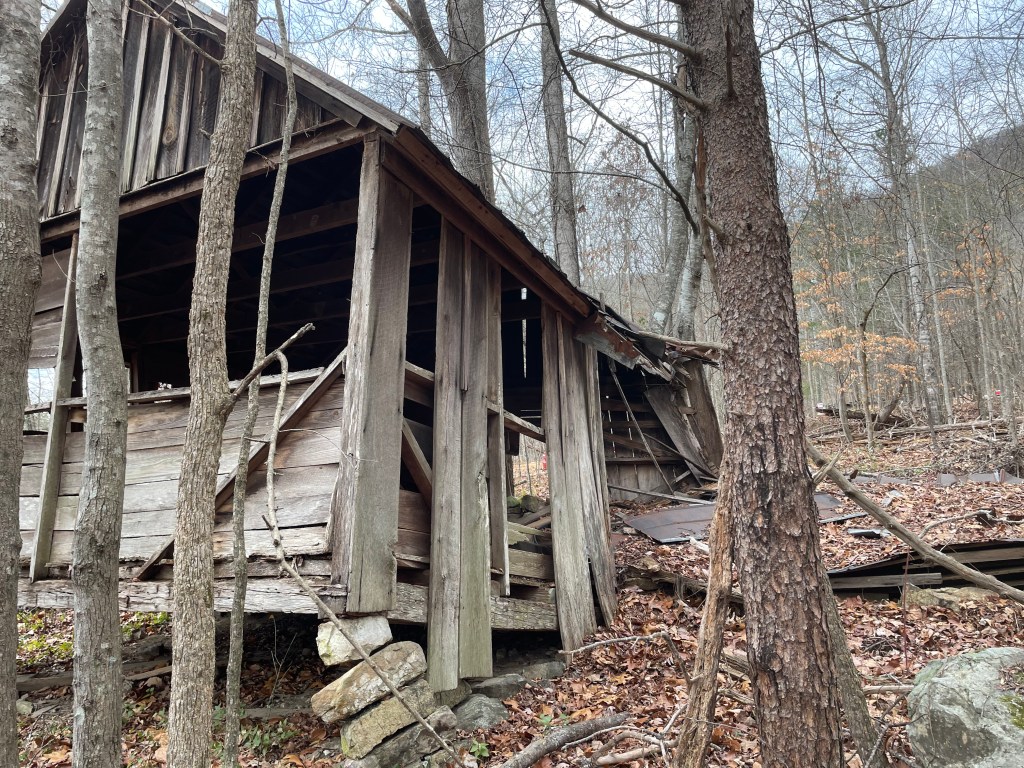
To safely take the cabin apart I would have to shore it up. To do this I removed a 16-foot, 2 x 6 joists from its interior. The beam had spanned the width of the cabin but was now only attached on one side.
I hammered the stubborn wood from a rafter where it was attached with long, thick nails. The hammer blows made the whole cabin vibrate. I mentally practiced diving to safety between joists. The stupidity of it hit me later. To make the overall project safer I’d engaged in a dangerous activity in the moment and that’s when accidents happen. This could very well have ended with me receiving a Darwin award. I could have easily cut a small tree to use as the brace instead.

After the brace was in place I continued to work on cleaning up around the cabin. Much of it is surrounded by assorted football size rocks hidden beneath a spaghetti work of vines. Unseen and unlevel they were ankle twists waiting to happen. The vines were great for catching a shoe and stopping me in my tracks. (I attributed an old-timey cowboy voice to them that said, “Whoa. Hold up there feller. Where do you think you’re going?”)
I pulled up the vines and lifted dozens of these big rocks from the ground where they were lightly seated in the loamy soil. I chucked them aside. In their place I began to make a path using the dirt that was soft and full of wood rot from the now cleared wing area. With no wheelbarrow I used a half piece of roof tin as a sled. Over and over I piled it with dirt and slid each load to the closest spot of the path I was making. In this way I was continually walking over the new dirt, packing it in as the path grew.
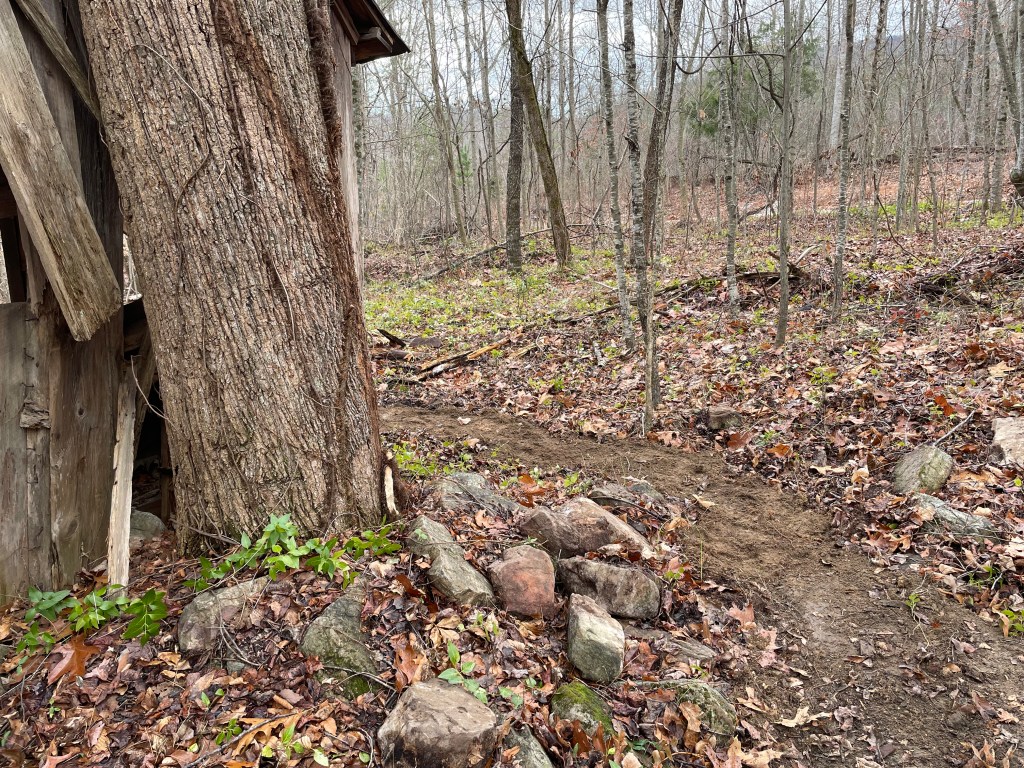
I have to wonder if this fresh dirt won’t end up being an incredibly fertile space for my two least favorite plants to pop up before I can get back this summer: The leggy, multiflora rose vines fall over when they get long and grab my clothes when I pass. I’ve already spoken at length about poison ivy. Anyway, it won’t be hard to clean up anything that grows between now and June and it’s a small price to pay for a level walkway.
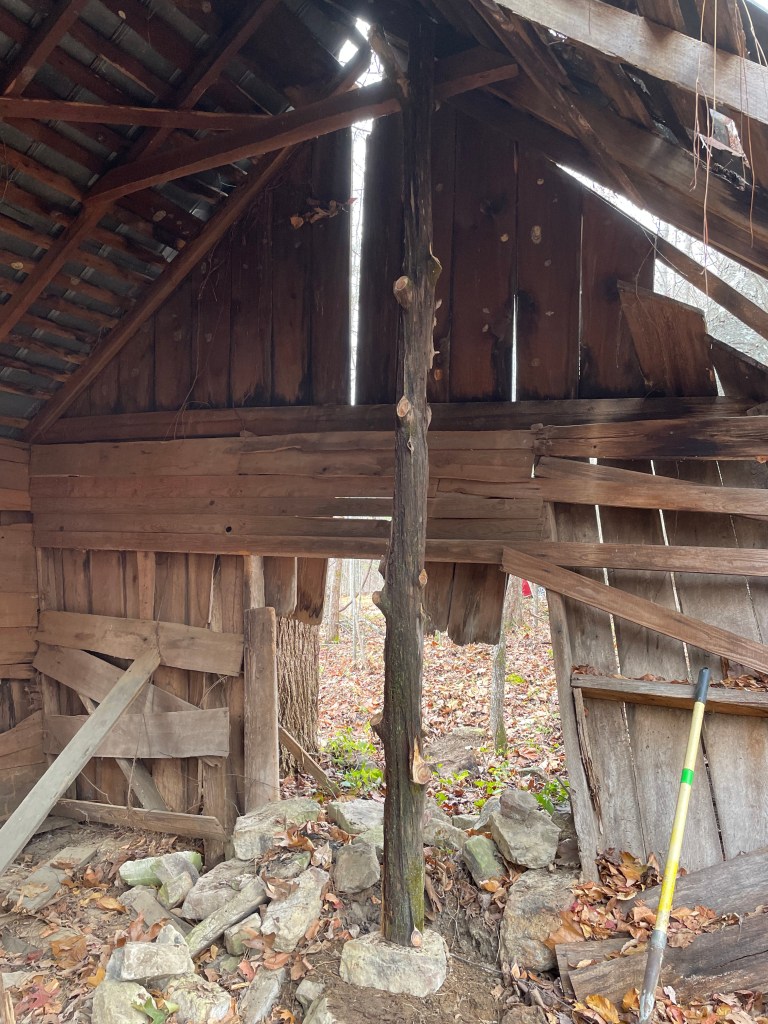
Between the hard labor there was another area I kept figuring on. I kept walking through the missing northwest wall of the cabin wondering why this portion of the roof wasn’t falling on my head. What I’d thought might be a corner post turned out to be a few pieces of siding hanging from the roof without even touching the ground.
Finally I figured out that it was just the upside down v-shape of the rafters with their opposing force and a few collar beams taking the place of the missing joists that was keeping this part of the structure from folding up. It seemed just slightly more solid than transcendental levitation and I pretty much dropped everything I was doing right then and there to make a post fashioned out of a fallen cedar that had not rotted out.
At some point early on in my deconstruction preparation, the neighbor whose goats died stopped to make sure I wasn’t some interloper stealing wood off the cabin. I walked out of the woods to meet him on the dirt road and told him about my plans for taking it down and reusing the good lumber for a new place.
“Aw well, I know you’ve got to do what you’ve got to do, but we’ll sure hate to see her come down,” he said.
I appreciated him saying that. I’ll hate to see the cabin go too. I like an old dilapidated cabin as much as the next person whether in person or in the form of an oil painting or artistic photo. It represents a special kind of peaceful solitude to anyone who’s ever thought of living out in the woods. But more than what it symbolizes I love the idea of reusing its materials and making it a part of a cabin that I can actually use.
 Spotty West Goes East