January 4, 2026

I was helping one of my students with doing some multi-digit subtraction a few days before our winter break and he asked me “Why do they call it borrowing if you never give it back?”.

I was flummoxed. I didn’t have a good answer and I’m not sure if I do now. Subtraction is just about taking away. You don’t give back at all. In the subtraction algorithm one digit takes from the next digit over so it can give what it needs to the digit below it. It’s all just part of a process. It’s like your body taking nutrients from your stomach to power your brain.

I think in the education world the correct term to use might be “regrouping” which makes more sense in terms of meaning but maybe not as much in common language. We are a nation of borrowers, but how often do we regroup? That involves teamwork or at least the notion that we have multiple things going on and sometimes we need to sort them out.

The language is important to me as a writer but I didn’t care much about it as a kid which made this student’s inquiry kind of special.

Back when I was his age my number sense was better than my word sense so when teachers said, “borrow from the whatever and carry the one”, it didn’t matter that the language didn’t make sense. I understood it was just a shortcut to get to the answer even though there was more wrong with the language than just the teacher saying “borrow”. 

Carry the one was a complete lie. In the subtraction algorithm you never carry a one (for whole numbers any way). You might carry a ten, or a hundred or a million, but one is not a number that gets carried.

From what I remember teachers didn’t pay much attention to number sense. You either had it or didn’t and the addition and subtraction algorithm (stacking numbers on top of each other) was hoisted on us pretty quickly before we had a good idea of how much bigger 1,012 is than 112. 

But what did I know about what teachers were paying attention to? I wasn’t paying attention to them!

_________________

I made it back to Tennessee for some time on the land and family visiting. My old friend Steve joined me. I met Steve way back when his wife was his girlfriend and I worked with her at Hospitality House in the Tenderloin neighborhood of SF. 

Steve and my Aunt Linda hit it off big time. Often, when I left them alone I’d come back in the room to see them laughing and smiling, telling stories or talking history. 

My trip was short. Steve’s even shorter. I arrived on a red-eye last Saturday and he came that night. He left on New Year’s Eve and I left New Year day. Still we got a lot in which included some delicious meals made by Aunt Linda and winter camping on a night that got down to 22° F. 

Surprisingly, the red-eye wasn’t too bad. I had everything I needed to make sleep possible—my 40+ year-old down jacket from college days, a window seat, a neck pillow, Benadryl and two doses of NyQuil in a 2-oz bottle. It’s one of the few times that having a congestion cold was convenient. If I ever take a red-eye again I might try to skip the cold but take the doxylamine. I made sure to clear my ears with a gentle, pinched-nosed push at intervals all the way up to cruising altitude and again on the way back down for both jumps of my trip.

I think another thing that helped was that when I got to Tennessee, I stayed up and didn’t try to “sleep off” the red-eye which would have likely just confused my body more. 
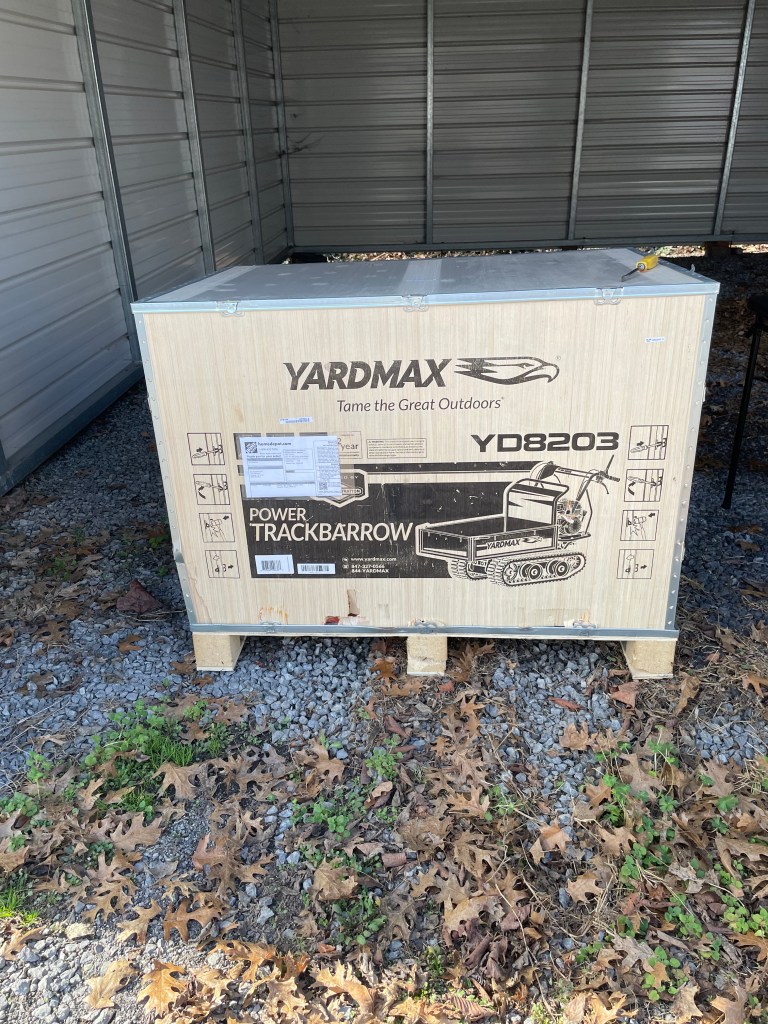
I purchased the track barrow I’d been pondering. Linda picked me up from the airport and when we got back to her house I went straight to work unpacking the crate and putting it together.

Before I got too deep into it I walked down to the farm office nearby and picked up Stewart’s truck, then drove out to my land picking up some gas for the new machine on the way. I wanted to see if I had any lumber that might fit the bill for making ramps, but I pretty much knew I didn’t. It was really just an excuse to check in on the land. 

It’s exciting to walk the main trail after I haven’t been there in a while. Not much had changed beyond everything. Absent summer foliage, I could see the shape of the land through the vertical line of timbers. Shades of brown was the theme instead of green. There was a small tree down across the trail near the south entrance. It was at head-height caught up in some limbs and would be easy to take out with a chainsaw. 

At the north driveway entrance, the long limb barrier that I had placed on forked branches and hammered into the ground was down on one side. A fork had rotted out.

A thick pile of leaves covered the gravel drive and all the trails. The top leaves were dry but underneath recent rains made a wet matted layer. My footsteps had a lighter, higher pitch than the tumbling sound that can happen when walking through leaves that are dry and basket-deep.

The planks I’d cut from the oak last summer had all dried without warpage, but none were thick or long enough to be used for a ramp. My new machine weighs 660 pounds. The ramp kit I bought recommends two 10’4” 2x8s for the truck tailgate height of 32”. In the shed I had one twelve foot, 2×8 from the orange box store, but by itself it was useless and two six foot planks were two short. 

By the time I walked the land and looked around the sun was getting low and I still needed to pick Steve up at the airport. I locked the shed and started out the 22 miles to the big box store. I at least wanted to have what I needed to load the machine the next day.

The next morning as Steve birded on Linda’s front porch I finished attaching the handles and sides to the track barrow. It comes partly disassembled to fit in a smaller crate. 

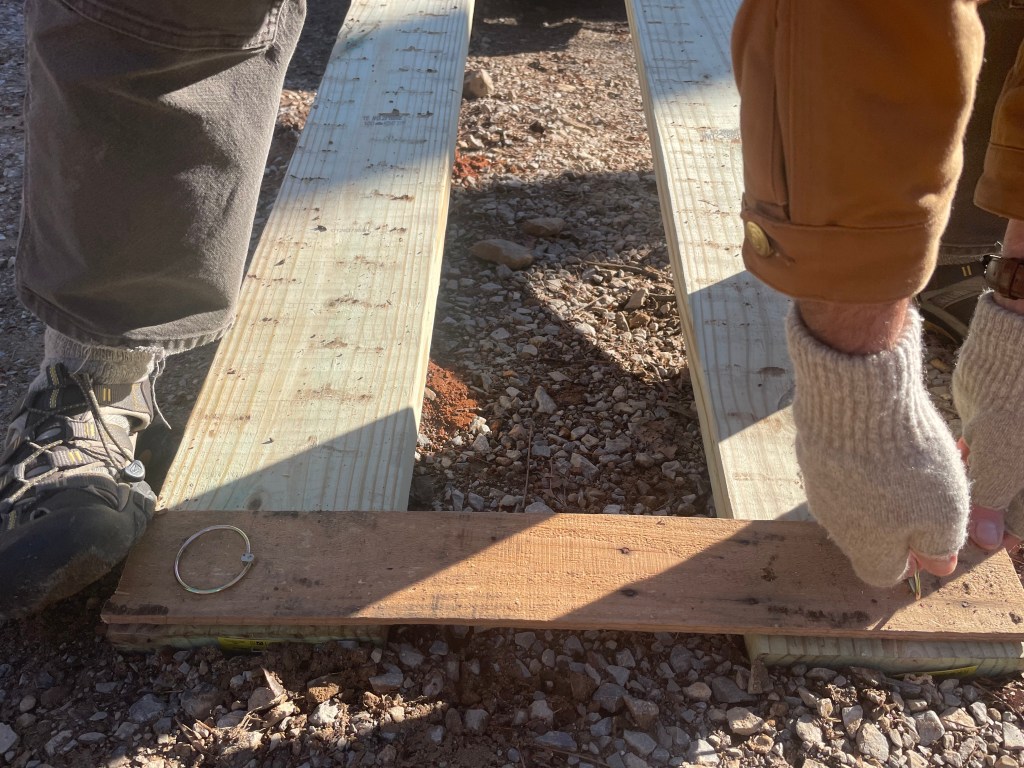
Steve scored a Red-breasted woodpecker for his life list and I grabbed Linda’s binocs so I could add it to mine. When I finished putting together the barrow and ramp I lined everything up to load. Steve helped with the eyeballing. Of course, I’ll have to get used to doing this alone, but it was nice to have the extra set of eyes this first time. I’d had the not very practical thought of only loading the track barrow on ground where I could stake the ramp planks to keep them from moving but Steve had the idea of cross bracing the planks by screwing a piece of lumber between them. 

First time loading the track barrow I ran out of gas half way up the ramp! I had only added a little because I wasn’t sure how much I would use on this trip.

By the time we got the track barrow out to the land there was only enough time to unload it and hide it beneath some tin roofing inside the falling cabin. Days tend to slip away fast in the winter. Hiding the machine was in all likelihood an unnecessary step on a private road that has numerous postings about its privacy including, until recently, one that mentions getting shot, but I was beginning to consider the machine my baby and asked Steve to help me take measurements of the bed so I could cut some plywood from the crate it came in to protect that beautiful powder coat from any scratches and dings. 

I imagine the neighbor took down the posted threat of trespassers being shot out of consideration for our other neighbor’s relatives. The other neighbor, Dennis, was shot and killed by accident last April. I’m sure his relatives appreciate not having reminders about what will likely never be far from their minds. 
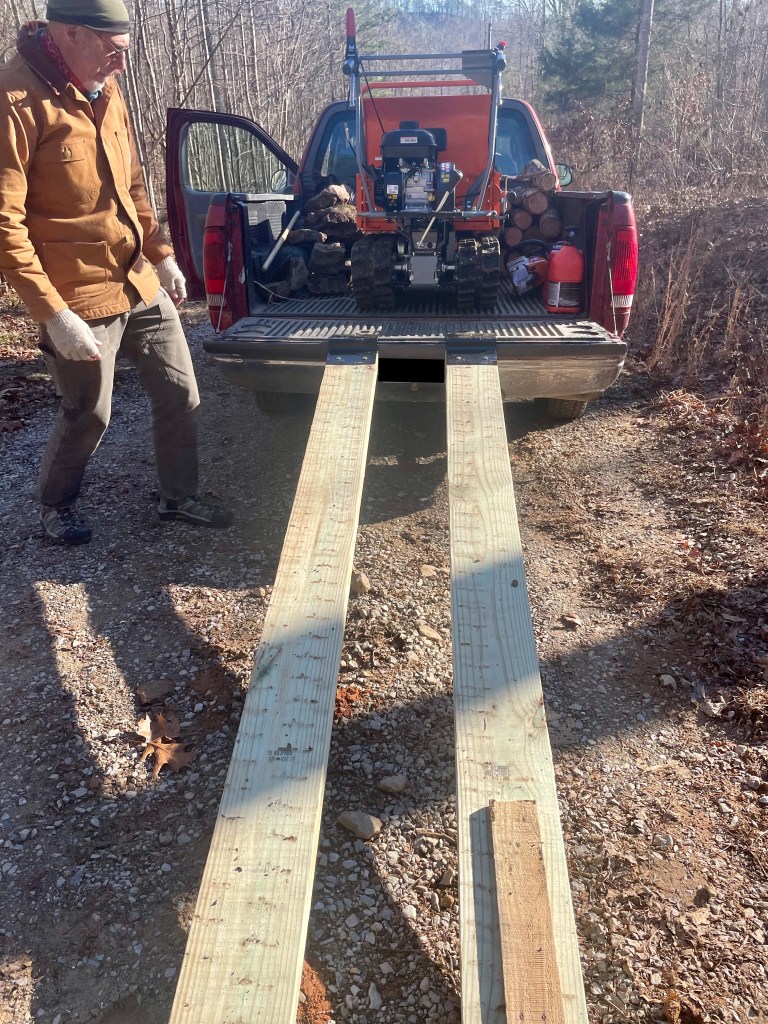
Screws to hold the ramp together evolved to push pins which make for easy removal and loading in the truck.

When we got home I used the last light of day to cut the protective pieces for the track barrow while Linda and Steve talked in the kitchen. That night we celebrated and relaxed with drinks, food, and wonderful conversation.

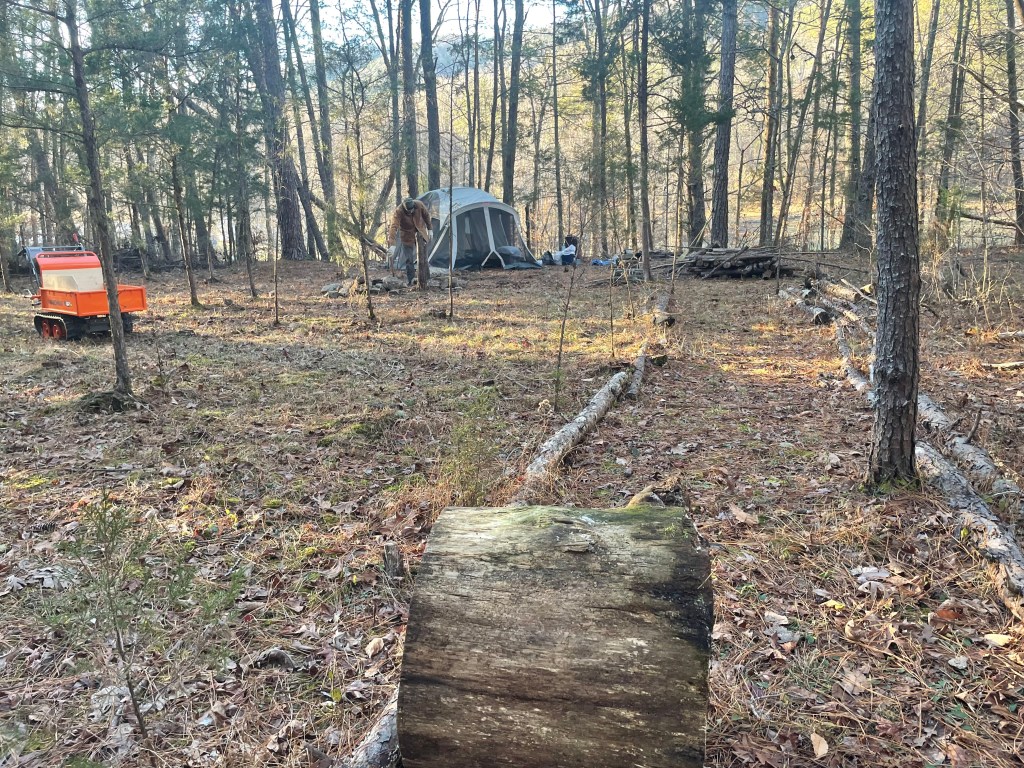
The next day we set up camp at the proposed cabin site and then headed over to the falling cabin with the track barrow. We did three loads of rock and a load of seasoned, cut oak to take back to the campsite. I learned pretty quickly that a full load of heavy rock gives the machine a heft that can pretty much yank your arm off if you change direction too quickly. Back at the camp I also learned why people like chopping seasoned oak logs with an ax. It doesn’t take much to split. The pieces fly apart with a satisfying crack. 
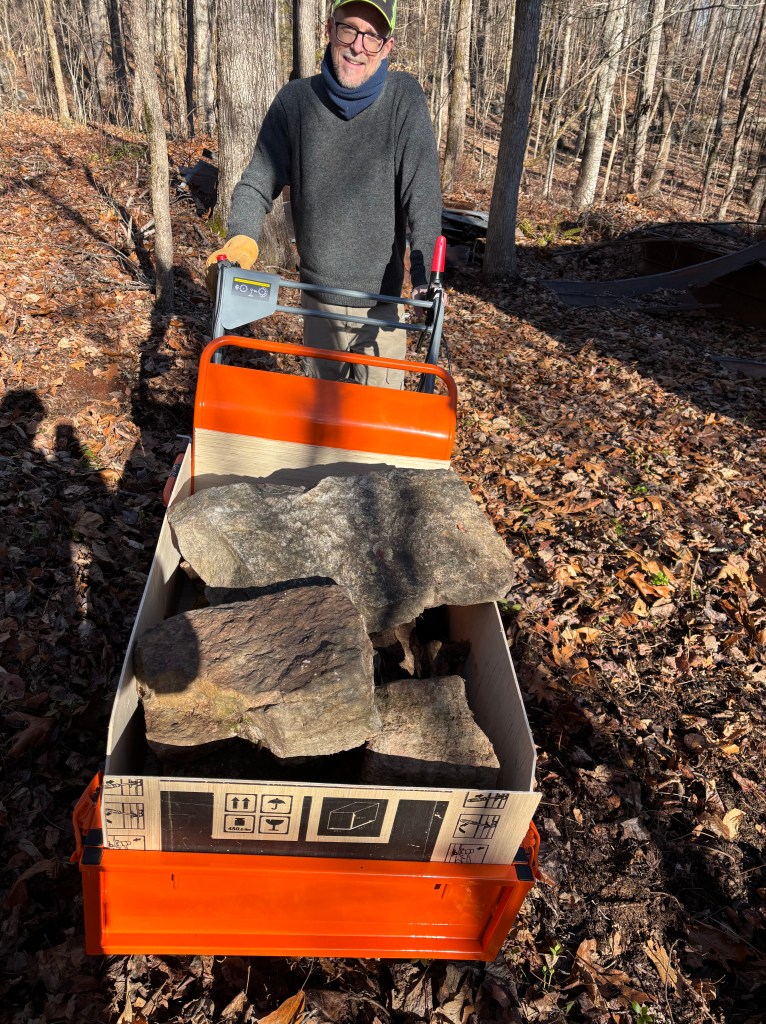
Load of big rocks. The machine is rated for moving 600 pounds but one YouTuber claims to regularly use it to move 2,000 pound loads.
Steve making the camp fire ring

When it got dark and we had the camp ready to make a fire we walked back to the truck and went into Blaine for a meal at the Mexican restaurant. We returned full-bellied, started a fire and played two games of chess reaching down to the ground between our camp chairs. When we turned in we didn’t feel the need to bank the fire as it was safe in the rock walls. 

It took me three hours to go to sleep which is how long it took for my body heat to win out over the intransigent cold inside my sleeping bag. After that I slept pretty soundly according to Steve’s report of my snores although I felt like I was just below the surface of wakefulness. In the morning I stuffed my down jacket in my sleeping bag to warm it and watched and waited for the light to grow before I rose.

It was easy to build a fire back up from the coals. When Steve woke we went back into Blaine and ate a hearty Waffle House breakfast, came back, broke camp and then hiked up to the top of the knob and came back to camp on a longer path.  Driving out with the track barrow and all the camping equipment we stopped at a pond to look at some small birds floating among Canada Goose. We steadied ourselves on a fence to get a good look with our binocs. Ring-necked ducks—another addition to both our life lists. 
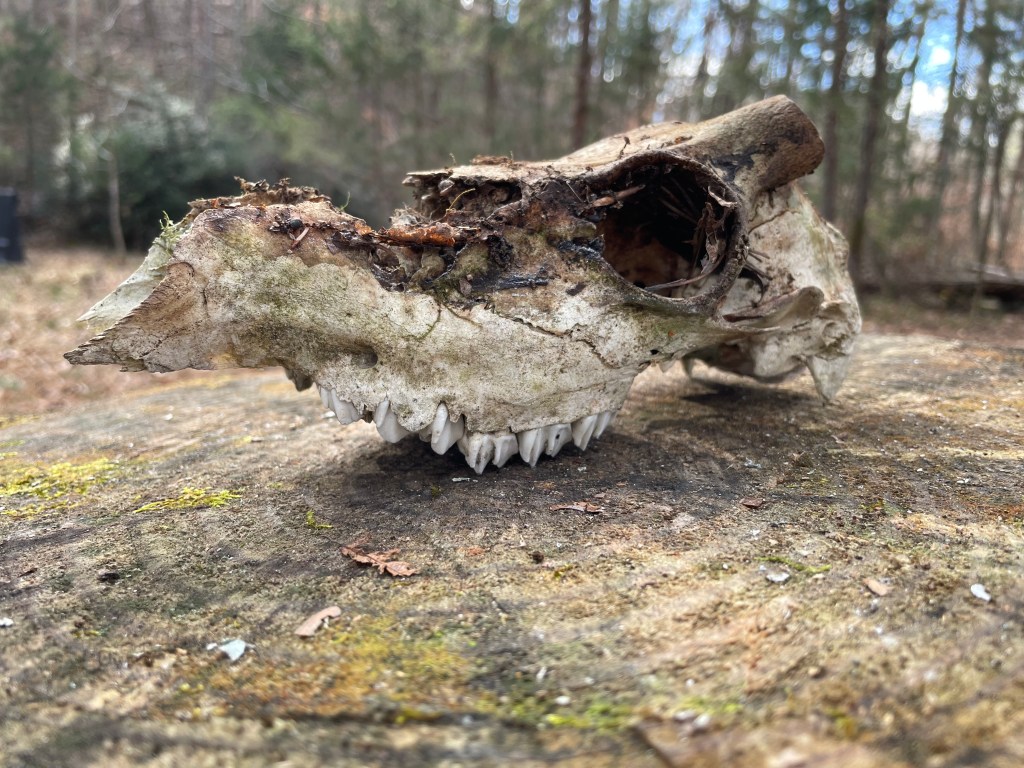
Deer skull Steve found on our hike
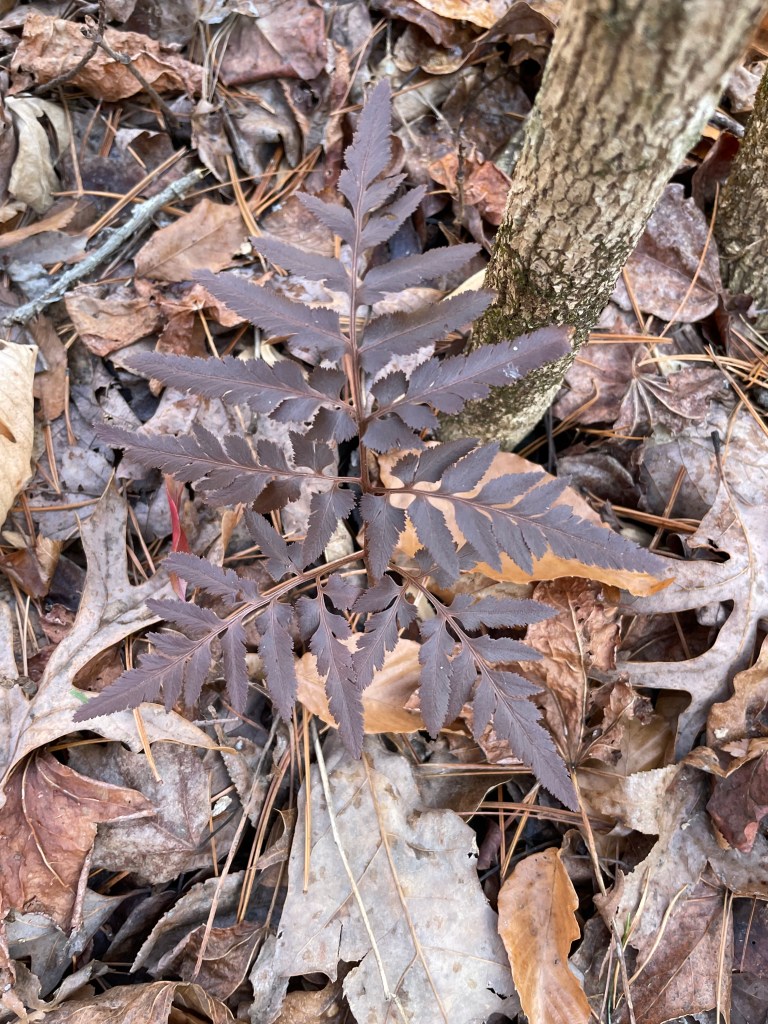
Cut-leaf grape fern

Denouement

It certainly wasn’t the highlight of my trip but yesterday, I found a had a stowaway accompany me back from Tennessee. Ticks don’t have necks, so I guess the best way to describe the one found on my back would be to say it was embedded up to its shoulders. (So much for the idea that ticks aren’t active in cold weather!)

It apparently was dead and didn’t wiggle its legs when I asked Jillian to touch it with a hot match hoping it would let go and back out. (No longer a recommended procedure.) While I’d like to believe that my body produces some substance that kills ticks who dive in head first, it probably has nothing to do with any superpowers of mine. 

Complete removal was unsuccessful. The head is still in there.

An interesting psychological awareness has come from this. I’ve learned that I’m not freaked-the-fuck-out by a tick embedded in me. I only get that way when I find one crawling on me.

I have a prescription of Doxycycline which I got specifically for this contingency. I’ve taken two doses. Unfortunately it has a “Discard 6/2/24” date on it. An email with pictures has been sent to my doctor. 

I think this was coming into Chicago which was 12°F

January 19, 2025

I have a new routine to write when I’m fresh in the morning and look at news when I’m tired at night. I get free library subscriptions to The NYTimes, The Washington Post and am currently paying one dollar for a year-long trial subscription to the SF Chronicle which has automatic renewal at a much higher rate. I bet they hope I forget about that but I won’t. That’s what calendars are for. I probably should support my fellow writers and just pay, but there’s a reason they are free—or close to it—and who am I to try to figure it out? 

Together with these three newspapers there is more news than I can look at. I’d be better informed if I substituted one of these papers for a more radical doomsday-type publication and added in a more conservative Tennessee newspaper but my gut is probably going to churn no matter what news I take in. 

The Post and The NYT usually have similar headlines. The writing is good in both. The NYT usually sends me three or four breaking news emails every day in addition to The Morning and I have to ask myself how much news can break? 

The SF Chronicle seems to have lots of strange gaps in their reporting that often makes me ask “okay, what happened?” but it’s local(ish) news for me even in Concord and I should probably pay attention to that. 

I’ve also decided that with all the crazy people in Trump’s junk drawer (Jillian told me people are calling it that instead of a cabinet), it’s probably best not to get worked up every time Broken Stapler #1 says they are going to invade Greenland or Dried Up White-Out says we need to stop requiring vaccines for children in public school. I just can’t be a yo-yo all the time on their rubber band.

This is my 2025 pick for book of the year (although it came out in 2022). The story is so compelling. It’s heartbreaking at times but there are lots of wait-for-it moments when the soul sings.
My favorite MLK jr. book that I’ve been reading to students for years. Warning: You will likely cry with joy at the end. Fantastic illustrations.

—————

I’m feeling better about the prospect of getting a cabin made. It’s been close to five years since I’ve been exploring this land and it feels, for the first time, like I’m finally getting a good map of it in my head. 

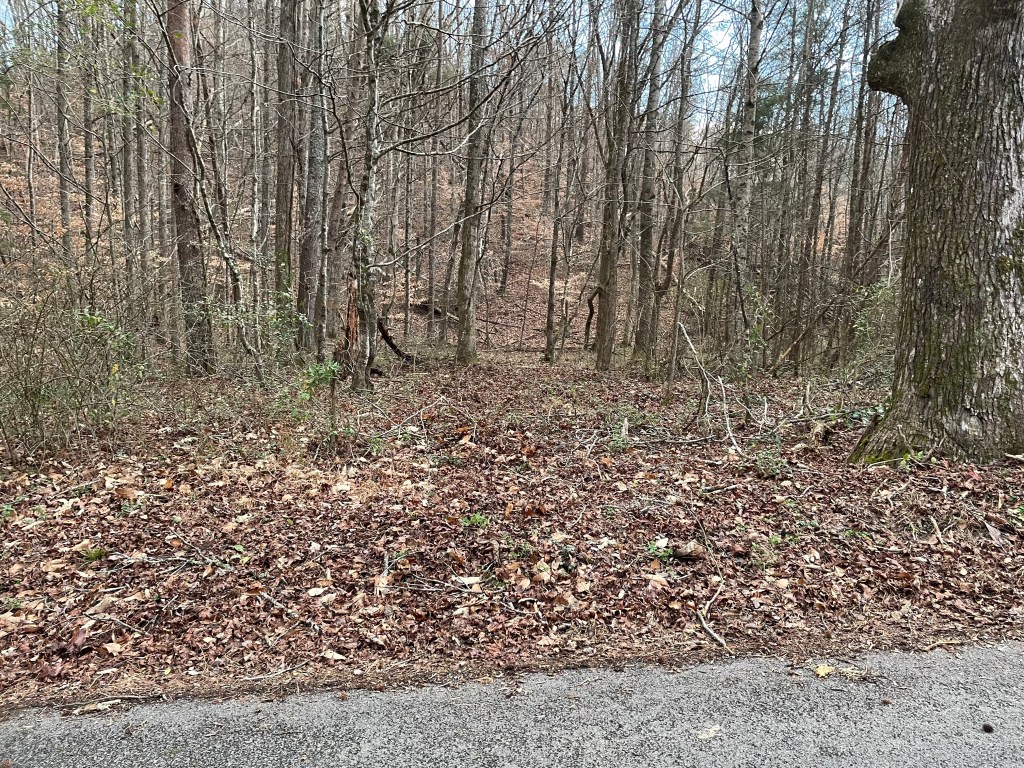
For one thing,  I found a good place where I can stage logs and then take them out to the road for cutting with a portable mill. I’ve passed by this spot a thousand times walking the trail the 170 yards from the proposed cabin site to the shed where I store tools. It’s flat, close to the road and largely free of any big trees. I think I never considered it before because it’s directly across from my nearest neighbor’s house and in the summer it’s overgrown with vines that offer a visual barrier that I like. 

The neighbor’s chickens were scratchin’ around next to the road and stepped into the woods when I approached them.

Now, as I’ve gotten to know my neighbors the idea of having complete privacy from the road doesn’t feel as important.There are plenty of spots on this 25 acre lot where I can get that. 

Most distant and remote is a little valley on the other side of the central hill and between the next hill which becomes the neighbor’s property after it tops out. This little valley—more of a holler—is almost completely absent of woods. If there were flying fairies, quidditch tournaments or witchy broomstick games this is where they would be played. It would be nice to have a cabin here, but there is no flat spot. Where the hill ends, the next one starts. The valley is a V not a U. A cabin could be built on the hillside with supports like you see in the Bay Area’s Oakland hills but my joy in this place is about the absence of human intrusion not dreaming of what it could be.

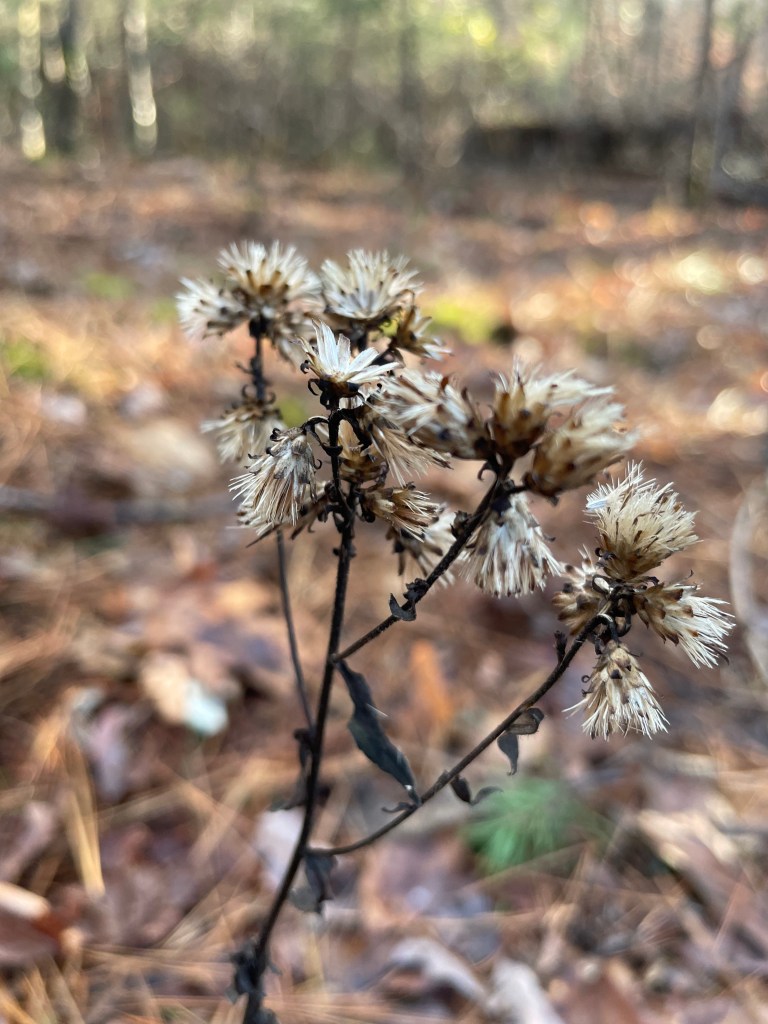
A pretty winter weed that I’m too lazy to try to identify right now. It’s probably something obvious.

A while back I named the machete as the most valuable tool in my kit. That remains true even after making trails through the ever-encroaching wilderness. When I go back in six months there will be vines and saplings trying to take over again.

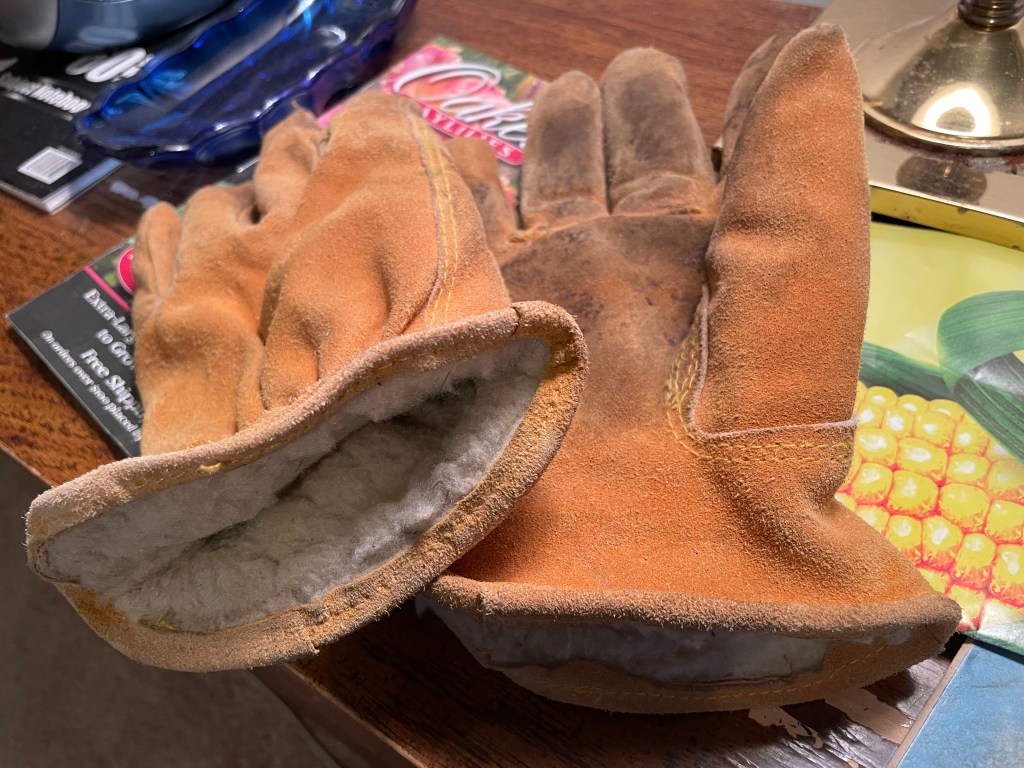
With this in mind I’m offering up another tool that tops the list and was most useful on this last trip. I threw a pair of $15, fleece-line gloves in my luggage at the last minute. I figured they might come in handy if it gets very cold, but that wasn’t why they ended up being so valuable.

It was the extra thickness that offered protection pulling up Multi-floral Rose. I got plenty of practice on that patch of land that I’ve decided is the perfect staging spot for bringing out all the logs to be milled. This species of rose is very aggressive and next to Poison Ivy the most prevalent vine on the land. It grows in clumps that extend out in an exploding firework shape. It grabs hold of your clothes like blackberry bramble and a thicket of it is not something you want to take on in the summer unless Aguirre, the Wrath of God and other Werner Herzog movies inspire you to go into nature and do the most difficult thing you can think of. 

Winter is definitely the time to clear Multi-floral Rose. The leaves are gone and you can see where every shoot is heading. Though it still has live green vines, most are brown and dead and if you are lucky, as I was, the soil is soft with recent rains. Some of the clumps I could pull out on my first effort, gathering most of the vines in my hands and leaning back. Any that gave trouble, I’d dig around the edge with my shovel and lean back on the handle to break roots and get some uplift on the ball. This preparation was usually enough. The next time I leaned away with a handful of thorny vines imbedded in my gloves the remaining roots would start popping like a kettle of corn and soon I’d be holding the whole explosion of plant in the air, triumphantly carrying it to a neighboring pile.

The log-staging area I mostly cleared of Multi-floral Rose

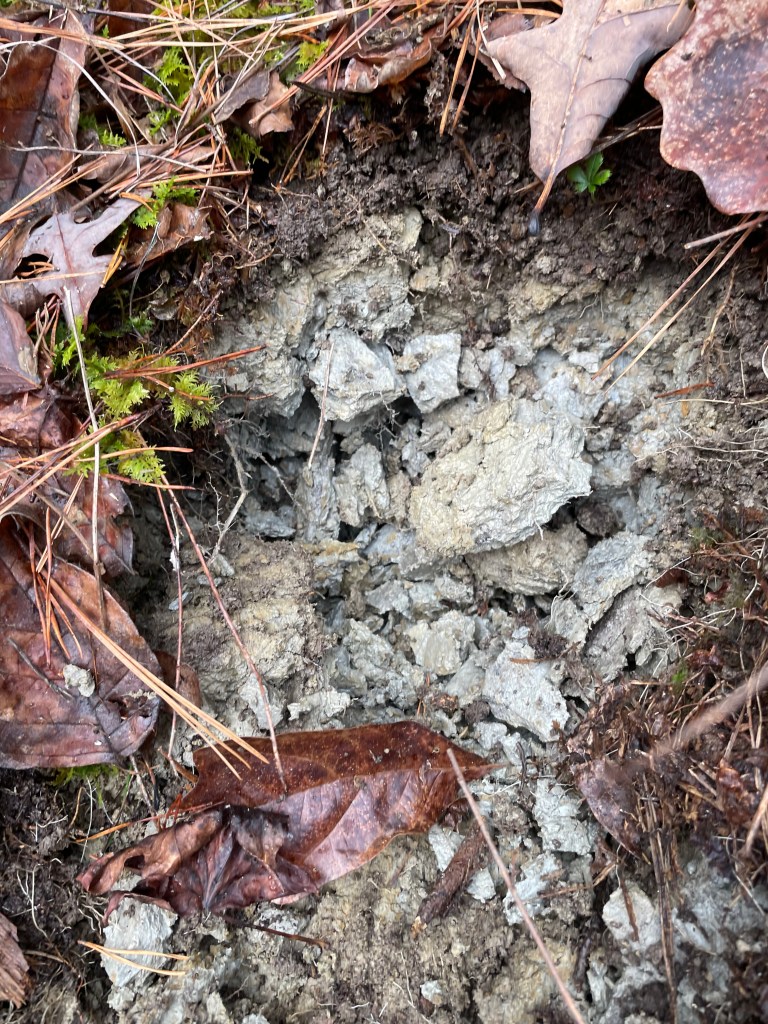
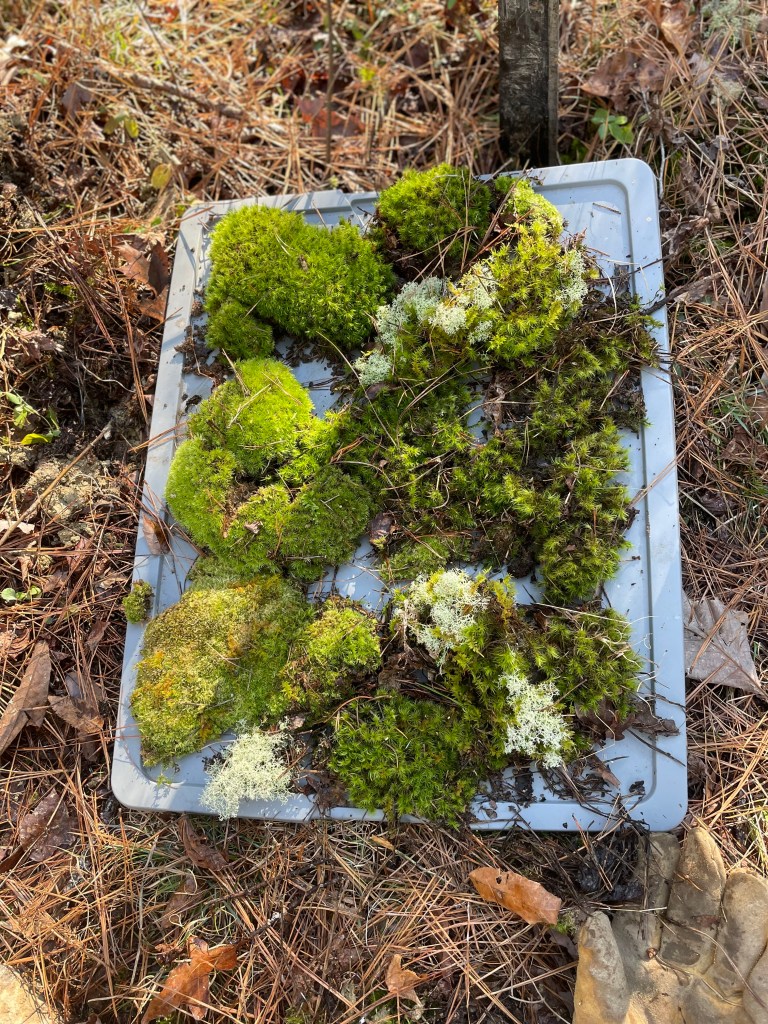
The gloves also made it easy to pull up all the Loblolly and Winged Elm saplings on the PCS. It was rare that I had to use the machete on a sapling in this area. The ground is covered with pine needles and moss of varying shades of green and grey. Beneath this is about an inch or two of topsoil followed by white shale and clay that becomes increasingly hard to dig into about six inches down. During wet weather it is a miniature flood plain with much of the water washing off the knob behind it. The moss and top soil make it spongy. 

Shale and clay earth just beneath the PCS surface
Ground moss collected from the PCS
I used the harvested moss to line the rock stairs I put in last summer. I’ll see if it lasts but I don’t know why it wouldn’t. The stuff is pretty hardy and there was some in the stair area before I brought all this extra in.

The poor quality of soil on the PCS is probably why there are only a few species of trees there — Loblolly, Cedar and Winged Elm. Oaks which start out with a single, deep tap root definitely don’t like it. I imagine the shale is too difficult to penetrate. Those other species have roots that spread wide and shallow—at least in the beginning. I’ve no idea what the root system looks like for some of the older, surrounding pines that top out well over a hundred feet. I imagine when a tree grows that big it must start to have powerful roots that can make their way into deeper territory. 

Ideally, I would have a well here on the PCS pumping water directly into the house, but I don’t know how much water makes it through the clay. Neighbors, Chuck and Rhonda, across the road, are roughly at the same elevation and hidden behind a small knob. They told me they hit water at 150 feet but drilled to 200 and take water from that level. 

They came by on the day I was cutting up some fallen trees near the road. They arrived in their new, gleaming diesel pick-up and put it rumbling into park. Michigan natives, they had a retirement home built here five years ago and are still adjusting to it. Chuck misses the snow but they have a daughter who lives nearby in Knoxville with her fiancé. Ever-friendly, Chuck invited me up to their place to say hi. I told him I may take them up on that. I’ve been a few times before. Rhonda said, “I’ll give you a piece of pie!”

The next day I called them when I started to get hungry and asked if it was okay if I took my sandwich up and ate it while I visited. 

“We have food,” Chuck exclaimed in his cheerful voice that made it sound like the introduction to a Broadway song. 

“Oh, thanks, but I made this sandwich and I better eat it,” I said.

“Well, you like coffee,” Chuck asked?

“Sure”

“Well, we can give you some of that.”

We talked more about their water while I was there. Chuck gave me a glass to taste and it was exactly what I would want in drinking water—pretty much tasteless. 

Their aging dogs Fatty Mattie, a standard poodle mix  and Waggy Maggie, a black lab are slightly mis-nicknamed since Maggie is a bit plumper than Mattie and Mattie is a bit more waggy than Maggie. At any case it was nice to get my hands on some dogs, missing Sasha so much in the short time I was in Tennessee. The feel of a short shorn standard poodle’s curls is a textural delight.

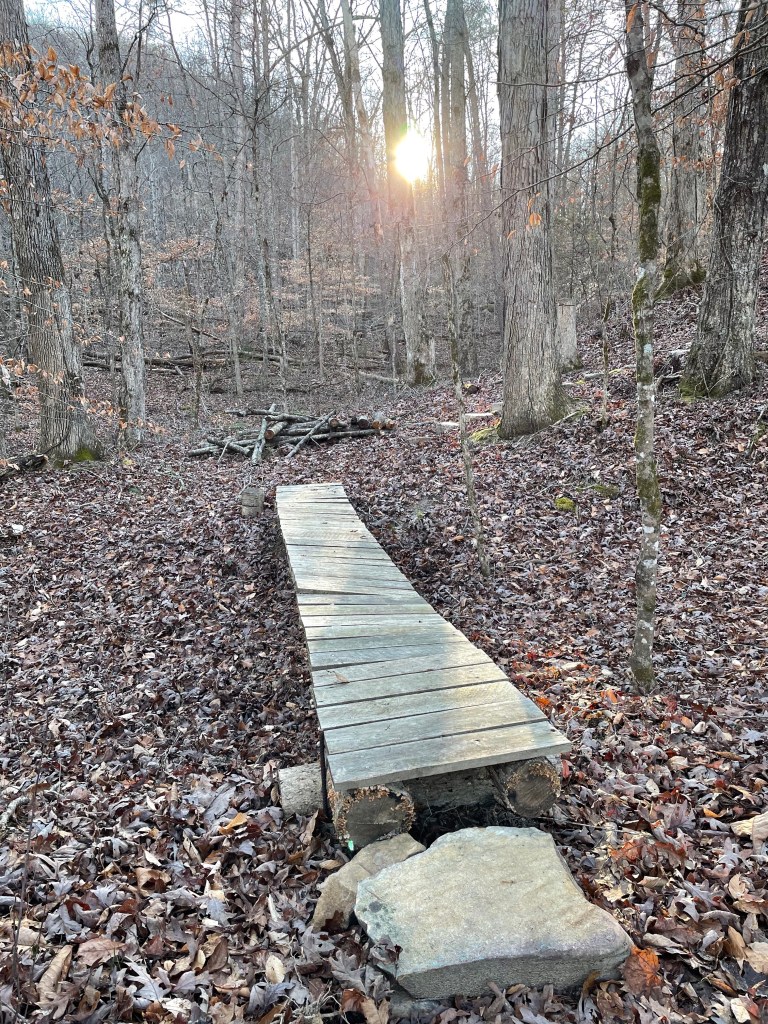
The old bridge is holding up, but growing a carpet of Turkey Tail Mushrooms which I scraped off the underside of oak logs. I don’t want to help the Mycelium network to advance the bridges ultimate failure.
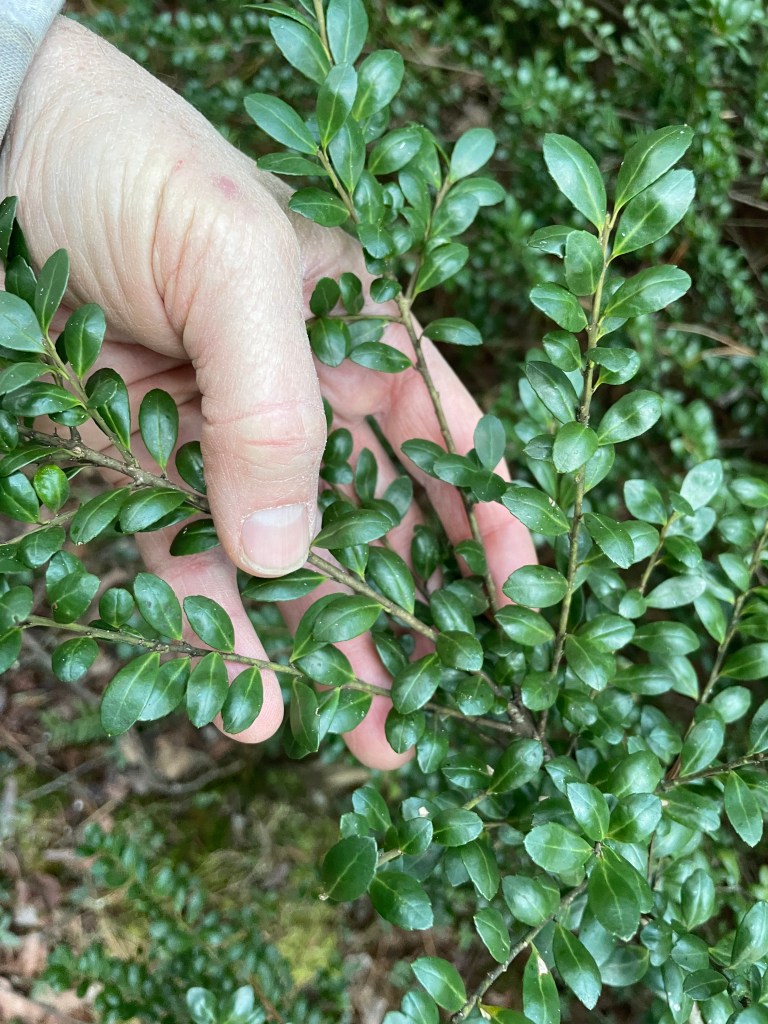
A Google search indicates this is a Japanese Holly, an invasive species. I admit that I’m not as concerned as a should be about invasives. This is a pretty plant and the only one I’ve found on my land. It is part of a big, lush bush at the base of the hill at the back of the PCS. I used the dark green as a backdrop to film the falling snow that didn’t stick. I’m quite fond of it and will keep it until convinced otherwise.
Numerous trees helped break the fall of this 120 foot, 30-inch diameter Tulip Poplar. Evidence includes skid marks down the side of another big poplar and a Loblolly Pine that snapped 12 feet from the ground. A free fall directly onto the Sheridan cabin would have probably meant its demise. Maybe the structure would have failed without the brace I put on the opposite side and a pole on the inside. My work to do that may have been a mistake if I wanted to have an easier way to disassemble it. 
The tree now laying on the ground is so beautiful and straight. It would be a waste not to use it for lumber. I’ll have to think about how to deal with it next summer. This one is not near the log staging area. It’s on the other piece of land. However, the closest neighbor has said I can use his tractor to pull cut pieces out. He also has a non-automated mill he will let me use. By non-automated I mean it is the kind I would have to push the saw through.
The top branches of the fallen poplar are big enough to be sizable trees by themselves.
An eight foot crater was left where the tree fell exposing lots of rocks for harvesting.

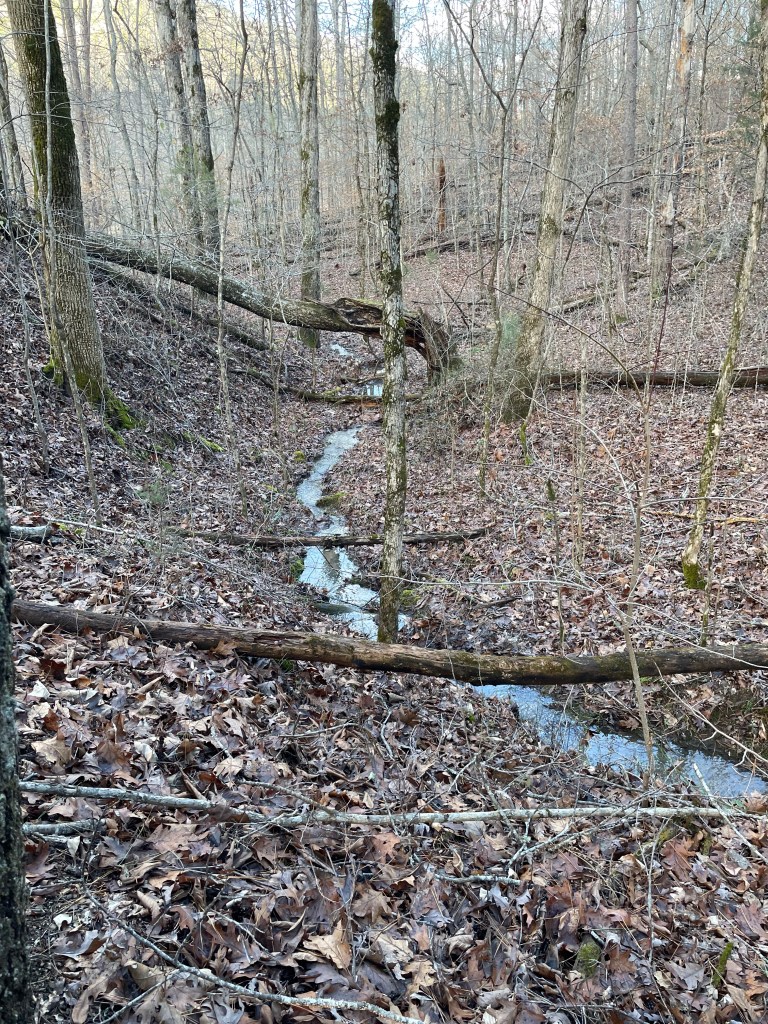
There were numerous wet-season creeks that I saw on the land for the first time on this trip.
This place holder was on the back of every seat on the American Airlines flight I took home. Was this the idea of a radical literacy advocate bemoaning the state of our video-saturated world or did they just want to make sure you didn’t put coffee cups and snack wrappers in the magazine pockets?